
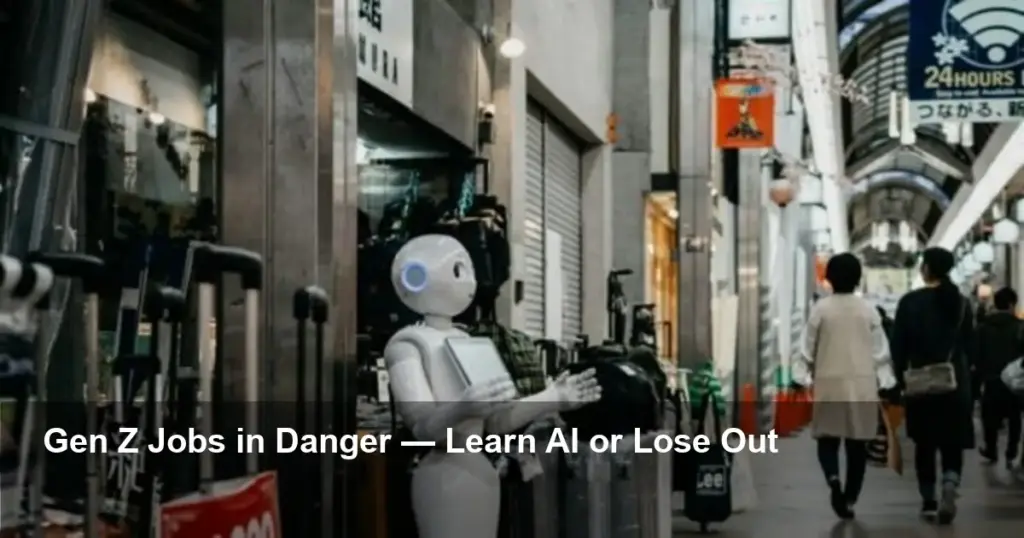
• Gen Z sees AI as both a threat to job security and an opportunity — they are the biggest adopters of AI tools.
• Automation is reshaping roles that rely on routine tasks; complex, creative, and social skills remain valuable.
• Experts urge rapid reskilling: blend AI tool proficiency with soft skills to stay competitive.
• Employers must invest in training or risk talent loss as Gen Z pivots to more resilient careers.
Overview
Hrishikesh Gopal Tawade’s recent observations capture a paradox at the heart of today’s labor market: Gen Z is simultaneously anxious about AI-driven job displacement and one of the most enthusiastic adopters of automation tools. That tension — fear of lost opportunity vs. eagerness to innovate — is shaping how young workers plan careers and demand employer support.
Key findings from Tawade
Tawade highlights that Gen Z “does see AI as a threat to getting a job and job security, but they are also the biggest embracers of AI.” This dual stance drives two clear behaviors: a readiness to learn AI-enabled tools and a pragmatic anxiety about which roles will survive the next wave of automation.
Which jobs are most affected
Automation tends to hit roles heavily weighted toward routine, repetitive, or narrowly defined tasks. Examples include data entry, basic customer service, simple accounting tasks, and some administrative functions. By contrast, roles requiring complex problem-solving, emotional intelligence, creativity, and cross-disciplinary judgement are less likely to be fully automated in the near term.
What this means for Gen Z and employers
For young professionals, Tawade’s message is a call to action: don’t wait. Embrace AI tools but pair that technical familiarity with durable human skills. Employers who ignore upskilling will face a twofold risk — reduced productivity and the loss of young talent to more forward-looking organizations.
Practical next steps
- Learn the tools recruiters value: basic prompt engineering, common AI assistants, and data literacy.
- Develop transferable soft skills: communication, critical thinking, leadership, and adaptability.
- Pursue hybrid roles: combine domain expertise (marketing, healthcare, finance) with AI fluency.
- Advocate for company-sponsored training and transparent career-path planning.
Tawade’s framing underscores a broader labor-market truth: automation won’t uniformly eliminate jobs, but it will change job content and the skills that employers prize. Gen Z’s willingness to adopt AI gives them an advantage — if they act quickly. Those who delay risk being outpaced by peers who pair tool literacy with human strengths.
For policymakers and business leaders, the implication is clear: invest in reskilling programs now or face disruptive churn and widening inequality later. For Gen Z, the path forward is equally pragmatic — embrace AI, but double down on what machines can’t replicate.
No embedded social media or video content was present in the original sourced material to include here.
Image Referance: https://goodmenproject.com/featured-content/gen-z-ai-automation-careers-tawade-sjbn/