
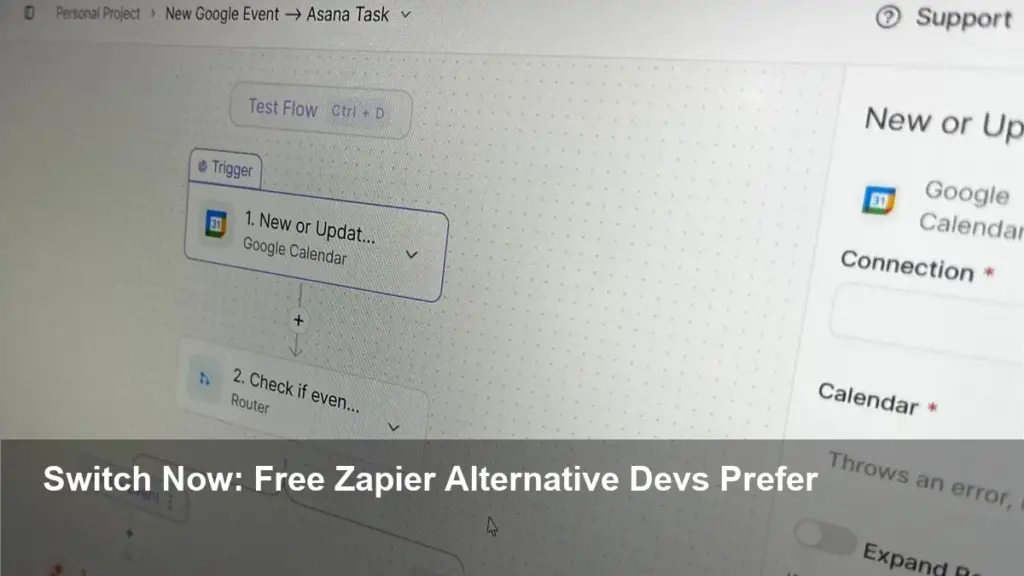
- An open-source automation tool is gaining attention as a superior alternative to Zapier and n8n.
- It combines an intuitive visual builder with robust self-hosting, low latency, and strong privacy controls.
- Developers and small teams report easier setup, fewer errors, and faster execution for common workflows.
- Ideal for those who want powerful automations without vendor lock-in or recurring fees.
This open-source alternative to Zapier and n8n is better than it has any right to be
Why it’s suddenly getting so much attention
Over the past year a new wave of open-source automation tools has matured to the point where they don’t just match commercial products like Zapier — in practical terms they often surpass them. Users praise this particular alternative for combining a clean, visual workflow editor with straightforward self-hosting, lower latency, and stronger privacy guarantees. For teams tired of monthly bills and opaque cloud services, that’s a compelling mix.
Core strengths
1. Self-hosting and privacy
Unlike many SaaS automation platforms, this tool can be hosted on your own infrastructure. That means sensitive data never needs to leave your environment unless you want it to. For businesses with strict compliance needs or anyone concerned about vendor access, the difference is huge.
2. Simplicity without sacrificing power
The interface emphasizes drag-and-drop workflow building and visual debugging. That lowers the barrier for non-developers while still offering advanced features — conditional logic, retries, error handling, scheduling, and HTTP/webhook triggers — that developers expect from enterprise-grade systems.
3. Performance and reliability
Self-hosting reduces round-trip times and gives teams full control over concurrency and resource allocation. Users report fewer failed runs and faster execution than when using hosted Zapier or even some n8n deployments, especially when automations interact frequently with internal APIs.
Real-world use cases
- Syncing CRM updates to internal tools without exposing records to third parties.
- Automating deployment notifications and incident alerts for dev teams.
- Pulling daily analytics from multiple sources into a private dashboard.
What to watch out for
No platform is perfect. Self-hosting requires basic ops skills and maintenance. Some commercial platforms have more out-of-the-box integrations and vendor support. But for many teams, lower costs, control, and transparency outweigh those trade-offs.
Getting started
Try a local or small-scale cloud deployment, import or recreate a few simple workflows, and compare execution times and reliability with your current setup. The active community and growing library of connectors make ramping up faster than you might expect.
Bottom line
If you’re evaluating automation tools, this open-source option is worth a serious look. It delivers strong performance, privacy, and flexibility — and it’s convincing developers and small teams to move away from paid services they once thought indispensable.
No social media embeds or YouTube videos were present in the source provided.
Image Referance: https://www.makeuseof.com/open-source-alternative-to-zapier-and-n8n-is-better/