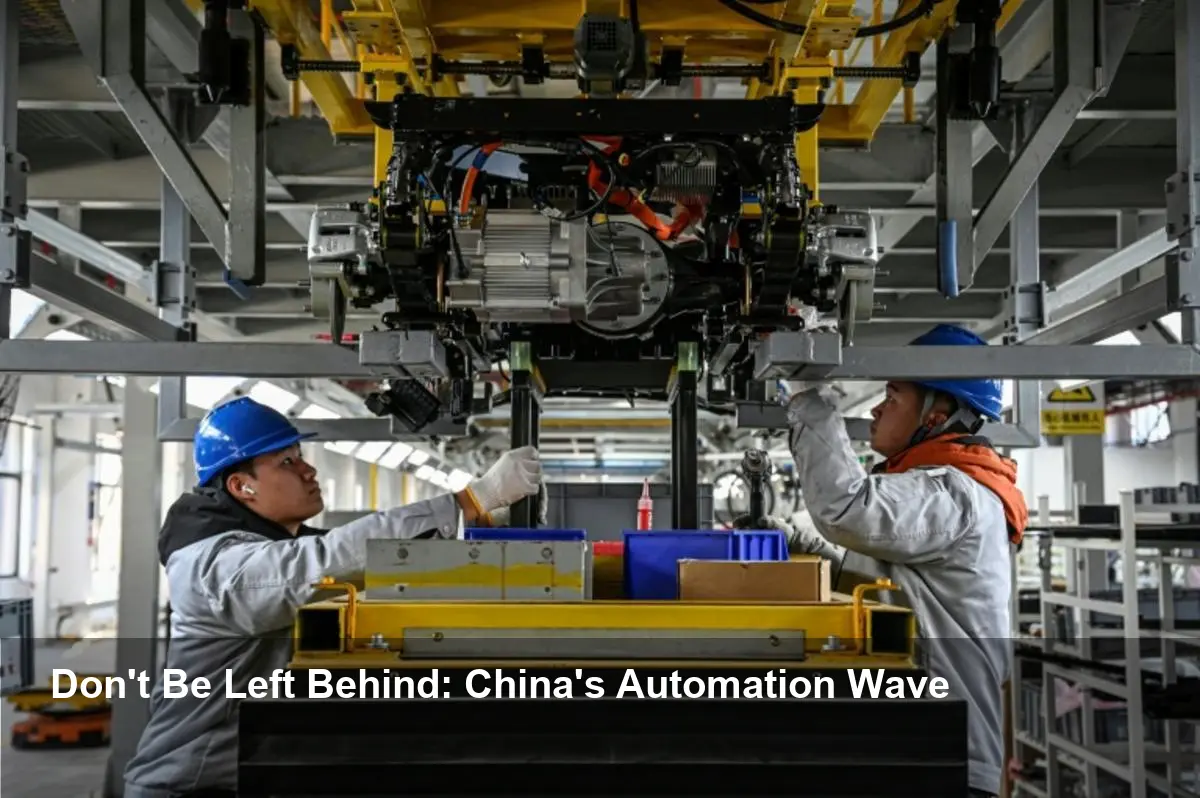
- In a light-filled workshop in eastern China, a robotic arm moved a partially assembled autonomous vehicle as workers calibrated its cameras — a scene now common at small manufacturers.
- Rising wages, tight labor markets and pressure to meet quality standards are driving a surge in robotics and automation among China’s SMEs.
- Adoption hurdles include high upfront costs, skills shortages and integration challenges, but government incentives and leasing models are easing the transition.
China’s smaller manufacturers rush to catch the automation wave
In a light-filled workshop in eastern China, a robotic arm moved a partially assembled autonomous vehicle as workers calibrated its cameras — typical of a broader change sweeping through the country’s smaller factories. Once reliant on manual assembly lines and low-cost labor, many small- and medium-sized enterprises (SMEs) are now investing in robotics, machine vision and software to stay competitive.
Why the shift is accelerating
Several converging pressures are pushing SMEs toward automation. Rising wages and an aging workforce are making labor-intensive production less economical. At the same time, customers and downstream industrial buyers increasingly demand higher precision, faster delivery and traceable quality — requirements that robotics and AI help meet.
For manufacturers working on emerging products such as electric vehicles and autonomous systems, automation is not just a cost play but a capability upgrade. Automated stations for camera calibration, welding and precision assembly reduce human error and speed ramp-up for new models.
Common automation paths and practical models
SMEs are adopting a mix of approaches: collaborative robots (cobots) that work alongside humans, machine-vision inspection to catch defects earlier, and modular automation cells that can be reconfigured as products change. To manage costs, some firms lease robots or buy through equipment-as-a-service arrangements rather than making heavy capital investments.
The obstacles that remain
Despite clear benefits, barriers persist. Upfront costs and the perceived complexity of integrating hardware with production software deter many small shops. A shortage of technicians skilled in programming, maintenance and systems integration further slows adoption. For many SMEs, the unknowns around return on investment — and fear of disrupting current orders — also weigh heavily.
Role of policy and industry support
Local governments and industry groups are stepping in with subsidies, pilot programs and training initiatives to de-risk automation projects. Equipment makers and integrators increasingly offer bundled services — from site assessment to turnkey installation — that reduce implementation friction for smaller customers.
What this means for manufacturers and buyers
The automation wave is creating winners and laggards. SMEs that move early can lock in productivity gains, satisfy higher-tier customers and access new markets; those that delay risk falling behind on cost and quality metrics. For suppliers and buyers, the shift means more predictable quality and faster product cycles — but also a need to help partners transition.
As robotics become easier to deploy and financing more flexible, the workshop scenes once confined to large factories are increasingly common in smaller facilities across China — signaling a structural change in how goods are made.
Image Referance: https://www.digitaljournal.com/world/chinas-smaller-manufacturers-look-to-catch-the-automation-wave/article