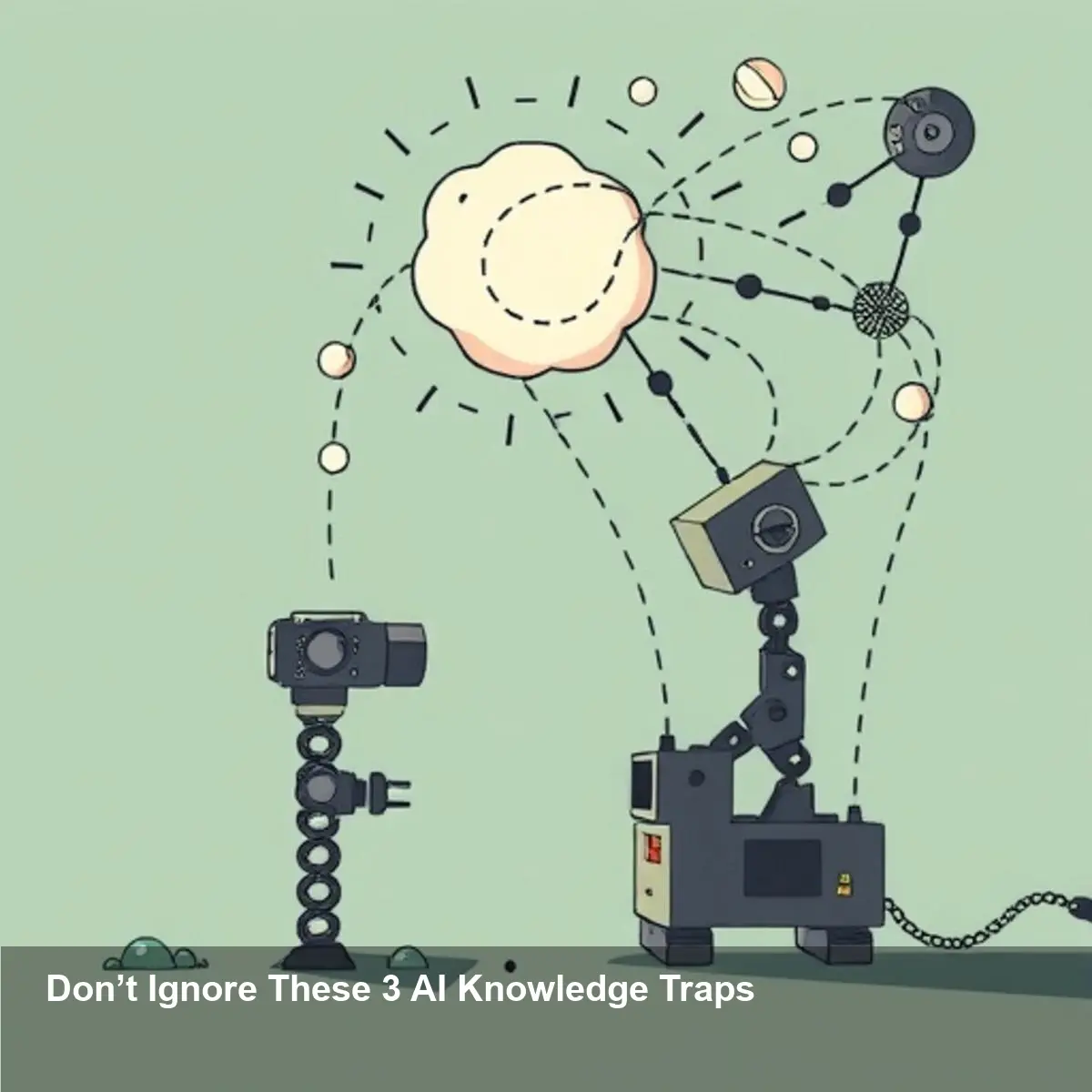
• AI-generated knowledge can mislead; authority without accountability is rising
• Explainability may create false confidence and be weaponized
• Automation standardizes truth, shrinking epistemic diversity
News: Three Paradoxes of Knowledge in Rhetorical Machines
As artificial intelligence systems increasingly shape public argument, decision-making and what counts as “knowledge,” philosophers and technologists are sounding alarms about deep, structural tensions. Under the broad heading of “epistemic automation,” machines do more than compute; they participate in creating, framing and distributing knowledge. That participation gives rise to at least three paradoxes that complicate trust, transparency and pluralism.
Paradox 1 — Authority Without Accountability
Rhetorical machines can synthesize and present information with a fluency that mimics expertise. The paradox: as we lean on algorithms for answers and persuasive framing, those systems accrue authority while lacking the institutional accountability of human experts. This creates a trust gap: users may defer to machine-produced conclusions without clear recourse when the outputs are wrong, biased or manipulatively framed.
Implications
Organizations that rely on automated rhetoric—news aggregators, social platforms, marketing engines, and even policy tools—can inadvertently amplify errors or partial perspectives. The technical capability to generate plausible claims does not equate to epistemic reliability.
Paradox 2 — Transparency That Produces Illusion
Calls for explainable AI aim to make systems intelligible. Yet another paradox emerges: explanations can create a comforting illusion of understanding while hiding complexity or facilitating strategic manipulation. Simplified rationales may be marketed as clear reasons when they actually gloss over probabilistic uncertainty, data gaps, or model biases.
Implications
Superficial transparency can cement misplaced confidence in machine judgments. Bad actors may exploit simplified explanations to persuade or mislead, undermining the goal of accountability that explainability is supposed to serve.
Paradox 3 — Homogenized Knowledge, Reduced Pluralism
Automation favors patterns and repeatable signals. When rhetorical machines optimize for engagement, clarity, or consensus, they tend to converge on dominant frames and narratives. The paradox: tools built to surface information can, at scale, standardize it—squeezing out minority viewpoints and diminishing epistemic diversity.
Implications
A loss of diversity in perspectives weakens collective problem-solving and makes systems more fragile to blind spots. It also reinforces feedback loops where widely circulated content becomes the training fodder for future models, accelerating homogenization.
What Comes Next
Addressing these paradoxes requires combined efforts: stricter accountability mechanisms, richer forms of transparency that reflect uncertainty, and design choices that preserve epistemic pluralism. Scholars urge multidisciplinary collaboration—between ethicists, engineers, policymakers and communities—to ensure rhetorical machines augment rather than supplant robust public reasoning. Ignoring these tensions risks ceding how society defines and values knowledge to opaque, optimized systems.
Image Referance: https://bioengineer.org/three-paradoxes-of-knowledge-in-rhetorical-machines/