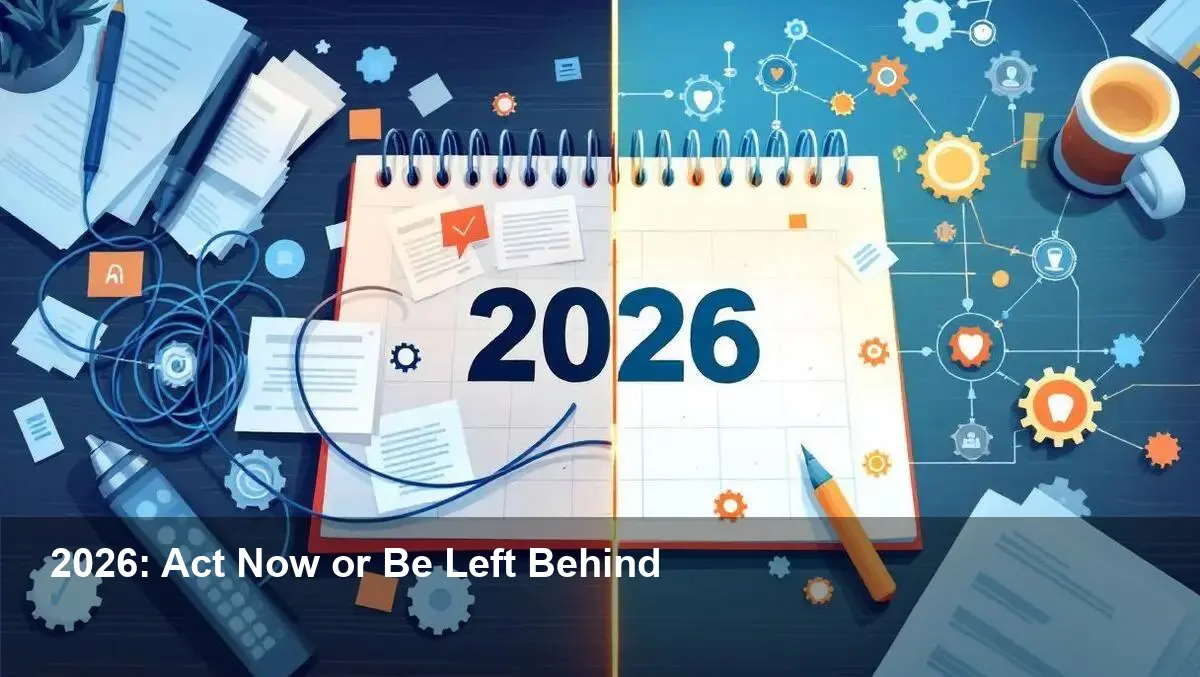
- 2026 is being framed by technology leaders as a make-or-break year for AI adoption in business.
- Companies are shifting from experimentation to demanding measurable ROI, workflow redesign and stricter security and governance.
- Vendors and CIOs face pressure to deliver tangible value, integrate AI into day-to-day processes and close skills and compliance gaps.
2026: The Tipping Point for Business AI
Technology leaders across industries are warning that 2026 will be a make-or-break year for business AI adoption. After several years of pilots, hype and rapid vendor growth, organisations are increasingly intolerant of projects that fail to show measurable value. The message is clear: move beyond proofs of concept or risk being overtaken by competitors who do.
From Experimentation to Expectations
Until now, many companies accepted a period of exploration — testing generative AI, RPA and analytics in isolated pockets. In 2026, however, boardrooms and procurement teams will demand clear evidence of return on investment. This shift is forcing leaders to prioritise projects that deliver concrete outcomes such as cost savings, revenue growth, faster decision-making and improved customer experiences.
Redesigning Workflows, Not Just Adding Tools
Executives emphasise that AI must be embedded into end-to-end workflows rather than bolted on as an add-on. Successful deployments will require process redesign, change management and closer collaboration between IT, operations and business units. Organisations that treat AI as a mere feature rather than a workflow transformation risk low adoption and wasted spend.
Security, Governance and the Trust Imperative
Security and governance are rising to the top of the agenda. With AI models becoming central to decision-making, companies are pushing for stronger controls around data privacy, model auditing, access management and regulatory compliance. Failure to tighten security could expose firms to data breaches, model bias, and regulatory penalties — and will make boards wary of further investments.
Practical Pressures: Talent, Costs and Vendor Rationalisation
Beyond technology, businesses face talent shortages and rising costs. Many organisations will consolidate vendors and scale only the initiatives that demonstrate tangible benefit. Upskilling workforces and hiring AI-literate leaders are becoming non-negotiable priorities if firms want to operationalise models safely and effectively.
What Businesses Should Do Now
Leaders recommend focusing on a few high-impact use cases, measuring outcomes rigorously, redesigning workflows to accommodate AI capabilities, and strengthening security and governance frameworks. Clear metrics, executive sponsorship and an organisation-wide change plan are essential to move from experimentation to sustained value creation.
In short, 2026 looks set to separate organisations that can convert AI potential into practical advantage from those that remain stuck in pilot purgatory. The cost of inaction or ineffective action may be high — not just in wasted budgets but in competitive position.
Image Referance: https://itbrief.co.uk/story/2026-tipped-as-make-or-break-year-for-business-ai-adoption