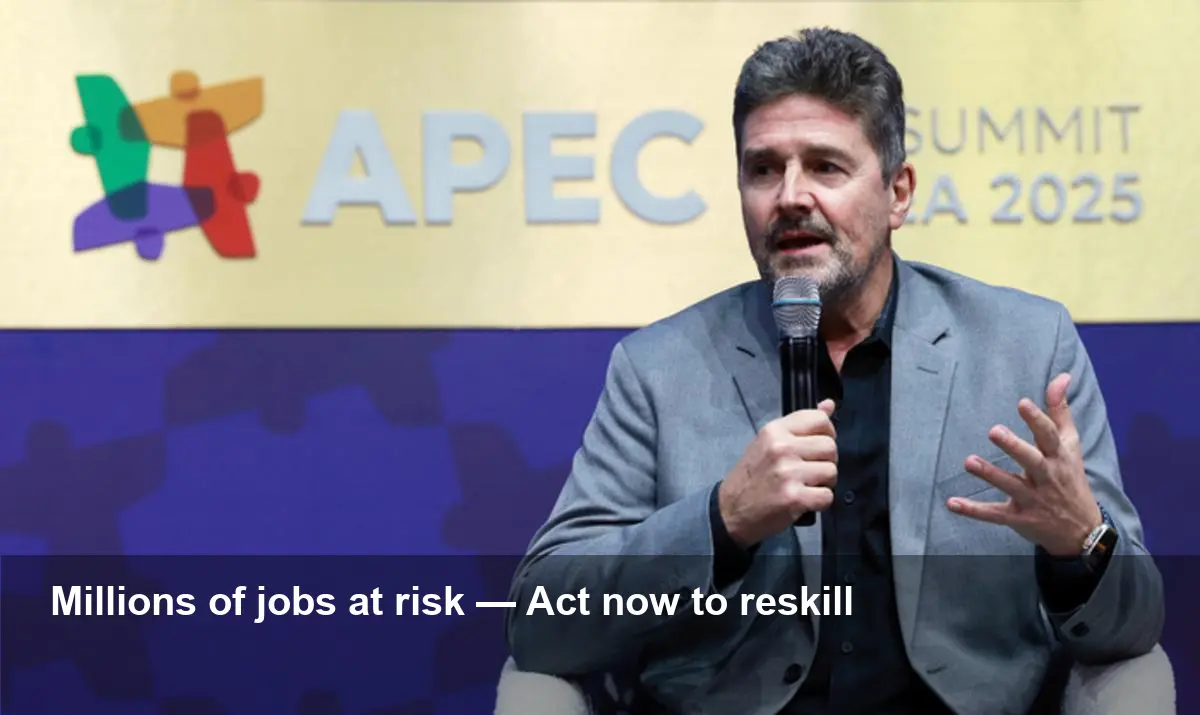
- AI-driven work automation is accelerating across domestic and international firms.
- Routine and mid-skill roles face rapid restructuring as companies deploy AI tools.
- Experts call for immediate reskilling, policy responses and corporate transparency.
- Those who delay adaptation risk job displacement and lost opportunities.
AI-driven work automation accelerates restructuring of “AI-derived” manpower
The rapid development of artificial intelligence (AI) technology is converting predictions into reality: companies at home and abroad are increasingly automating tasks once performed by humans, prompting a tangible restructuring of what industry leaders call “AI-derived” manpower. From call centers and finance desks to content production and basic legal work, the tide of automation is changing the labour market.
Sectors most affected
Routine, repetitive and information-processing roles are the first to feel the impact. Customer service agents, data-entry clerks, basic accounting staff, and some content production roles are being streamlined as firms adopt conversational AI, document-processing models, and robotic process automation. Manufacturing and logistics are also seeing new waves of AI-enabled robotics and optimization systems that reduce the need for human intervention in repetitive tasks.
Domestic and international responses
Companies both domestically and overseas are responding in different ways: some are reducing headcount in roles that can be automated, while others are redeploying staff into oversight, quality control and AI supervision positions. Large tech firms and traditional corporations alike cite efficiency gains, faster turnaround and 24/7 operations as drivers for investment in AI systems — social proof that automation is now mainstream.
At the same time, there is growing pressure on employers to be transparent about automation plans and to invest in reskilling programs. Several global firms have announced retraining initiatives, but experts warn that the scale of support remains insufficient compared with the speed of technological change.
What workers and managers should do now
- Prioritize reskilling in AI literacy, data handling, AI oversight and soft skills where human judgment matters.
- Consider hybrid roles that combine domain expertise with AI supervision.
- Companies should conduct human-centered impact assessments before large-scale rollouts and offer clear transition support.
Policy implications and urgent calls
Policymakers are urged to update labor regulations, expand social safety nets, and fund rapid retraining programs. Without swift, coordinated action from government, industry and education providers, millions of workers could face prolonged displacement or downward mobility.
Why this matters
For workers, the message is clear: automation is no longer hypothetical. Confirmation bias may have led some to assume that job losses would be slow or limited; current trends show otherwise. Negativity bias means people will focus on risk — yet the flip side is opportunity for those who act early. Businesses that invest in humane, strategic automation and workforce transition can benefit from greater productivity while maintaining social license.
Bottom line
AI-derived workforce restructuring is underway globally. Stakeholders — from individual workers to corporate leaders and policymakers — must move now to reskill, plan and protect livelihoods, or risk being left behind in an accelerating technological shift.
Image Referance: https://www.mk.co.kr/en/it/11922116