- Agentic AI pricing will shift to ‘all-you-can-eat’ models, changing vendor economics.
- Data tooling and integration will become a major headache for enterprises in 2026.
- AI agents will increasingly be delivered as features inside apps rather than standalone revolutions.
- Physical AI (robots, edge devices) will matter operationally, not just conceptually.
Enterprise technology 2026: What to watch now
High-confidence shifts: agentic AI and economics
One of the clearest expectations for 2026 is that agentic AI—models that operate proactively on behalf of users—will change commercial models. Expect “all-you-can-eat” pricing tiers for agentic capabilities from major cloud and SaaS vendors. That pricing shift will force companies to rethink cost models, procurement, and how they measure ROI on AI-driven workflows.
Data tools: the growing headache
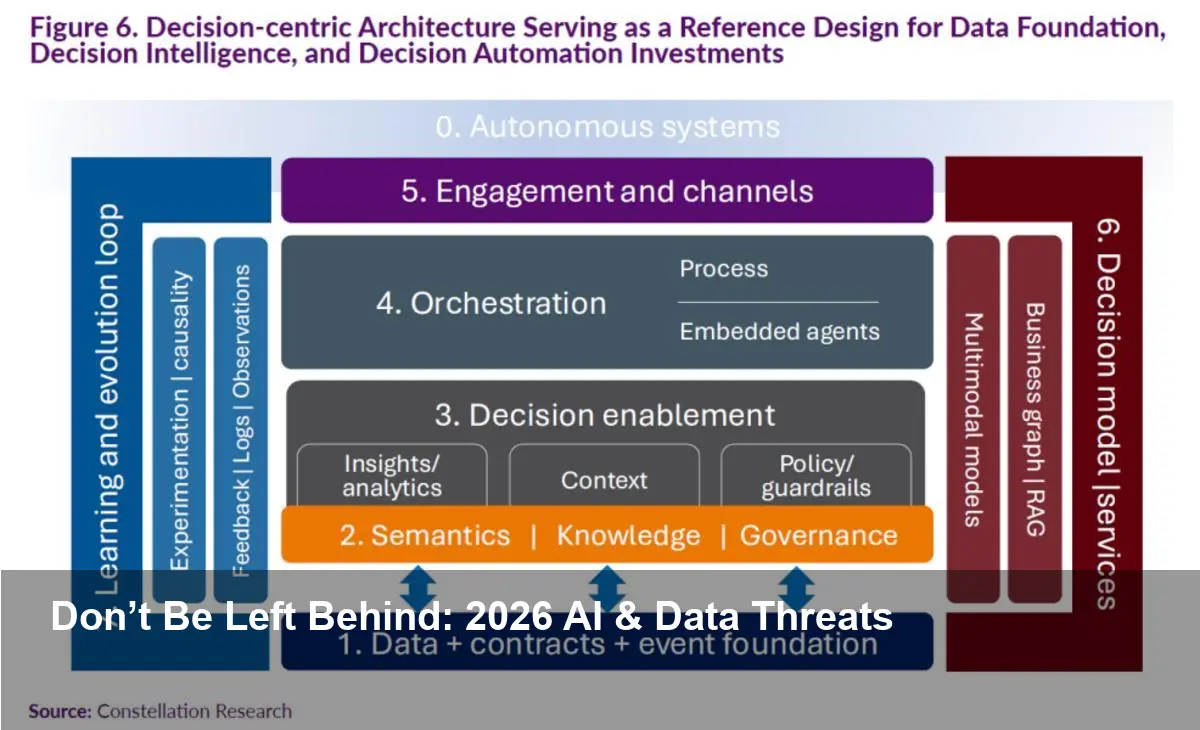
Data tooling and plumbing are forecast to be a top enterprise pain point next year. As organizations stitch together multimodal models, agentic systems, and legacy data sources, tool sprawl, integration debt, and governance gaps will escalate. Teams should prepare for more investment in data observability, lineage, and runtime governance to avoid costly outages and compliance risks.
Key impacts:
- Higher operational costs for data integration and cleanup.
- Increased demand for data governance and privacy controls.
- Greater importance of metadata, observability, and model monitoring.
AI agents become a feature, not a revolution
Rather than arriving as a singular industry upheaval, AI agents will increasingly be embedded as features inside business applications. This means companies will see agentic behavior integrated into CRMs, ERPs, customer support, and vertical SaaS—improving productivity but making differentiation harder for vendors that offer agents as table stakes.
Physical AI: from lab demos to operational reality
Physical AI—robots, automation at the edge, and tactile systems—will move from high-profile demos to practical deployments in warehouses, manufacturing lines, and field services. This will create new requirements for real-time inference, safety, and hardware-software integration.
Other trends to monitor
Expect consolidation among AI tooling vendors, increased vertical specialization of models, more packaged solutions for regulated industries, and rising scrutiny from compliance and security teams. Low-code/no-code orchestration will continue to expand, enabling faster experimentation but also amplifying governance needs.
Bottom line
2026 promises meaningful but incremental change: agentic AI will reshape pricing and pervasiveness, data complexity will be the top operational headache, and physical AI will finally matter in day-to-day operations. Organizations that invest early in data governance, cost controls, and safe deployment patterns will have a clear advantage.
Image Referance: https://www.constellationr.com/blog-news/insights/enterprise-technology-2026-15-ai-saas-data-business-trends-watch