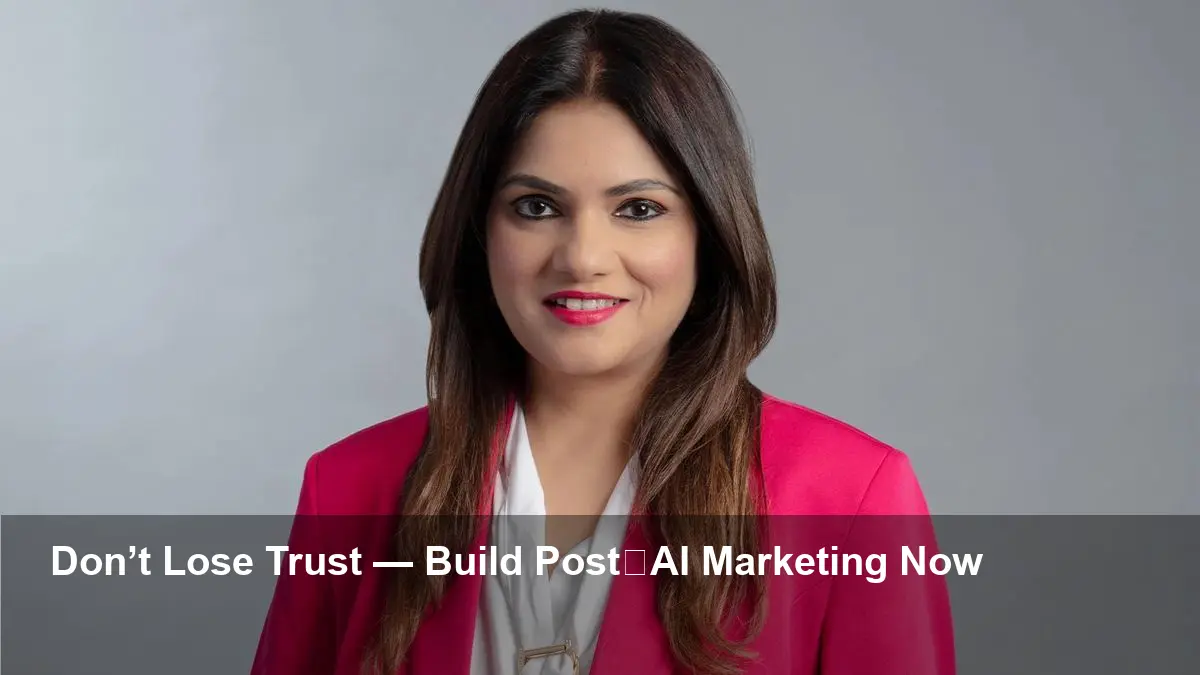
- IBM’s Tuhina Pandey says AI is reshaping creative collaboration but raises new trust risks.
- Post‑AI marketers must “think like an anthropologist” to understand human context and “build like an architect” to create governance and systems.
- Human judgment, ethics and brand trust — not just technical skill — will differentiate successful marketers.
- Immediate action is needed: design guardrails, test extensively and embed human oversight to avoid reputational harm.
Think Like an Anthropologist, Build Like an Architect
IBM leader lays out what will separate winners from laggards
Tuhina Pandey, Director of APAC Communications and Marketing for India and South Asia at IBM, says the arrival of powerful generative AI is changing how creative teams work — and what marketers must prioritize. In a recent interview she framed the shift with two vivid metaphors: marketers must “think like an anthropologist” to surface how real people behave and feel, and “build like an architect” to design the systems, guardrails and measurement that keep AI-driven work aligned with brand values.
AI multiplies creative capacity — and risk
Pandey acknowledges the upside: AI accelerates ideation, enables rapid personalization and opens new collaborative workflows between technology and human teams. But she warns that speed and scale amplify mistakes. Without human judgment and strong governance, AI-generated content can damage trust, spread inaccuracies or misinterpret cultural context — risks that can quickly become reputational crises.
Trust and human judgment now matter more than ever
For Pandey, the critical differentiator for marketers won’t be who uses the flashiest tools, but who can combine domain expertise, ethical judgment and design discipline. She urges marketers to invest in three things:
- Deep audience understanding: use qualitative research and ethnographic methods to capture motivations and cultural nuances.
- System design and governance: create workflows, approval layers and bias checks so AI outputs meet brand and legal standards.
- Measurement and iteration: embed testing, feedback loops and clear KPIs that track both performance and trust.
Practical steps for teams
Pandey advises marketing leaders to treat AI adoption like product design. Define guardrails, prototype small, measure impact and scale only with proven controls. That means cross‑functional teams — creative, legal, data and ethics — working together so AI augments rather than replaces human oversight.
Why marketers should act now
The urgency in Pandey’s message is strategic: early adopters who balance creativity with governance will capture audience attention while protecting brand equity. Those who prioritize speed without oversight risk costly backlash. Social proof matters — when established firms like IBM emphasize trust and human judgment, marketers should take note and adapt.
Bottom line
As AI becomes integral to marketing, success will hinge on human skills that machines can’t replicate: cultural empathy, ethical judgment and systems thinking. Marketers who learn to observe people closely and architect responsible AI workflows will not only preserve trust but gain a lasting advantage in the post‑AI landscape.
Image Referance: https://www.brandinginasia.com/qa-tuhina-pandey-the-post-ai-marketer-must-think-like-an-anthropologist-and-build-like-an-architect/