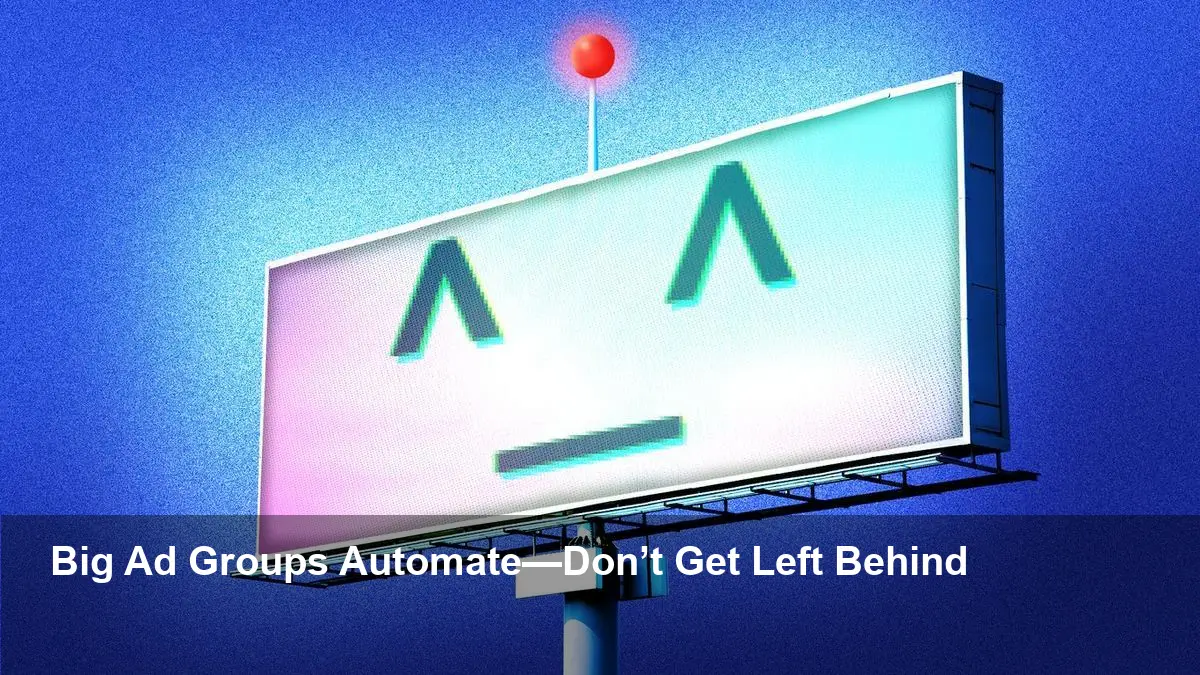
- Major ad holding companies — including Disney and Omnicom — are rapidly deploying AI agents to automate campaign creation and media buying.
- Agencies claim automation will boost speed and efficiency, but experts warn of job disruption and creative quality risks.
- Brands that move slowly risk falling behind as rivals scale AI-driven advertising across channels.
Robots come for advertising: the rush to automate
What’s happening
Big advertising groups are racing to fold AI agents into core operations, from creative production and targeting to programmatic media buying and campaign optimization. The new wave isn’t experimental pilot projects — it’s aggressive deployment across client workstreams, driven by promises of faster execution, cheaper scale and more precise targeting.
Who’s leading the charge
Household names in the ad world are already publicly investing in automation, and several global holding companies are integrating AI tools into pitch decks and client services. That social-proof effect is prompting smaller agencies and in-house teams to accelerate their own adoption to avoid losing business.
Why agencies are pushing automation
Agencies highlight clear benefits: automated creative variants, real-time optimization of media buys, and AI-driven analytics that refine audience reach. In theory, routine tasks — resizing ads, A/B tests, bid adjustments and basic copy generation — can be handed to AI agents, freeing humans for strategy and higher-value creative direction.
How it’s being used now
- Dynamic creative optimization: AI generates multiple ad versions and serves the best-performing variants automatically.
- Automated media buying: agents run programmatic bids, reallocating spend in real time to maximize ROI.
- Campaign setup and reporting: AI automates campaign builds and produces near-instant performance dashboards.
Risks and realities
Negativity bias is fueling concern: workers fear job losses, and creative leaders worry about homogenization of ideas. There are also operational risks — hallucinations, poor-quality creative, and compliance failures — that can damage brands if AI is left unchecked. Regulators and clients are beginning to scrutinize how decisions are made and who’s accountable.
Industry response
Many agencies argue automation is augmentative: humans retain final creative control while AI handles repetitive tasks. Training, governance frameworks and human-in-the-loop checks are being positioned as essential safeguards — but rollout speed means gaps remain.
What marketers should do now
Advertisers should evaluate vendor claims, pilot AI agents with clear guardrails, and prioritize transparency in reporting. Brands that delay risk competitive disadvantage: the current race among major agencies indicates a market quickly shifting toward AI-enabled scale.
As this transition unfolds, expect continued debate about jobs, creativity and accountability — and more clients demanding demonstrable ROI from AI-driven advertising.
Image Referance: https://www.axios.com/media-trends-membership/2026/01/13/ai-agents-advertising-automation