Key Takeaways
- FMC is not the top agricultural investment right now — Deere & Co. is capturing the market’s AI and automation upside.
- Deere’s heavy investment in precision agriculture, autonomous equipment, and software services is creating recurring revenue and higher-margin opportunities.
- Investors should weigh Deere’s technology-led moat against legacy agrochemical plays like FMC when reallocating portfolios.
Deere’s AI and Automation Advantage
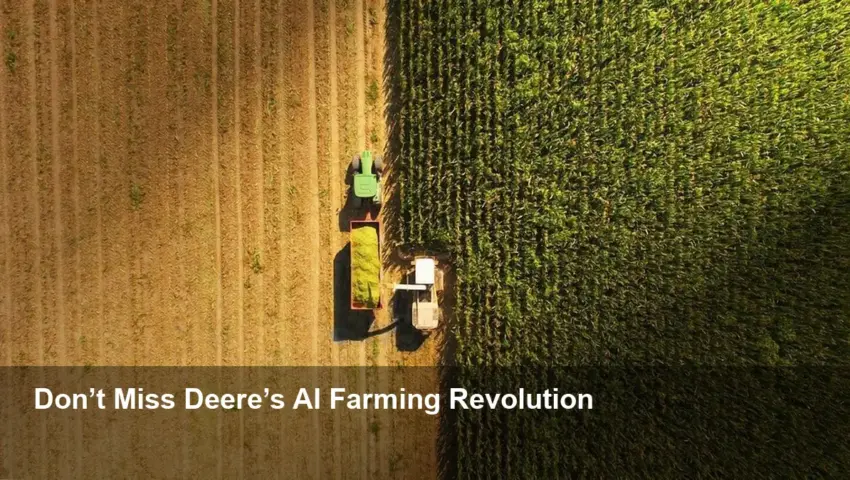
Deere & Co. has been positioning itself as the technology leader in modern agriculture by integrating artificial intelligence, automation, and precision farming tools into its equipment and services. From advanced sensors and telematics to machine-learning-driven guidance systems and autonomous machinery, Deere is turning farming into a more data-driven, efficient business.
Why that matters financially
Technology-led features create several investor-friendly dynamics: higher margins on premium equipment, recurring revenue from software and connectivity subscriptions, and stronger customer stickiness as farms adopt integrated ecosystems. Those advantages can translate into steadier growth and greater resilience through commodity cycles — traits investors prize when choosing among ag-related equities.
Why FMC Falls Short for Now
FMC, historically focused on crop protection and chemicals, plays a different role in the agricultural value chain. While crucial to crop yields, legacy agrochemical businesses face intense competition, pricing pressure, and regulatory scrutiny. In contrast, firms that deliver differentiated tech solutions — like Deere — are better positioned to capture long-term, recurring revenue as farms modernize.
Confirmation and social signals
Industry adoption of precision tools and automated equipment reinforces the argument that tech-centric companies will lead the next wave of farm productivity gains. Institutional buyers and farm operators increasingly prioritize systems that reduce input costs and labour dependence — a clear tailwind for automation-first companies.
Risks and What to Watch
- Execution risk: Building reliable autonomous systems and monetizing software requires sustained R&D and solid aftermarket service networks.
- Regulatory and adoption pace: Autonomous farming faces regulatory review and varying adoption speeds across regions and farm sizes.
- Commodity and macro cycles: Even tech leaders are not immune to broader farm income trends driven by commodity prices and weather.
Portfolio implications
Investors looking for exposure to agricultural innovation should consider how much of their allocation favors technology and recurring-revenue models versus traditional input businesses. Deere’s blend of equipment sales and expanding software services can offer a differentiated risk-reward profile compared with pure-play agrochemical firms.
Bottom line
For investors seeking the “farm of tomorrow,” Deere’s push into AI and automation makes it the more compelling play today. FMC still matters for crop protection, but its business faces structural and competitive challenges that may limit upside relative to tech-forward competitors. As always, balance your exposure according to risk tolerance, time horizon, and the pace of agtech adoption.
Image Referance: https://www.fool.com/investing/2026/01/17/ignore-fmc-stock-agricultural-innovator-ai-de/