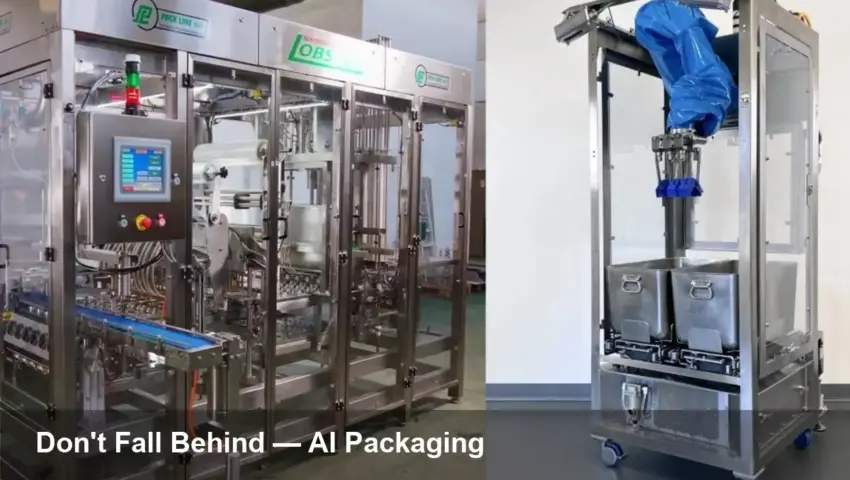
- Chef Robotics and Packline, both US-based, have developed an AI-enabled system for end-to-end food and packaging assembly.
- The solution uses wireless integration to link robotics, packaging equipment and control systems.
- The companies position the offering as a complete assembly workflow from food handling to packaged product.
- The move could accelerate automation adoption in food plants — but it also raises operational and workforce questions.
What was announced
Chef Robotics and Packline have launched a joint AI-powered food pack automation system. According to the short report, the US-based companies have combined AI capabilities with wireless integration to support end-to-end food and packaging assembly — from food handling through to final packaging.
How the system is positioned
The partners describe the solution as an integrated workflow that connects robotic handling equipment and Packline’s packaging modules through wireless links and AI-driven coordination. This approach aims to remove physical wiring complexity on the plant floor and enable flexible line layouts that can be reconfigured more rapidly than traditional hardwired systems.
Why the industry should pay attention
AI-enabled, wireless integration touches several persistent pain points in food manufacturing: changeover time, space constraints, and the need to maintain hygiene and traceability. By combining robotics with smart control, manufacturers could cut manual intervention and speed up packing lines — which is likely to appeal to processors chasing higher throughput and lower downtime.
Potential operational benefits
Key potential advantages include faster reconfiguration of lines for different SKUs, reduced cable and infrastructure costs, and improved coordination between handling and packaging stations through AI-driven decision-making. Wireless systems can also simplify installation and maintenance in complex facilities.
Concerns and what to watch for
New automation approaches bring trade-offs. Wireless networks introduce cybersecurity and reliability considerations that plants will need to manage. Integrators and operations teams must also plan for systems integration, staff retraining, and validation to meet food-safety and regulatory requirements. These are not technicalities — they determine whether a pilot becomes a scalable deployment.
Market impact and adoption cues
For manufacturers, the announcement signals growing momentum behind AI orchestration and wireless-enabled packaging. Companies that delay evaluating these systems risk falling behind competitors who adopt flexible, software-driven assembly lines. At the same time, cautious adopters will want to see real-world case studies and independent performance data before committing at scale.
Next steps for buyers
Procurement and operations teams should ask vendors for integration plans, network reliability targets, security provisions, and references from food plants that have completed pilots. Equally important: understand the change-management steps required to align maintenance, quality and compliance processes with a more software-centric production line.
With Chef Robotics and Packline focusing on AI plus wireless integration, the announcement is a clear sign that automation vendors continue to push toward more flexible, software-driven food packaging solutions. How quickly the industry adopts them will depend on demonstrated reliability, regulatory compliance and measurable return on investment.
Image Referance: https://www.packaginginsights.com/news/ai-food-packaging-assembly-solution.html