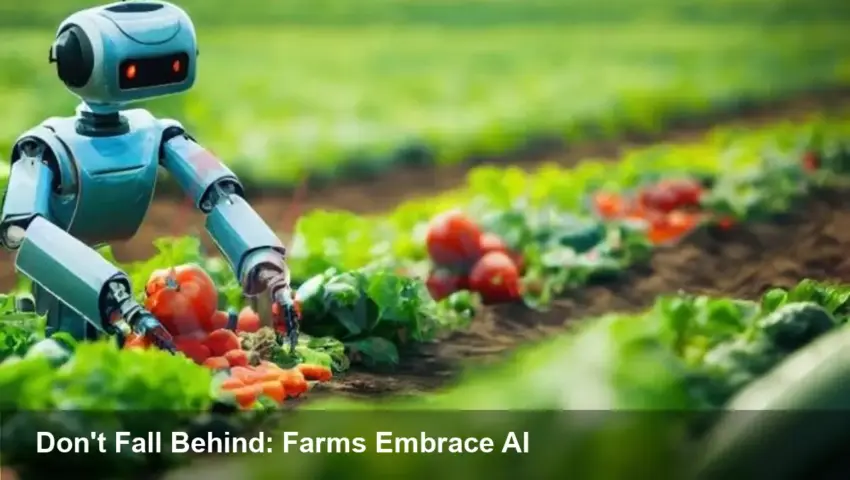
- AI adoption in agriculture is gaining strong momentum as farmers turn to automation.
- Key uses: precision farming, crop monitoring, yield prediction and smart irrigation.
- AI helps optimize inputs, reduce operational costs and improve decision-making.
- Wider adoption could reshape resource use and competitiveness across farms.
What’s happening
The AI in agriculture market is gaining strong momentum as farmers increasingly adopt automation to improve productivity and resource efficiency. Farmers and agribusinesses are using AI-powered tools for precision farming, crop monitoring, yield prediction and smart irrigation to optimize input usage, cut operational costs and support faster, data-driven decisions.
How AI is being used on farms
Precision farming
AI lets operators target inputs — seeds, fertilizer, pesticides — more precisely by analyzing field data. That focused approach reduces waste and can improve crop performance without expanding acreage.
Crop monitoring and early detection
Machine learning and imaging tools help identify stress, disease or pest pressures earlier than traditional scouting. Early alerts allow quicker interventions that may limit losses and reduce heavy chemical use.
Yield prediction and planning
AI models synthesize weather patterns, soil data and historical results to produce yield forecasts. Those forecasts aid supply planning and can help farmers decide when to harvest, store or market crops.
Smart irrigation and resource efficiency
Automation and AI-controlled irrigation systems adjust water use to actual crop needs, helping conserve water and energy while maintaining yields.
Why this matters
Adopting AI tools is not just a technology trend — it affects farm economics and sustainability. Optimizing input use and reducing operational costs can improve margins, while better decision-making reduces risk. As adoption grows, farms that embrace automation may gain competitive advantages in efficiency and environmental performance, creating pressure on slower adopters.
Considerations and obstacles
Despite clear benefits, widespread adoption faces challenges: integrating new systems into existing operations, ensuring reliable data quality, and building trust in automated recommendations. Training and support are important to make sure tools are used correctly and deliver value.
The outlook
The market momentum suggests AI will play a larger role across the agricultural value chain. For farmers, the choice is becoming one of strategic importance: use AI to squeeze more value from existing resources, or risk falling behind competitors who adopt automation and data-driven practices.
As AI tools continue to improve and become more accessible, expect more case studies and farmer experiences to shape best practices. For now, the message is clear: automation and AI are practical levers for improving productivity and resource efficiency on modern farms.
Image Referance: https://vocal.media/futurism/ai-in-agriculture-market-automation-in-farming-resource-efficiency-and-growth-outlook