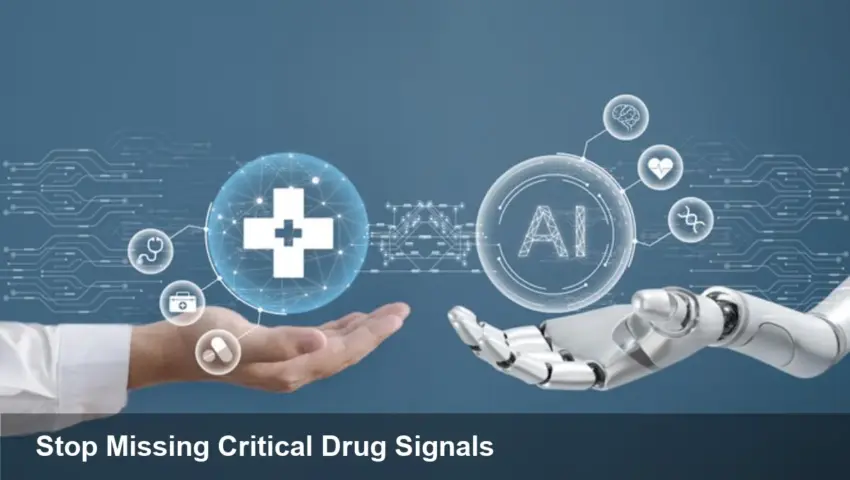
- Rising volumes of safety reports have made fully manual pharmacovigilance impractical.
- AI and automation are being used to speed triage, surface signals and cut backlogs—without removing human oversight.
- Benefits include faster case processing and earlier detection; risks include algorithmic bias, false signals and regulatory validation needs.
Why pharmacovigilance is overwhelmed
Pharmacovigilance teams face growing workloads as adverse event reports, electronic health record data and real‑world evidence expand. For many organizations, the sheer volume of case intake and literature to review has exceeded what can be safely handled by manual review alone. That creates backlogs, slower response times and a higher risk that important safety signals will be missed.
How AI and automation are being applied
AI and automation tools are entering workflows to handle repetitive, high‑volume tasks so human reviewers can focus on judgment and complex cases. Common uses include:
- Automated case intake and prioritization—sorting reports by severity and likely relevance.
- Natural language processing to extract key details from free‑text reports, case narratives and scientific literature.
- Machine learning for early signal detection and trend analysis across large datasets.
- Workflow automation to route cases, generate standard reports and reduce administrative burden.
Why this doesn’t replace people
The central claim from advocates is not that AI will replace pharmacovigilance professionals, but that it will restore focus to the human element. Automation handles routine work and surfaces likely issues; trained safety scientists and clinicians still make causality determinations, assess regulatory implications and handle complex adjudication. Maintaining human oversight is also important for transparency and compliance.
Risks, validation and regulatory concerns
Introducing AI into safety surveillance brings new risks. Models can embed bias, generate false positives or false negatives, and behave unpredictably on data they were not trained on. Regulators expect validation, explainability and audit trails for tools that affect public safety decisions. Organizations must document performance, monitor for drift and keep clear escalation paths to human reviewers.
Practical steps for organizations
Companies adopting these technologies should start with narrow pilot projects, measure impact on backlog and signal detection, and ensure multidisciplinary oversight including clinical, safety and data‑science expertise. Training and upskilling of pharmacovigilance staff is critical so teams can interpret model outputs and act on automated triage appropriately.
Why it matters
Faster, more accurate detection of safety issues protects patients and supports regulatory compliance. Done responsibly, AI and automation can reduce burnout among safety staff and improve the overall reliability of drug safety monitoring—while preserving human judgment where it matters most.
Image Referance: https://medcitynews.com/2026/01/the-future-of-pharmacovigilance-technology-how-ai-and-automation-are-redefining-drug-safety/