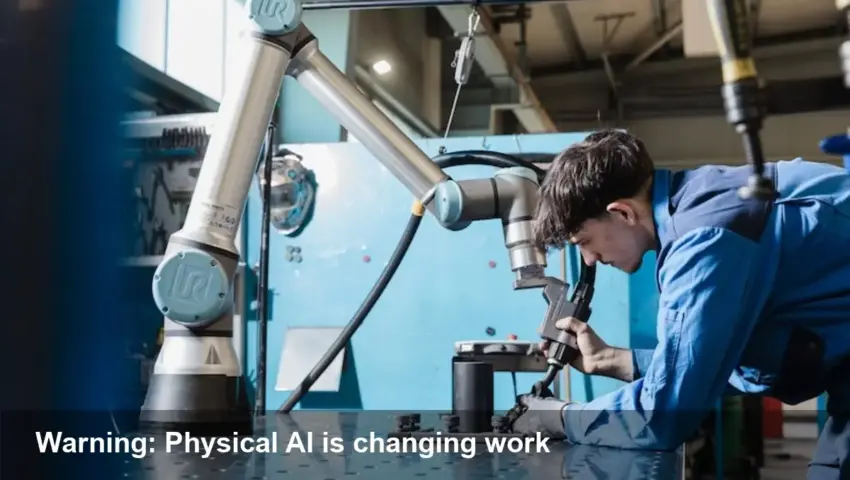
- Universal Robots’ AI chief set out four core “physical AI” trends that will shape robotics in 2026 and beyond.
- The trends are: predictive math for machines, cooperative robots that work safely with humans, task‑specific AI models, and an emerging data economy for robot data.
- Each trend promises efficiency gains but brings new safety, privacy and business risks companies must address.
- Manufacturers, system integrators and operators should prepare now or risk falling behind in automation performance and competitive advantage.
What Universal Robots’ AI chief sees coming
Universal Robots’ AI chief has outlined four physical AI trends expected to drive major change in robotics during 2026 and beyond. The term “physical AI” describes AI applied directly to robots and other machines that act in the real world — not just software or cloud analytics.
The four trends, explained
1. Predictive math for machines
Predictive math refers to models that let machines anticipate outcomes — predicting wear, motion, or task completion before problems arise. In practice, this can mean fewer breakdowns, shorter cycle times and smoother human‑robot handoffs. The risk: overreliance on predictions can mask model errors or data gaps, so operators will need new validation and monitoring practices.
2. Cooperative robots (co‑bots) become more capable
Cooperative robots that safely share space and workstreams with humans will move from niche to mainstream. Advances in sensing and control allow co‑bots to adapt to human motion and intent, increasing productivity on assembly lines and in logistics. The negative angle: closer human‑robot interaction raises safety and liability questions that organizations must resolve before wide deployment.
3. Task‑specific AI outperforms general models
Instead of one-size-fits-all AI, expect more models trained for narrow, high‑value tasks — vision systems tuned for particular inspection jobs, motion planners designed per part family, and so on. Task‑specific AI can be more efficient and reliable, but it also multiplies maintenance needs as more bespoke models require lifecycle management.
4. A new data economy for robot data
Robot operations will generate valuable datasets — motion traces, quality metrics, environmental telemetry — that can be monetized, shared or licensed. This creates new revenue opportunities but also sparks privacy, ownership and interoperability debates. Companies that build data strategies early may gain a competitive edge; those that delay risk letting partners capture value instead.
Why this matters and what to do now
These trends promise real productivity and cost benefits but bring fresh operational and ethical challenges. Manufacturers and automation teams should start by auditing their data and model hygiene, updating safety and compliance plans for tighter human‑robot collaboration, and piloting task‑specific models in controlled settings. Building clear data governance and exploring partnerships for data sharing will be essential to capture value.
Bottom line
Physical AI is moving from theory to factory floor reality in 2026. The potential upside is significant — but so are the risks. Companies that act early on validation, safety and data strategy stand to gain; others risk losing ground.
Image Referance: https://roboticsandautomationnews.com/2026/01/31/the-view-from-universal-robots-four-physical-ai-predictions-for-2026-and-beyond/98456/