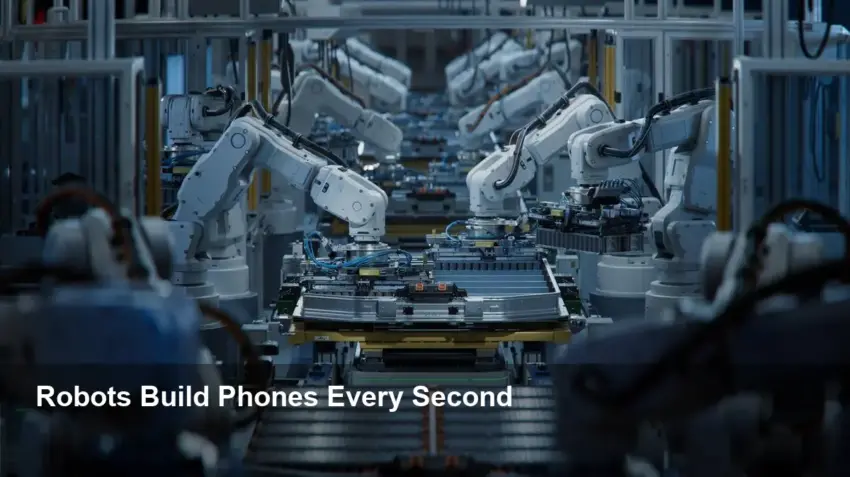
- Xiaomi operates a fully automated, “dark” smartphone factory where no one works the assembly line.
- The factory runs with the lights off because AI and robotics perform all assembly tasks.
- The production line can produce a phone every second, highlighting dramatic efficiency gains.
- The setup raises questions about jobs, supply chains, and the future of factory design.
What happened
Xiaomi is operating a fully automated, “dark” smartphone factory that runs with the lights off because no humans are required on the assembly line. Using AI and advanced robotics, the facility can produce a phone every second, according to the company’s description. The result is a manufacturing site where machines handle the entire assembly workflow without on‑line human intervention.
How it works
The factory relies on coordinated robotics and artificial intelligence to perform tasks traditionally done by people: part placement, fastening, testing, and packaging. Automation systems communicate across the production line to keep flow steady and consistent, allowing continuous operation even in the absence of lighting for human workers. While specific technical details were not provided in the reported summary, the broad architecture follows the lights‑out manufacturing model that some high‑tech plants use to boost uptime and reduce human error.
Why it matters
The factory’s ability to make a phone every second is a visible demonstration of how far industrial automation has come. For manufacturers, that speed and consistency can mean lower unit costs, faster ramp‑ups for new models, and tighter quality control. For consumers it can translate into quicker availability of devices and potentially lower prices over time.
At the same time, a move to lights‑out facilities raises immediate social and economic questions. If assembly lines no longer require on‑site workers, companies and communities that depend on manufacturing jobs must adapt. The shift increases demand for different skills — maintenance, robotics programming, and systems engineering — even as routine manual roles decline.
Industry implications and context
Lights‑out factories are not entirely new, but Xiaomi’s example shows the trend reaching mainstream consumer electronics at scale. This model favors firms that can invest heavily in robotics, machine vision, and software integration. It may intensify competition between manufacturers that can deploy automation rapidly and those that cannot, with ripple effects across supply chains and labor markets.
What to watch next
Key developments to follow include how widely this approach spreads in smartphone manufacturing, what cost and quality gains companies report, and how supply‑chain partners respond. Policymakers and industry groups will likely monitor workforce impacts and training needs for displaced workers.
For now, Xiaomi’s dark robot factory is a clear signal: AI and robotics can run complex consumer‑electronics assembly lines around the clock, and the era of lights‑out manufacturing is moving from niche to mainstream.
Image Referance: https://www.bgr.com/2087200/xiaomi-dark-robot-smart-phone-factory/