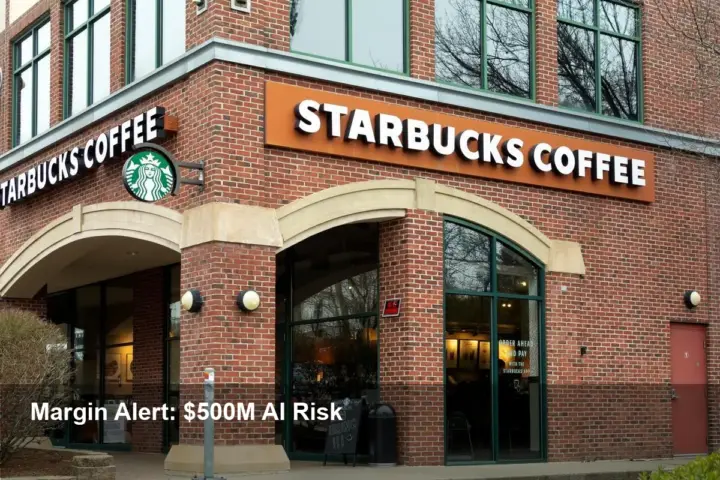
- Starbucks shares dropped about 5% after the company disclosed a $500 million investment focused on AI and staffing.
- The outlay has raised investor concern that margins will be squeezed in the near term, even as U.S. sales rebound and customer experience improves.
- Management’s push into AI and higher staffing costs aim to improve service and efficiency but create short‑term profit pressure.
- Watch for guidance and margin updates: the market is weighing near‑term cost pain against potential long‑term gains.
What happened
Investors punished Starbucks in trading after the company revealed plans for roughly $500 million of investment tied to artificial intelligence initiatives and staffing. The news sent shares down about 5% as the market reacted to the prospect that those costs will weigh on profit margins, at least in the near term.
Why this matters
Retail and restaurant margins are sensitive to labor and technology spending. While spending on AI and staffing can improve service speed, personalization and customer satisfaction, it typically requires substantial upfront outlays — software, integration, testing and training — plus ongoing wage and scheduling costs. The combination can depress operating margins before efficiencies or revenue gains materialize.
Context: better U.S. sales, but a costly transition
At the same time the company is increasing these investments, its U.S. business appears to be rebounding and customers are reporting improved experiences. That creates a mixed picture: healthier sales and service lift revenue and brand strength, yet the new spending program could offset those gains and keep margins under pressure until the investments pay off.
Investor reaction and what to watch next
The roughly 5% drop reflects investor concern about short‑term earnings dilution and how quickly any efficiency gains from AI will offset higher staffing costs. Key signals for the market will include:
- Guidance: any changes to quarterly or annual margin forecasts will be closely scrutinized.
- Execution milestones: proof that AI rollouts and staffing investments improve throughput, average ticket size, or labor productivity.
- Timing: how long management expects before these initiatives contribute positively to margins.
Why some investors may still stay patient
AI and automation are commonly framed as long‑term enablers for retail chains. If Starbucks can successfully deploy the technology to personalize offers, speed service and reduce waste, the initial price tag could be justified by higher lifetime customer value. But the market’s current verdict shows limited patience: near‑term margin pressure is a clear investor worry until tangible benefits appear.
Bottom line
Starbucks’ $500 million push into AI and staffing is a strategic bet that also carries immediate financial trade‑offs. Improved U.S. sales and better customer experience are positives, but the stock’s drop signals the market is focused on whether those gains will come fast enough to offset higher costs. Watch guidance and early results for signs the investment is beginning to pay off.
Image Referance: https://coincentral.com/starbucks-sbux-stock-drops-ai-automation-investment-staffing-margins-us-sales/