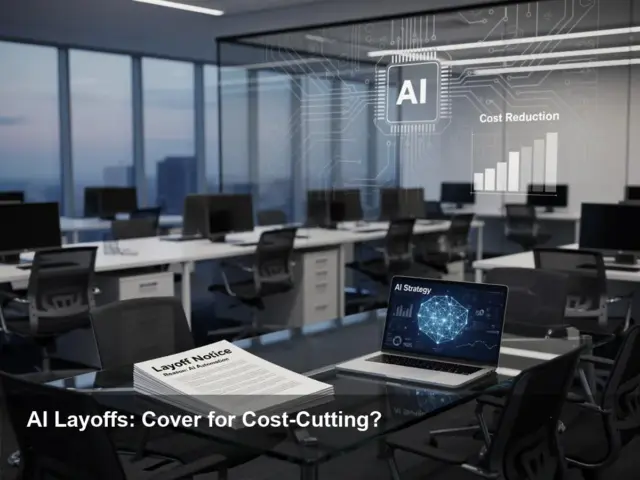
- Companies increasingly cite AI and automation as reasons for workforce reductions.
- Critics and labor advocates say automation is often used to justify cost-cutting, not full labor replacement.
- The debate raises questions about transparency, severance, and reskilling for affected workers.
- Workers should press for specifics, consider upskilling, and review severance and contract terms.
What companies are saying
Many corporations now explain layoffs as part of an “AI transformation” or a move toward automation. Executives frame these decisions as necessary modernization — investments in software and systems that reduce the need for routine roles. That narrative is compelling for investors: automation promises efficiency and future competitiveness.
Why critics see a different story
Labor advocates, former employees and some analysts argue the picture is more complex. They say companies sometimes use automation as a convenient public explanation for cost-cutting measures that would have happened anyway. The criticism centers on three patterns: vague explanations from employers, simultaneous investments in executive compensation or buybacks, and job cuts that precede or outpace actual automation rollouts.
Those who study workplace change point out that true automation — redesigning systems so machines do more of the work — typically takes time, pilot programs and additional spending on integration. Where layoffs are immediate and broad, skeptics question whether automation is the real cause or the preferred narrative.
Why this matters to workers and the job market
If AI is being used as cover, affected workers can face worse outcomes: smaller severance packages, reduced negotiating leverage and less transparent explanations about why roles were eliminated. The broader labor market may also suffer if companies keep cutting headcount while retaining the human know-how needed to run systems, leading to productivity or quality issues down the line.
At a policy level, the trend raises concerns about corporate accountability. Policymakers and worker advocates are asking for clearer reporting on automation-related savings and the timeline for replacing roles with technology — a transparency gap that can obscure whether layoffs were truly technology-driven.
Practical steps for employees
- Ask for specifics: When told a role is eliminated for “automation,” request a clear timeline and examples of what technology will replace the work.
- Review separation terms: Get severance in writing, consult a lawyer or labor representative where possible, and document job duties and handover instructions.
- Upskill strategically: Prioritize skills that complement AI (e.g., supervision of systems, judgment-based work, cross-functional communication) rather than only technical specialties that may be automated.
- Use social proof and networks: Talk to peers and industry groups — shared experiences can clarify whether a company’s story is consistent with broader trends.
Bottom line
Automation and AI are real forces reshaping work, but they are not a universal or immediate replacement for human labor. The current tension is between legitimate technological change and a narrative that can be used to mask routine corporate cost-cutting. Workers, advocates and regulators are pushing for better transparency so that any transition to automation is fair and clearly explained.
Image Referance: https://www.webpronews.com/the-ai-layoff-paradox-how-corporate-america-uses-automation-as-cover-for-cost-cutting/