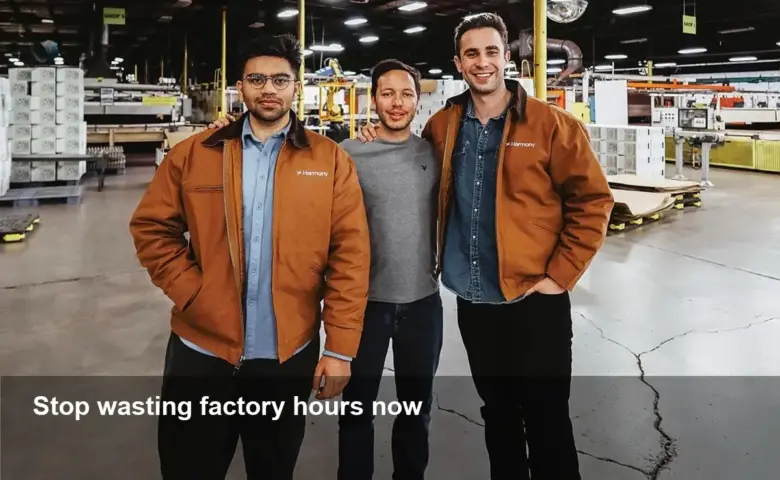
- Harmony merges factory data and AI to cut repetitive “grind” tasks and increase output.
- The startup was founded by George Munguia, Guillermo Sequeira and Vikranth Kanumuru.
- The platform turns sensor and operations data into real‑time recommendations and automated actions.
- Manufacturers face integration, quality and training challenges even as gains can be substantial.
What Harmony does
Harmony combines data from factory floor systems — sensors, PLCs, MES and operational logs — with machine learning to automate routine analysis and recommended actions. The result is less manual “grind” work: fewer spreadsheets, fewer hours spent chasing root causes, and faster, data‑driven decisions. The company was founded by George Munguia, Guillermo Sequeira and Vikranth Kanumuru.
Why manufacturers are paying attention
Manufacturers struggle with fragmented data and repetitive tasks: operators spend time compiling reports, engineers chase intermittent faults, and managers wait on reports to decide. Harmony’s approach aims to surface the right signals quickly and automate low‑value tasks so staff can focus on exceptions and improvements. That creates clear benefits: reduced downtime, higher throughput, and faster response to production issues.
How the AI and data tie together
Harmony ingests streams from factory equipment and historical records, applies models to detect patterns and anomalies, then converts those signals into actionable workflows. Those workflows can trigger alerts, schedule maintenance, or suggest operator steps — removing manual handoffs that slow production. Because the platform works across existing systems, it’s positioned as a bridge between legacy equipment and modern AI capabilities.
Realistic gains — and real risks
The potential upside is straightforward: fewer repetitive tasks, more productive engineers, and measurable output improvements. But companies should be cautious. Integration requires clean, reliable data; poor inputs make automated recommendations risky. Successful adoption also depends on retraining staff, updating operating procedures, and addressing cybersecurity for connected systems. Harmony’s promise addresses the upside, but manufacturers must manage these transition challenges.
Where this fits in the broader trend
Harmony is part of a wider move toward industrial AI and automation where software reduces routine labor and augments human decision‑making. For operations leaders, the question is no longer whether AI can help — it’s how quickly teams can integrate tools without creating new hidden work. Early adopters who get integration and training right may see the biggest benefits; late adopters risk falling behind.
What to watch next
Look for announcements about customer pilots, integrations with common MES/ERP platforms, and case studies showing downtime reduction or throughput gains. Also watch for how Harmony and similar firms handle data governance and operator workflows — those details will determine whether promised productivity lifts become reality.
Image Referance: https://www.timesfreepress.com/news/2026/feb/03/machine-minded-harmony-fuses-factory-data-and-ai/