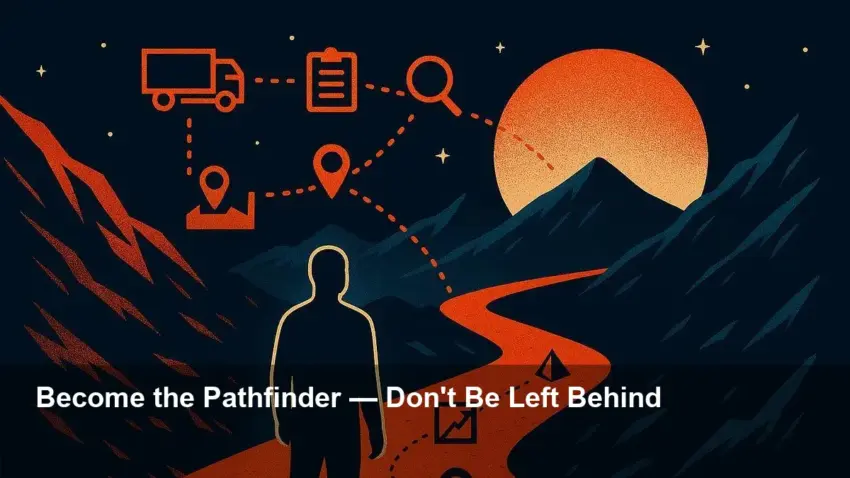
- AI will reshape supply‑chain roles; leaders who don’t adapt risk losing influence or relevancy.
- Pathfinders combine AI fluency, data strategy and cross‑functional pilots to capture value fast.
- Practical steps: build small experimentation teams, reskill workforce, measure outcomes, and partner with tech vendors.
Why AI changes the game for supply‑chain leaders
AI is moving from promise to practical use cases across demand forecasting, inventory optimization, logistics routing and exception detection. That shift means routine model‑driven decisions and tactical tasks will increasingly be automated. For executives, the risk is not a single technology replacing jobs but a gradual erosion of strategic influence if leaders fail to reframe their role around new capabilities.
Becoming a pathfinder: four practical moves
1. Speak the language of data and models
Executives don’t need to code, but they must understand what models can and cannot do: common failure modes, data dependencies, and where human judgment still matters. This helps you set realistic expectations with the board and reduce costly pilots that fail from scope or poor data.
2. Reorient strategy around outcomes, not tools
Translate AI investments into measurable business outcomes (reduced stockouts, faster order cycle times, lower expedited freight). Prioritize use cases that deliver quick, verifiable ROI to build momentum and social proof across the organization.
3. Build small cross‑functional ‘pathfinder’ teams
Create nimble teams that combine supply‑chain planners, data scientists, IT, and operations managers. Use them to run rapid experiments, validate assumptions in weeks, and document playbooks so successful pilots can scale without re‑inventing the wheel.
4. Reskill and redesign roles
Shift talent investment toward analytical and orchestration skills: scenario planning, supplier collaboration, exception management, and governance. Preserve institutional knowledge by pairing experienced planners with AI‑savvy analysts.
What to measure
Focus on outcomes that prove usefulness: forecast accuracy uplift, days of inventory saved, reduction in expedited shipments, and time to decision. Also track adoption metrics — how many planners use the AI outputs and with what confidence.
Quick actions to start this month
- Identify two high‑impact, low‑complexity use cases and scope 6–8 week pilots.
- Appoint an executive sponsor and a cross‑functional squad to run each pilot.
- Audit your data readiness: key gaps in product master data, demand signals, and lead‑time records.
Bottom line
AI will reshape supply‑chain roles, but it won’t eliminate the need for leaders who can translate technology into outcomes and organize teams to act on insights. Executives who become pathfinders — experimenting quickly, reskilling teams, and measuring real results — will expand their influence. Those who wait risk being marginalized as decisions shift to faster, more data‑driven teams.
Image Referance: https://www.thechain.media/p/supply-chain-executives-become-a?source=queue