- AI-driven tools are transforming recruitment workflows, but they are also creating new problems for employers and candidates.
- Automated screening and AI-generated applications are flooding hiring pipelines and hiding real talent.
- Employers face skill mismatches and process strain; jobseekers must adjust how they signal real ability.
What’s happening in 2026
A growing number of recruiters and applicants are feeling the strain as artificial intelligence tools become central to hiring. From resume-screening algorithms to AI-assisted candidate outreach, technology that promised speed and efficiency is introducing noise, bias and new failure modes into recruitment.
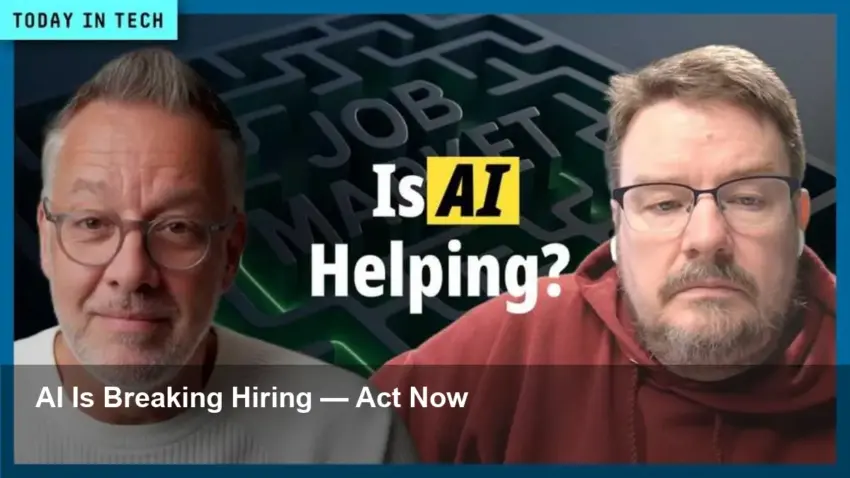
A recent Computerworld video explored these tensions, highlighting how both sides—hiring teams and jobseekers—are struggling to adapt. While the video focused on real-world examples, the broader trend is clear: automation is changing what counts as useful signals in hiring and creating fresh bottlenecks.
Why AI is causing strain
-
Automated screening amplifies volume: Applicant tracking systems (ATS) and AI parsers can allow many more applications to enter the funnel, but not all are meaningful. That increases time spent by recruiters filtering low-quality or AI-generated submissions.
-
Signal loss and false positives: AI can miss unconventional but qualified candidates and surface polished AI-written resumes that lack real experience, making it harder to separate true talent from noise.
-
Skill mismatch acceleration: Employers are accelerating demands for AI-related skills, sometimes listing broad or vague requirements, which both confuses applicants and shrinks the realistic talent pool.
-
Candidate experience and trust: Jobseekers report longer response times, more automated rejections and less human feedback—factors that increase ghosting and lower long-term employer brand value.
Why this matters
If hiring processes reward the wrong signals, companies risk missing talent, increasing turnover, and hiring for short-term checklist skills rather than long-term capability. For workers, relying on generic AI tools to prepare applications can reduce differentiation in a crowded market.
Practical steps for employers and jobseekers
For recruiters and HR teams
- Reintroduce human checks at critical stages: use AI to triage, but ensure humans evaluate ambiguous or high-potential profiles.
- Tune job descriptions: focus on core outcomes and essential skills rather than long lists of buzzword demands.
- Track quality metrics: measure hires’ performance and diversity post-hire to detect where AI is misfiring.
For jobseekers
- Signal concrete impact: use portfolios, project links and measurable outcomes rather than generic resume text.
- Personalize applications: tailored cover notes and specific examples help bypass automated over-filtering.
- Upskill deliberately: prioritize demonstrable skills employers actually use, and be ready to show work.
What to watch next
Expect recruiting tools and hiring policies to evolve quickly as employers respond to poor outcomes. Transparency, better measurement and hybrid human/AI processes will determine which organizations actually benefit—and which will watch talent slip away. The key takeaway: AI is changing hiring fast, and both sides must change faster to avoid being left behind.
Image Referance: https://www.computerworld.com/video/4126728/is-the-job-market-broken-in-2026-how-ai-is-straining-hiring-on-both-sides.html