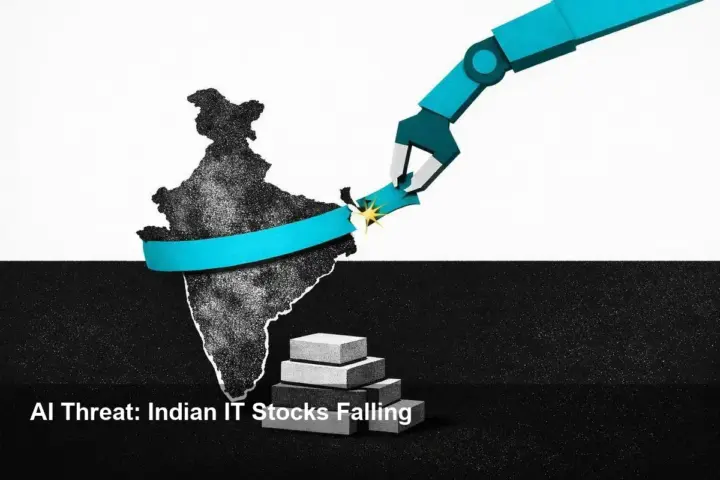
- Analysts warn AI tools could shrink demand for high‑margin app services in India.
- Investors pushed shares lower, but some experts say the selloff looks like panic pricing.
- Key indicators to watch: contract pricing, client renewals, guidance and AI adoption.
What happened
Markets moved quickly after analysts flagged that a wave of AI automation tools could undercut parts of India’s large, high‑margin application services business. The short description from market reports warned those services — a longstanding profit driver for many Indian IT firms — may face pricing pressure as automation reduces billable hours.
At the same time, other analysts and market commentators described the sudden share declines as an extreme reaction: “panic pricing” in a market that may be pricing in too much change too fast. The result is heightened volatility and fresh questions about how quickly AI will affect actual contracts and revenue streams.
Why this matters
Indian IT revenues have been driven for years by large volumes of application development and maintenance work sold at attractive margins. If AI tools automate routine tasks across coding, testing and maintenance, sellers could see reduced demand for labor‑intensive services and downward pressure on prices.
That matters because margins and predictable service contracts are core to Indian IT earnings models. A sustained move to lower‑priced automated solutions could compress margins, force margin reinvestment, or accelerate a strategic shift toward higher‑value offerings like cloud, cybersecurity, and consulting.
What analysts are saying
Analysts are split in tone. Many warn that AI will change service delivery economics and that companies that don’t adapt risk losing margin. Others caution that adoption is gradual — contracts, compliance, and client change management slow real disruption — so short‑term market reactions may overstate long‑term impact.
This mixed reading helps explain why some observers call the recent selloff a panic: investors may be pricing in immediate, full‑scale disruption rather than a multi‑year transition that plays out alongside new revenue streams and upgraded services.
Signals investors and companies should watch
- Contract renewals and pricing language: Are customers negotiating lower fees or demanding outcomes tied to automation savings?
- Company guidance and margins: Are firms reporting margin compression or increased investment in AI and reskilling?
- Deal mix: Is revenue shifting from traditional app services to cloud, platform, or IP‑led offerings?
- Client CIO statements and case studies: Are corporate clients publicly adopting automation at scale for tasks that previously generated billable hours?
Why it isn’t all doom
AI adoption also creates new opportunities: firms that productize automation, offer AI integration and governance, or move up the value chain into strategic consulting can capture higher‑value work. The near‑term risk is whether the market has correctly balanced the downside to legacy services with these potential offsets.
For now, investors should expect volatility and focus on company‑level indicators rather than headlines. For companies, the imperative is clear: accelerate AI strategy, protect lucrative revenue streams, and demonstrate how automation will translate into sustainable growth rather than just cost cuts.
Image Referance: https://finimize.com/content/ai-automation-spooked-indian-it-stocks