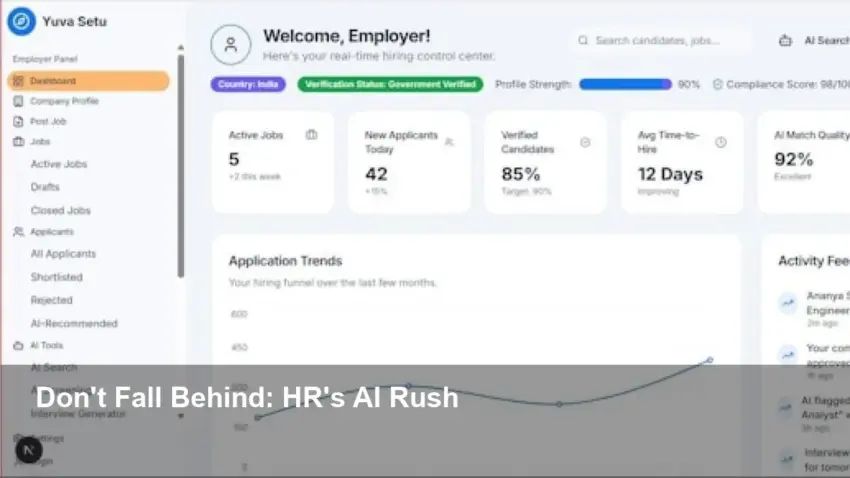
- AI is now treated as core infrastructure, forcing HR to change hiring, budgets and skills.
- HR leaders are prioritizing measurable business outcomes and reskilling over traditional headcount growth.
- Budgets are shifting to AI tools, vendor partnerships and training; governance and bias risk are rising.
- Fewer general hires, more AI-literate roles, and new KPIs tie talent investment to revenue and productivity.
AI as core infrastructure: what changed
Companies are moving AI out of pilots and into the backbone of operations. That transition turns AI from an experimental cost center into mission-critical infrastructure — and HR is in the hot seat. Instead of hiring to fill org charts, talent teams are redesigning roles, rewiring budgets and demanding measurable business returns from every hire and tool investment.
How HR is responding
Human resources leaders are focusing on three things: skills, outcomes and governance. Skills programs now prioritize prompt engineering, model oversight and data literacy. Outcome-oriented hiring means job descriptions emphasize measurable KPIs — productivity gains, time savings, or revenue attribution — rather than vague competencies.
Governance is also rising on HR agendas. With AI embedded in workflows, leaders must manage bias, compliance and vendor risk. That adds new budget lines for audits, third-party assessments and ethics training.
Where budgets are moving
Money is shifting from headcount expansion toward tooling, training and vendor partnerships. Expect larger allocations for:
- AI platforms and integrations that embed with core systems.
- Continuous learning programs to reskill existing staff quickly.
- External vendors for specialized AI capabilities and governance support.
This reshuffle can look painful: some teams freeze hiring for traditional roles while investing in upskilling programs and contractor models. The trade-off is deliberate — HR leaders say a smaller, AI-savvy workforce can deliver higher measurable impact than larger conventional teams.
Changes to hiring and career paths
Recruiting strategies are evolving. Generalist resumes are less compelling; recruiters prioritize candidates with demonstrable AI experience or a track record of working alongside automation. Internal mobility programs are becoming a core retention tool, enabling companies to redeploy talent into AI-adjacent roles rather than sourcing externally.
Why this matters for business results in 2026
The point of the shift is measurable impact. HR budgets are increasingly justified by clear links to business outcomes — reduced time to market, lower operating costs, improved customer satisfaction. Organizations that fail to tie talent investments to these metrics risk wasting budget or falling behind competitors who already measure ROI on AI-related hires.
Risks and next steps
The move is not without risks. Skills gaps, governance failures and runaway vendor costs can undercut benefits. HR leaders recommend rapid reskilling, tighter vendor controls and new metrics that connect talent moves to revenue and productivity.
For HR teams, 2026 will reward pragmatism: prioritize measurable outcomes, invest in skills and governance, and treat AI as infrastructure — or risk being outpaced by peers who already are.
Image Referance: https://mexicobusiness.news/talent/news/ai-push-reshapes-hr-strategy-budgets-hiring-practices