Key points
- AI and automation are changing the nature of jobs — not just tasks.
- The new concept of a “skillforce” calls for continuous reskilling and micro-credentials.
- Workers, employers and governments must adapt policies, training and hiring practices now.
- Urgency: without action, many roles will be reframed or displaced by 2026 and beyond.
2026: enter the ‘skillforce’
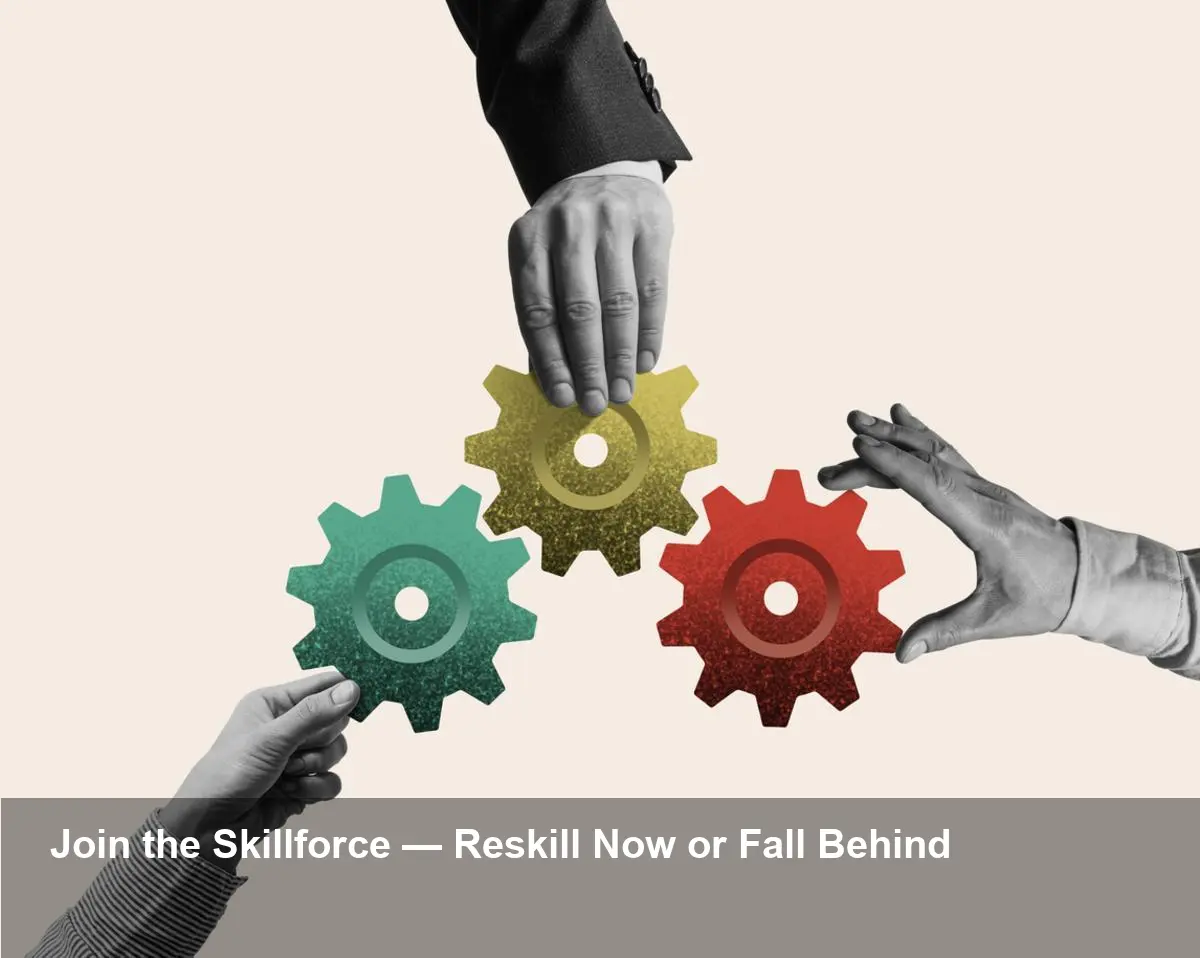
With the rise of AI and automation, the very definition of what it means to work is shifting beneath our feet, writes Asha Palmer. The emerging idea of a “skillforce” reframes labour around adaptable skills and continuous learning rather than static job titles. As machines take on routine tasks, human contribution will be defined by creativity, oversight, empathy and complex problem solving — but only for those prepared to adapt.
Why “skillforce” matters
The term captures a seismic shift: organisations will hire and deploy people for bundles of skills that can be mixed and matched across projects, teams and sectors. This move accelerates trends already visible in gig work, project-based contracting and technology-driven role redefinitions. Employers increasingly value demonstrable, up-to-date capabilities — often signalled by micro-credentials, badges and short-course certifications — over long-form degrees alone.
What workers face
Workers must expect more frequent transitions between tasks and roles. Traditional career paths that relied on tenure and a single qualification are giving way to portfolios of skills that must be refreshed regularly. This creates both opportunity — greater flexibility, multiple income streams, and new ways to showcase talent — and risk, particularly for people in roles heavy with automatable tasks.
Employer and policy response
Employers need to redesign hiring, learning and workforce planning: embed continuous learning in job design, offer modular training linked to business needs, and recognise micro-credentials. Governments and training providers must also move faster to fund accessible reskilling programs, align credentialing standards and support transitions with safety nets that reduce friction for displaced workers.
Practical steps to join the skillforce
- Audit your skills: identify which competencies are at risk of automation and which are irreplaceable.
- Invest in microlearning: short courses and industry badges that target high-demand skills.
- Build a skills portfolio: document outcomes, projects and credentials that demonstrate capability.
- Advocate at work: push employers for on-the-job training, rotation and credit for prior learning.
The bigger picture
The shift to a skillforce is not inevitable doom — it can be a generational opportunity if handled intentionally. But time is short. Workers who delay reskilling risk losing leverage; organisations that ignore skill-first design risk talent shortages; and policymakers who lag behind will face greater social and economic disruption. The message is clear: start building your place in the skillforce now.
By Asha Palmer
Image Referance: https://www.governmentnews.com.au/2026-enter-the-skillforce/