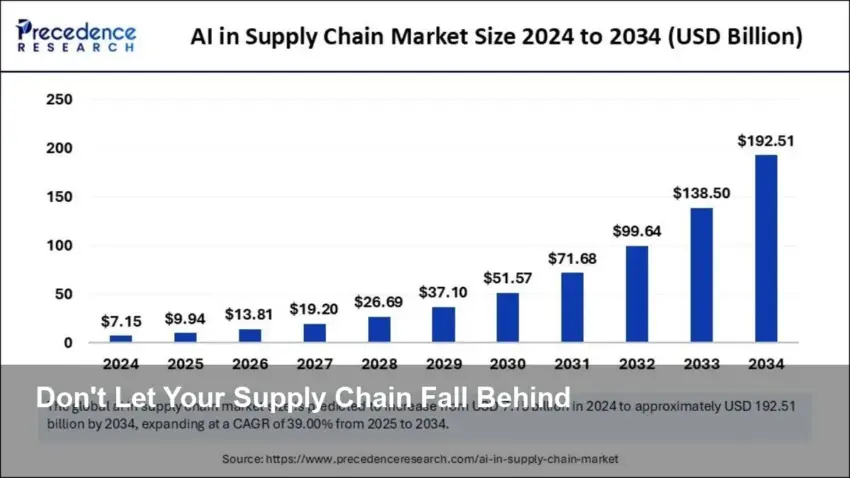
- AI and digital intelligence are shifting how companies forecast demand and route shipments.
- Automation and predictive analytics improve logistics efficiency and operational resilience.
- Sustainability gains come from optimized routing, inventory reduction and smarter sourcing.
- Firms that delay adoption risk higher costs, slower recovery from disruptions, and lost competitiveness.
Overview
Artificial intelligence (AI) and digital intelligence tools are increasingly central to modern supply chains. From demand forecasting to warehouse automation and dynamic routing, these technologies help businesses respond faster to disruptions, reduce waste, and run leaner operations. The change is not just efficiency gains — it reshapes decision-making across procurement, manufacturing and logistics.
How AI and Digital Intelligence Work in Supply Chains
At the core are predictive models and automation platforms that turn data into action. Machine learning improves demand forecasting by spotting patterns across sales, weather, promotions and supplier behavior. Digital twins — virtual models of physical supply networks — let planners simulate scenarios and test responses to shocks without risking real operations. Robotic process automation and autonomous vehicles streamline repetitive tasks in warehouses and transport.
What This Means for Forecasting, Logistics and Resilience
Forecasting becomes more continuous and granular. Rather than relying on static monthly forecasts, companies can use near-real-time signals to update plans, lowering stockouts and overstocks. In logistics, route optimization and capacity orchestration reduce transit times and fuel use. For resilience, AI-based risk monitoring can flag supplier instability or geopolitical exposure earlier, giving procurement teams time to pivot.
Sustainability and Cost Benefits
Digital tools often deliver sustainability wins as a byproduct of efficiency: fewer empty miles, smaller safety stocks, and smarter sourcing reduce emissions and material waste. Cost benefits appear through lower inventory carrying costs, better utilization of transport assets, and reduced emergency freight spend during disruptions.
Challenges and Practical Limits
Adoption is not without hurdles. Data quality and integration remain the biggest barriers — AI depends on clean, timely data from suppliers, carriers and internal systems. Legacy IT stacks, fragmented data standards, and organizational silos slow implementation. There are also change-management needs: teams must learn to trust algorithmic recommendations and work alongside automation.
What Companies Should Do Now
Start with high-impact use cases: demand forecasting, inventory optimization, and route planning typically pay back fastest. Invest in data hygiene and integration, and pilot digital twins or predictive analytics in one region before scaling. Build cross-functional teams that combine domain experts with data scientists so models align with real-world constraints.
Why It Matters
AI and digital intelligence are not a niche improvement — they’re becoming standard practice for companies that need speed, resilience and lower costs. Organizations that delay risk higher operating expenses and slower recovery when disruptions occur. For businesses aiming to remain competitive and sustainable, adoption is increasingly less optional and more strategic.
Image Referance: https://www.precedenceresearch.com/insights/reinventing-global-supply-chains-ai-digital-intelligence