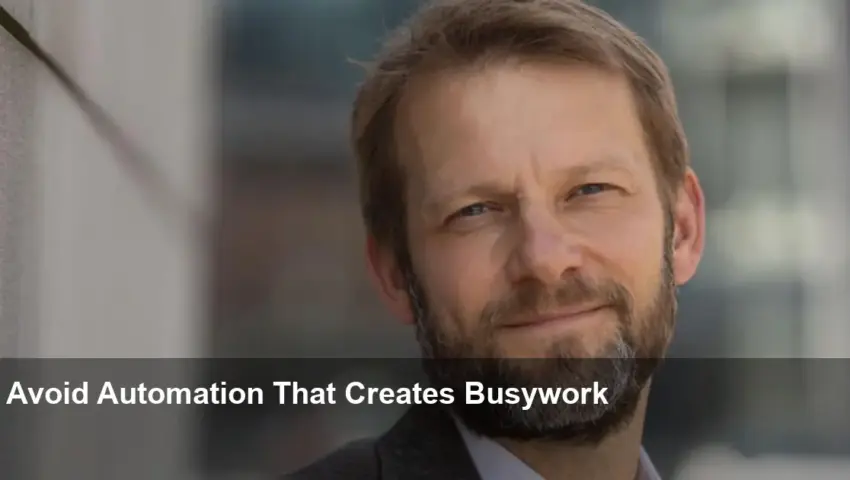
- AI can boost efficiency, but experts warn it may also create “pseudowork”: low‑value tasks that replace meaningful jobs.
- Pseudowork risks wasted time, lower morale and hidden costs if organizations fail to redesign roles.
- Firms that shift to outcome‑based metrics, reskilling and human‑in‑the‑loop oversight will capture AI benefits.
- Immediate action — job redesign, governance and training — is needed to avoid automation creating busywork.
AI gains are real — but so is the risk of ‘pseudowork’
AI systems are delivering clear efficiency improvements across industries, automating routine tasks and speeding decision cycles. But experts are increasingly warning about a counterintuitive risk: instead of freeing people for higher‑value work, automation can leave them with fragmented, administrative, or oversight tasks that add little real value — a phenomenon being called “pseudowork.”
Pseudowork shows up when core parts of a job are automated but the supporting human tasks remain — for example, constant verification of AI outputs, repetitive data‑cleanup, or managing exceptions created by automation. Those activities can consume time, create complexity and erode employee satisfaction even as headline productivity metrics improve.
Why this matters now
This issue matters because AI adoption is accelerating. Organizations that treat automation as a simple swap of human tasks for machine tasks risk replacing substantive roles with a stream of busywork. The result can be hidden costs: slower decision making, higher churn, and weakened innovation capacity. From a workforce perspective, meaningful work is a major driver of retention and engagement; turning roles into oversight pipelines risks damaging morale and long‑term talent supply.
There is also a strategic angle: companies that proactively redesign jobs and measure outcomes rather than activity will likely capture disproportionate benefits from AI. Others may see short‑term efficiency headlines but long‑term decline in employee productivity and creativity.
What organizations should do
- Redesign roles around outcomes: Focus job descriptions and performance metrics on decisions, customer outcomes and measurable impact rather than hours spent or microtasks completed.
- Invest in reskilling and career pathways: Train employees for higher‑value activities such as interpretation, exception handling, user experience and strategic decision making.
- Embed human‑in‑the‑loop oversight: Use humans where judgement, ethics and contextual awareness are needed, and automate safely with clear escalation protocols.
- Rebalance incentives and metrics: Replace activity tracking with value metrics — customer satisfaction, error rates, cycle time and business outcomes.
- Establish governance and guardrails: Create policies to prevent automation from shifting costs to workers and to monitor for degradation in work quality.
Looking ahead
AI will continue reshaping jobs. The immediate question for leaders is not whether to adopt automation but how to adopt it without hollowing out roles. Firms that act now — redesigning work, setting the right measures and investing in people — will avoid the trap of pseudowork and secure a real productivity dividend. Those that don’t risk creating busier employees, not better ones.
Image Referance: https://www.chosun.com/english/market-money-en/2026/01/22/P4OZIKDGZFEBBMDN4KVSBYJ7HU/