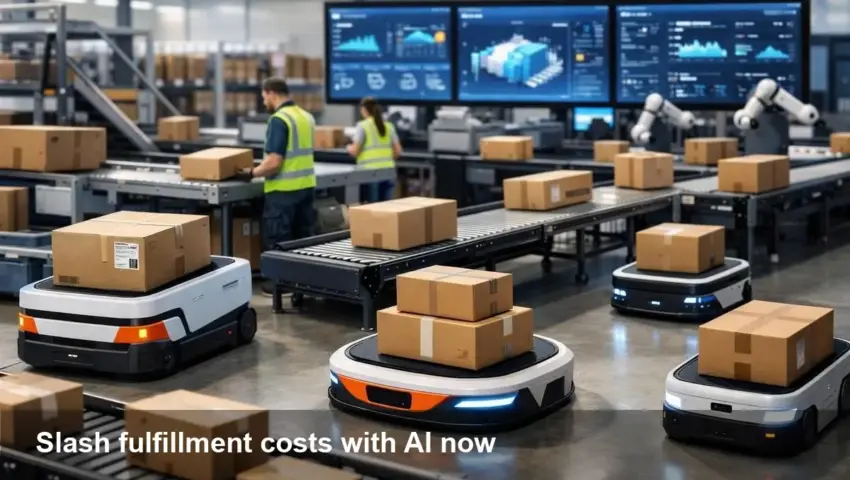
- AI-driven logistics platforms reduce fulfillment costs by optimizing routes, inventory and labor.
- Improved forecasting and automation speed deliveries and raise customer satisfaction.
- Adoption requires clean data, upfront investment and workforce planning to avoid pitfalls.
What’s happening
E-commerce sellers are turning to AI-powered logistics platforms to trim fulfillment expenses and improve delivery performance. These systems combine machine learning, predictive analytics and automation to make decisions that previously relied on manual processes or simple rules. The result: fewer wasted miles, tighter inventory control and faster order turnaround — all of which lower the per-order cost of fulfillment.
How AI cuts fulfillment costs
AI reduces expenses across several parts of the fulfillment chain:
- Route and carrier optimization: Machine learning models analyze historical and real-time data to choose the most cost-effective carriers and delivery routes, reducing fuel and transit time without sacrificing delivery windows.
- Demand forecasting and inventory placement: Predictive analytics help place inventory closer to demand, cutting last-mile costs and minimizing stockouts or overstock that tie up capital.
- Warehouse automation and picking: Computer vision, robotics and smart task allocation speed picking and packing while reducing labor errors and overtime.
- Dynamic slotting and labor scheduling: Platforms predict peaks and automatically assign staff to high-value tasks, lowering idle time and temporary labor costs.
- Returns handling: Automated triage and routing for returns reduce processing time and the cost of restocking or disposal.
These improvements compound across thousands of orders. Even modest per-order savings can translate into meaningful margin gains for large or fast-growing e-tailers.
Why it matters to e-tailers
Lower fulfillment costs have direct effects on pricing flexibility, margins and customer experience. Faster, more reliable delivery increases repeat purchases and reduces cost-to-serve. In a market where customers expect quick delivery, AI-driven logistics can become a competitive advantage that separates efficient sellers from those losing margin to logistics overhead.
Risks, trade-offs and what to watch for
AI is not a plug-and-play magic bullet. Key challenges include:
- Implementation and data quality: Models need clean, timely data. Poor data leads to bad predictions and higher costs.
- Upfront investment: There are integration, software and sometimes hardware costs before savings appear.
- Workforce impact: Automation can shift roles and require retraining; mishandled change creates operational disruption.
- Over-reliance on models: Markets and carrier conditions change; models must be monitored and adjusted to avoid costly errors.
Practical next steps for e‑tailers
Start with a focused pilot on a single fulfillment zone or product category to validate savings. Measure end-to-end metrics (cost per order, delivery times, return rates) and keep human oversight in the loop while models learn. Prioritize platforms that integrate with existing order management and carrier systems to reduce integration risk.
AI-driven logistics is increasingly mainstream because it addresses the largest variable in e-commerce profitability: fulfillment. For e-tailers, the choice is simple in theory — experiment now or risk falling behind competitors who are already using AI to lower costs and improve service.
Image Referance: https://oakhillgazette.com/ai-logistics-fulfillment-costs/