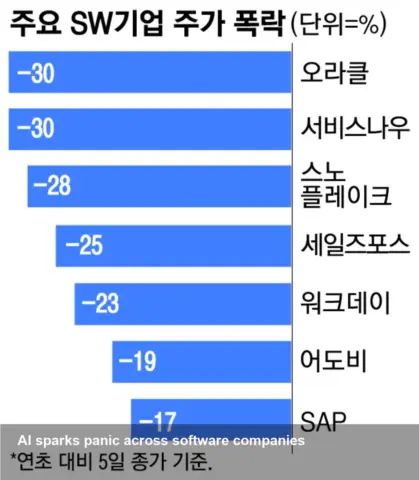
- Anthropic introduced new AI automation tools that have sent shockwaves through the New York stock market, according to reports.
- Investors reacted quickly, heightening fears that automated AI services could undercut traditional software businesses.
- Analysts say the move may reshape which software companies thrive — those that adopt AI, and those that don’t.
What happened
Reports say the New York stock market was caught up in a strong whirlwind after Anthropic unveiled new AI automation tools. The announcement triggered immediate concern among investors and market observers that AI-driven automation could sharply reduce demand for some kinds of existing software products and services.
Why investors are worried
The core fear is straightforward: automation replaces tasks. When AI can perform routine development, integration or operational tasks more cheaply and quickly, margins for traditional software vendors can compress. For public companies, that prospect can translate into lower future revenue expectations and faster valuation declines — which is likely what drove the market reaction described in the report.
How this could reshape the industry
While mechanistic jobs are most exposed, the ripple effects go further. Buyers — enterprise IT teams and product leaders — may rethink spending patterns, favoring AI-native offerings or platforms that bundle automation services. That creates pressure on incumbent vendors to either integrate similar AI capabilities or pivot toward higher-value, human-led services such as bespoke implementations, consulting and compliance-focused offerings.
What companies and leaders are likely to do next
Industry responses typically fall into three paths: adopt, specialize, or exit. Many software firms will accelerate AI integration into their products to preserve pricing power. Others will double down on specialized domains where human expertise remains critical. And some smaller players may become acquisition targets as larger firms buy capabilities rather than build them.
Market and workforce implications
The immediate market response signals investor uncertainty, not inevitability. Past technology shifts have eliminated some companies while creating new leaders. For workers, automation often changes job content more than eliminates roles outright — though some roles are likely to shrink or be re-skilled.
What to watch next
Key indicators to monitor include: share prices of public software firms, acquisition activity, product road maps emphasizing AI functionality, and any public statements from enterprise customers about procurement shifts. These will show whether the market reaction is a short-term shock or the start of a longer structural change.
For now, the report captures a moment of heightening fear and rapid reassessment: a reminder that major AI developments can quickly alter market sentiment and force companies to adapt — or risk being left behind.
Image Referance: https://www.mk.co.kr/en/it/11956152