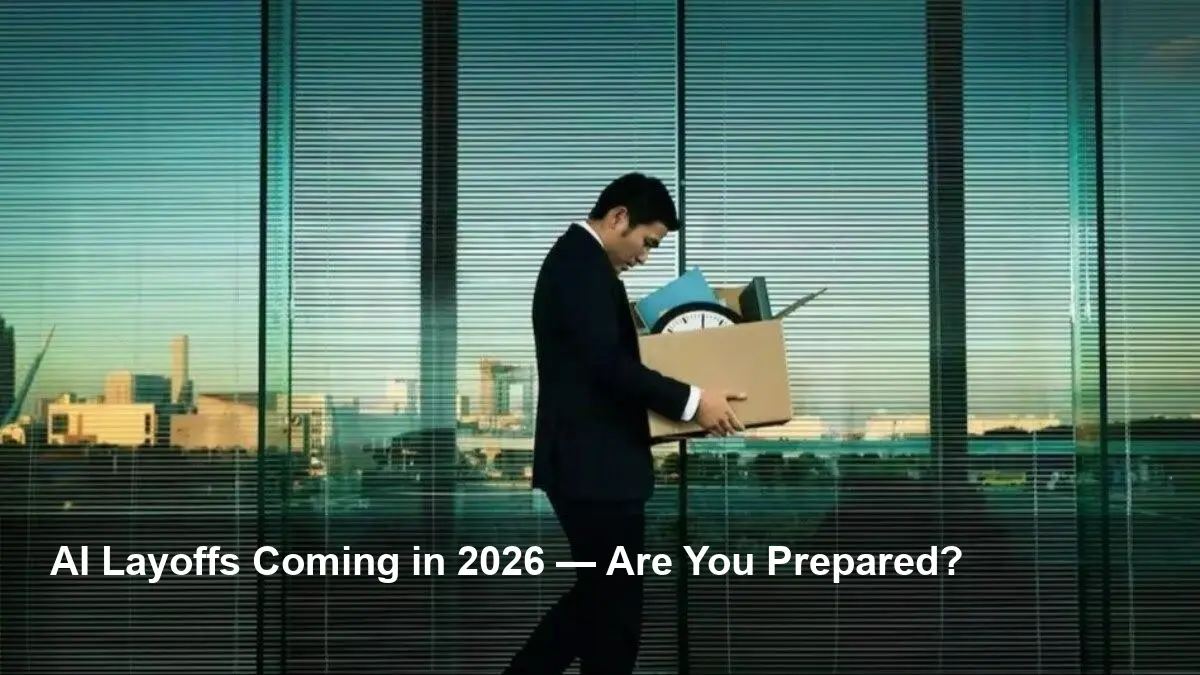
- Goldman Sachs warns 2026 could bring a fresh wave of AI-led layoffs.
- Companies increasingly choose automation to permanently reduce employee costs rather than expand headcount.
- The shift is driven by cost-cutting priorities, not only productivity gains, putting back-office and routine roles at highest risk.
Goldman Sachs: Automation Over Hiring — A 2026 Warning
Why firms prefer machines to new people
Goldman Sachs’ recent research highlights a growing corporate preference for automation as a long-term cost-reduction strategy. Rather than using technology to augment expanding teams, many firms are deploying AI and software to replace roles previously filled by human workers. The result: fewer new hires and a structural shift toward permanently lower employee-related expenses.
Cost first, growth second
The report frames the change not primarily as a search for higher productivity but as a deliberate move to lock in lower labor costs. Companies that once tolerated higher headcount during growth phases are increasingly focused on the predictability and permanency of automation savings. That reorientation increases the risk of job losses becoming recurring rather than one-off events.
Who’s most at risk?
Goldman Sachs points to routine, repeatable functions as the most vulnerable: back-office processing, basic data entry, transaction monitoring, and some customer-service tasks. These roles are often the first target for automation because they are easier to standardize and scale with software and AI tools.
Not just tech firms
This is not a phenomenon confined to Silicon Valley. Financial institutions, large retailers, professional services firms and other organizations with high volumes of repetitive tasks are also among those likely to favor automation. The report warns that the adoption pattern could trigger another round of workforce reductions as early as 2026.
What this means for workers and employers
For workers: the key takeaway is that job security increasingly depends on non-routine skills — complex judgment, cross-functional collaboration, creative problem solving and AI oversight. Upskilling and reskilling programs will be critical for those in vulnerable roles, while career mobility toward higher-value tasks will become a major asset.
For employers: the Goldman Sachs analysis serves as a reminder to balance short-term cost savings with long-term organizational health. Rapid automation without investment in transition pathways and human capital risks eroding morale and institutional knowledge.
Preparing for the wave
Practical steps recommended for businesses and workers include auditing roles for automation risk, investing in retraining, designing humane transition policies, and prioritizing roles where human judgment materially adds value. For employees, proactively developing skills around AI tools, data literacy and interdisciplinary problem solving can reduce vulnerability.
Bottom line
Goldman Sachs’ warning is a confirmation of a broader trend: firms are increasingly using technology to reduce permanent employee costs, not just to grow. If the pattern holds, 2026 could bring renewed, AI-related job disruption — and both organizations and workers should act now to prepare.
Image Referance: https://www.businesstoday.in/technology/news/story/automation-over-hiring-goldman-sachs-report-explains-why-2026-could-see-another-wave-of-ai-led-layoffs-509334-2026-01-04