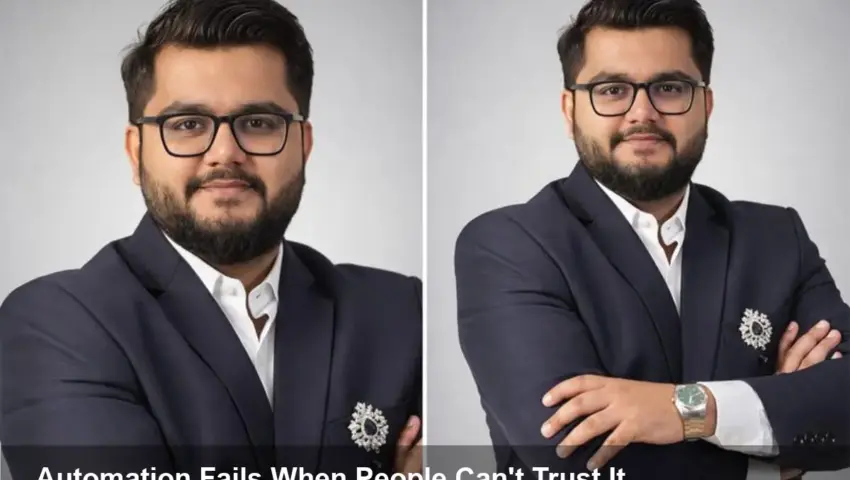
- Prashant Shekhar, founder of Quick Automation, says the problem with automation isn’t tools — it’s systems people can’t rely on.
- Shekhar, a Bengaluru-based computer science engineer with a background in software development and data science, pushes a “human-first” standard for AI-era operations.
- He argues companies must design automation that earns trust, or AI investments will underdeliver.
What Shekhar is arguing
Prashant Shekhar, the founder of Quick Automation, has a clear, contrarian thesis: most companies don’t stumble because they lack AI tools or platforms. They fail because they never build systems that people can truly rely on. Based in Bengaluru and trained as a computer science engineer with experience in software development and data science, Shekhar frames the challenge as one of trust and operational design rather than technology scarcity.
Why this matters now
The AI era has flooded teams with new capabilities — from low-code automation to advanced machine learning — but sheer availability of tools has not guaranteed better outcomes. When automation behaves unpredictably, lacks clear ownership, or breaks common workflows, users revert to manual workarounds. That destroys ROI, slows adoption and leaves projects labelled as “failed automation” despite the presence of sophisticated tools.
This is the key danger Shekhar highlights: investing in technology without designing for human trust and reliable operations creates brittle systems that fail when real work gets messy.
How a human‑first standard shifts focus
A human-first approach reframes success metrics. Instead of counting integrations or models deployed, it measures whether people can depend on automation day-to-day. Practical elements include:
- Clear ownership and accountability for automated processes.
- Predictable behaviour and transparent error handling so users know what to expect.
- Simple, reversible workflows that allow people to intervene safely.
- Continuous monitoring and feedback loops so the system improves with real use.
These principles are not specific product features but cultural and operational standards that influence how tools are chosen, configured and supported.
What companies should watch for
Leaders buying automation should beware of two common traps: mistaking feature breadth for reliability, and assuming users will adapt without support. Instead, prioritize pilots that prove trustworthiness under real conditions, involve everyday users in design, and set up fallbacks so work doesn’t stop when automation fails.
Implications for the market
If Shekhar is right, the next wave of successful automation vendors and internal teams will be those that treat reliability and human adoption as first-class design goals. That will favour products and processes that are explainable, observable and easy for teams to rely on — not necessarily the flashiest or most complex.
About Prashant Shekhar and Quick Automation
Shekhar is a Bengaluru-based entrepreneur and computer science engineer with a background in software development and data science. As founder of Quick Automation, he advocates for operational standards that keep people at the center of automation design, arguing that trustworthiness — not tool count — determines whether automation succeeds.
Image Referance: https://www.tribuneindia.com/news/business/quick-automation-founder-prashant-shekhar-sets-a-human-first-standard-for-ai-era-operations/amp