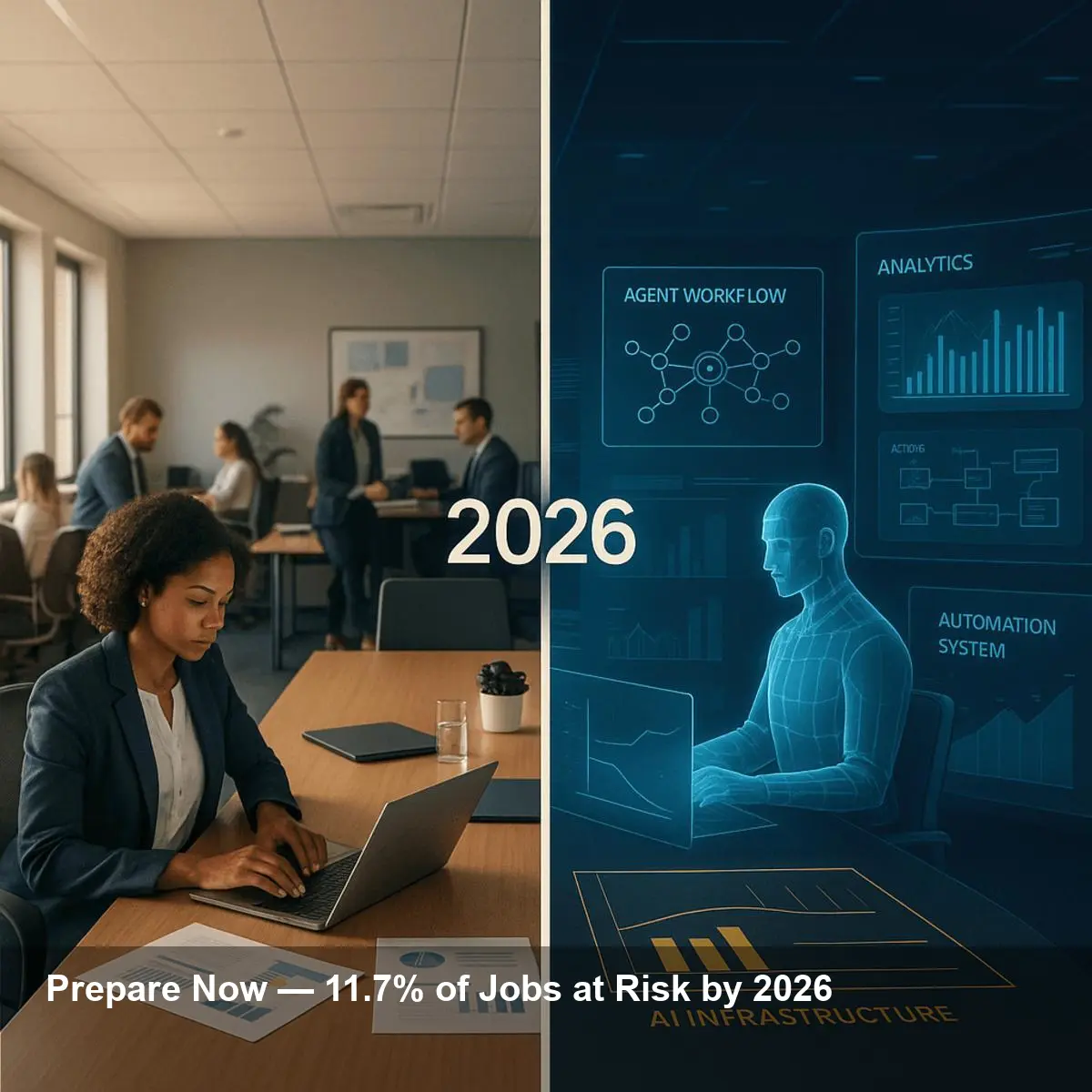
- Investors and enterprise VCs predict a sharp acceleration of AI-driven labor displacement in 2026.
- Analysts estimate 11.7% of jobs globally face significant automation risk as AI budgets reallocate hiring funds.
- Venture capital priorities and enterprise AI spend are expected to shift headcount plans, increasing layoffs and hiring freezes.
- Experts urge companies and workers to accelerate reskilling and strategic planning to avoid disruption.
Investors Say 2026 Will Bring an Inflection Point for AI and Jobs
VCs expect hiring budgets to be siphoned by AI investments
Enterprise venture capitalists and other investors are warning that 2026 could be the year AI initiatives meaningfully pull resources away from traditional hiring. According to investor forecasts, companies increasing AI budgets are likely to divert funds that would otherwise go to new headcount — a shift that could accelerate labor displacement across multiple sectors.
Magnitude of the risk: 11.7% of jobs vulnerable
Recent estimates highlighted by investors place roughly 11.7% of jobs at tangible risk of automation. While not every position will disappear overnight, investors say the combined effect of new AI systems, productivity tools, and automation rollouts will compress hiring growth and prompt workforce restructuring.
How investor behavior influences corporate labor decisions
Investors’ signal to prioritize AI ROI is already influencing management decisions. When funders emphasize software-driven efficiency gains, companies often respond by reallocating budgets to product and engineering priorities, slowing or pausing hiring in roles that automation can address. The result: fewer new positions, more investments in AI platforms, and a faster path to displacement for routine tasks.
Which workers and sectors may feel it first
Jobs with repetitive, rules-based workflows — such as certain administrative, entry-level data, and transactional roles — are most exposed. Sectors with high digital maturity and quick AI adoption cycles, including finance, customer service, and parts of professional services, could see accelerated impacts.
What businesses and workers should do now
For companies
- Reassess talent strategies to balance AI investment with human capital needs.
- Prioritize transparent communication and retraining programs for at-risk employees.
- Evaluate redeployment opportunities where human oversight and creativity remain essential.
For workers
- Invest in reskilling and upskilling, especially in AI-adjacent and creative problem-solving skills.
- Monitor hiring trends in your industry and pivot to roles emphasizing judgment, leadership, and complex interpersonal skills.
Looking ahead
Investors’ predictions of an acceleration in 2026 serve as a warning and a call to action. Companies that plan thoughtfully and invest in workforce transitions may ride the AI wave without severe disruption. Workers who proactively adapt will improve their chances of staying competitive in a rapidly changing labor market.
Image Referance: https://www.techbuzz.ai/articles/investors-predict-ai-labor-displacement-accelerates-in-2026