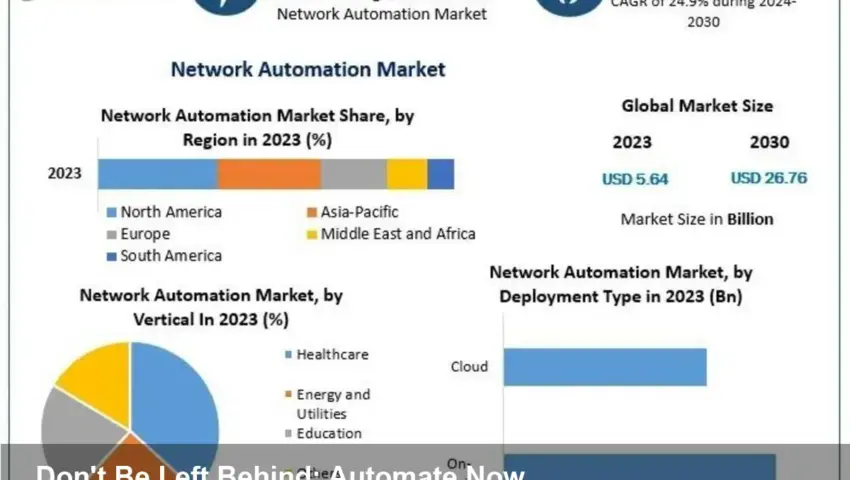
- Network automation market is rising, driven by AI, 5G rollouts and cloud-native architectures.
- AI enables predictive operations and faster provisioning; 5G creates scale and complexity that push automation.
- Cloud solutions and virtualization make centralized orchestration easier but introduce integration and security challenges.
- Enterprises and operators that delay automation risk higher costs, slower service delivery and competitive disadvantage.
What happened
A recent press release from MAXIMIZE MARKET RESEARCH PVT. LTD highlights a clear uptick in demand for network automation tools and services. The report points to three converging forces — artificial intelligence, 5G deployments and cloud-native architectures — as the primary drivers reshaping how networks are designed, operated and monetized.
Why AI, 5G and cloud matter
AI is being embedded into network management to predict outages, automate routine fixes and optimize traffic in real time. That reduces manual effort and shortens mean time to repair, making operations more cost-efficient.
5G brings vastly greater device density, lower latency expectations and new services such as network slicing. Those technical requirements make manual configuration impractical at scale and raise the urgency for automated orchestration and intent-based networking.
Cloud and virtualization shift control plane and management functions away from discrete hardware toward software and centralized orchestration platforms. That consolidation simplifies lifecycle management and enables continuous delivery of network functions, but it also increases dependence on APIs and integration across diverse vendors.
What this means for businesses and operators
Organizations that adopt automation can expect faster service rollout, improved resource utilization and tighter alignment between network behavior and business objectives. Telecom operators in particular view automation as essential to monetize 5G services and to reduce operational expenses associated with increasingly complex infrastructures.
However, adoption is not without pitfalls. Legacy environments, fragmented toolchains, a scarcity of skilled automation engineers and gaps in operational security can slow deployments and increase risk. The press release warns that integration challenges and talent shortages remain key hurdles for widespread adoption.
Risks and challenges to watch
- Integration complexity: Multiple vendors, proprietary interfaces and inconsistent APIs complicate end-to-end automation.
- Skills gap: Teams need software, cloud and data-science capabilities in addition to networking expertise.
- Security and compliance: Automated systems can amplify misconfigurations unless governance is strong.
- Vendor lock-in: Rapid consolidation and proprietary platforms may limit flexibility for enterprises that don’t plan for portability.
What to look for next
Expect continued investment in AI-driven assurance, open-source orchestration frameworks, and partnerships between cloud providers and network vendors. Market momentum suggests automation will become a baseline expectation for modern networks; organizations that delay risk slower innovation and higher operating costs.
While the press release frames the market as a clear growth story, businesses should weigh both the efficiency gains and the operational risks when planning automation roadmaps.
Image Referance: https://www.openpr.com/news/4361576/network-automation-market-surge-ai-5g-and-cloud-solutions