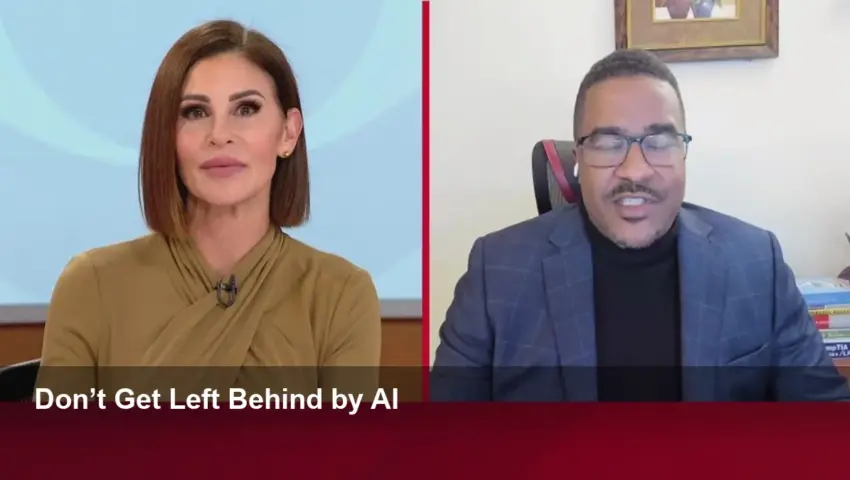
- Amazon could announce another round of layoffs as early as this week after cutting 14,000 jobs in October, partly due to AI.
- An AI automation expert highlighted the types of skills that are hardest for AI to replace.
- Workers can protect careers by combining technical know‑how with creativity, social intelligence and complex judgment.
What happened and why it matters
A recent report shows Amazon cut about 14,000 jobs in October, a move company leaders partly attributed to automation and AI. According to short‑form coverage of the topic, Amazon could announce another round of layoffs as early as this week. That combination of high‑profile cuts and rapid AI adoption is sharpening a very practical question for millions of workers: which skills are likely to remain valuable when machines get better at routine tasks?
Which skills are genuinely AI‑proof
In a CBS8 segment on the issue, an AI automation expert explained the broad categories of abilities that are most resistant to automation. While no skill is absolutely safe forever, employers and experts consistently point to several types of human strengths:
1. Complex problem solving and judgment
AI can optimize within known patterns, but humans still lead when problems require contextual judgment, moral choices, or the handling of ambiguous information.
2. Creativity and original idea generation
Generating novel concepts, crafting strategy, art, storytelling and conceptual leaps are areas where human imagination still outpaces current AI systems.
3. Social and emotional intelligence
Roles that rely on persuasion, negotiation, empathy and relationship building — such as senior leadership, counseling, or high‑level sales — are difficult for AI to replace.
4. Cross‑disciplinary and systems thinking
Combining knowledge from different fields to design systems, foresee consequences or create new business models requires integrative thinking that AI struggles to replicate reliably.
What workers should do now
If another round of layoffs arrives, people with narrowly defined, routine skills will be most exposed. To reduce risk, experts recommend:
- Build AI literacy: understand how AI tools work and how to use them to augment your work.
- Layer skills: combine technical capabilities (data, tools) with human skills (communication, leadership, creativity).
- Focus on adaptability: learn to reapply your expertise in new contexts and industries.
- Invest in continuous learning: short courses, mentorship and on‑the‑job projects that stretch judgment and collaboration.
Why employers care
Companies like Amazon are streamlining operations with automation to stay competitive. That creates pressure on roles that are repetitive or narrowly defined, but it also creates demand for people who can design, manage and improve AI‑enabled systems. Workers who can partner with AI — not just be replaced by it — will be in higher demand.
Takeaway
The immediate threat of layoffs is real for some workers. The safer path is to develop a blend of technical familiarity and distinctly human skills: creativity, complex judgment and emotional intelligence. Those skills won’t make you invincible, but they greatly increase your chances of staying relevant as AI reshapes the job market.
Image Referance: https://www.cbs8.com/video/news/community/cbs8-guests/ai-automation-expert-explains-what-skills-are-ai-proof/509-d8e480ff-0686-431e-a1a8-48bf8406a0de