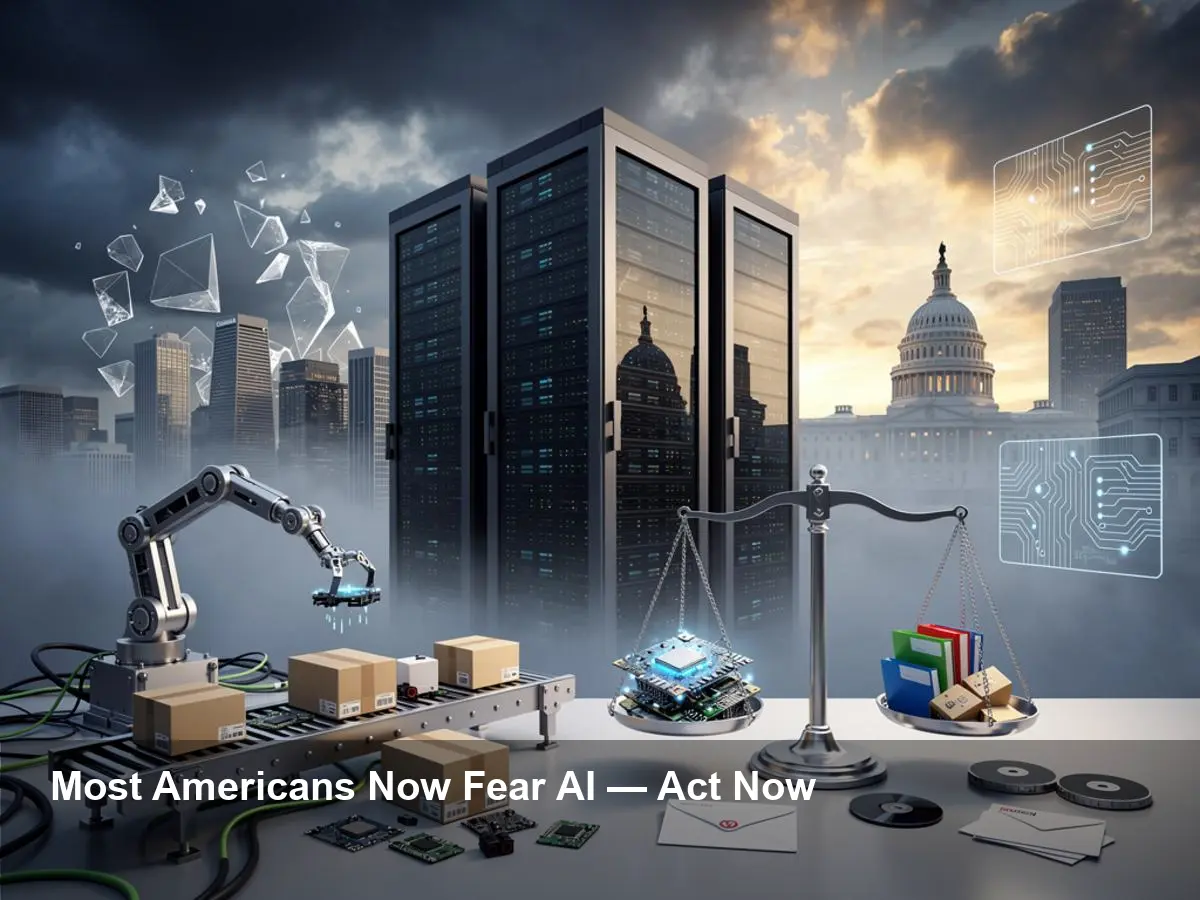
- Most Americans are deeply skeptical of artificial intelligence in 2026, citing job loss, ethical risks, and inadequate safeguards.
- Widespread distrust centers on companies and regulators; many demand stronger rules, transparency, and retraining programs.
- Concerns focus on bias, privacy breaches, and AI’s potential to worsen inequality — calls for immediate action and oversight are growing.
Americans’ 2026 AI Skepticism: Jobs, Ethics, and a Call for Regulation
Public mood: fear and mistrust
A recent national snapshot of public opinion in 2026 finds that Americans are more skeptical about artificial intelligence than ever. Rather than excitement about new tools, the dominant public reaction is caution — and for many, outright fear. Voters and workers alike are worrying that AI’s rapid spread could cost livelihoods, deepen social harms, and operate without sufficient oversight.
Primary worries: jobs, bias, and privacy
Job displacement sits at the top of the list. Many respondents said they feared automation would replace tasks or entire roles, especially in industries already vulnerable to digital disruption. Beyond employment, ethical concerns loom large: bias in AI decision-making, misuse of personal data, and the opacity of systems that increasingly influence housing, hiring, and healthcare.
Distrust of corporations and regulators
Distrust is widespread — not only toward large technology companies seen as prioritizing speed and profit, but also toward government bodies perceived as slow to act. Many Americans told pollsters they do not believe current safeguards adequately protect consumers, and some said companies cannot be trusted to self-regulate.
Demand for strong, enforceable rules
The public mood has translated into clear policy preferences: a majority want enforceable standards, independent audits, and transparency requirements for AI systems affecting safety-critical decisions. Popular proposals include mandatory bias testing, strict limits on consumer data use, and clear liability rules when AI causes harm.
What people want: support, retraining and transparency
Respondents did not just voice objections — they also offered solutions. Many support government-backed retraining and education programs to help workers transition to new roles. There is strong appetite for transparency measures so people can understand when and how AI affects decisions about them. Calls for independent oversight bodies and faster regulatory action are gaining traction.
What this means for policymakers and businesses
For lawmakers, the message is clear: delay risks public backlash. Businesses face a dual challenge — reassure a wary public while continuing to innovate. Those that proactively adopt transparent practices, invest in safety testing, and support worker transition programs may gain public trust and a competitive edge.
Bottom line
In 2026, AI is no longer just a technological promise — it is a social flashpoint. The prevailing public sentiment favors caution, concrete protections, and urgent policy responses to ensure AI benefits are widely shared and its harms are limited.
Note: No embedded social media posts or YouTube videos were found in the source content provided for this summary.
Image Referance: https://www.webpronews.com/americans-deep-ai-skepticism-in-2026-job-fears-ethics-and-regulations/