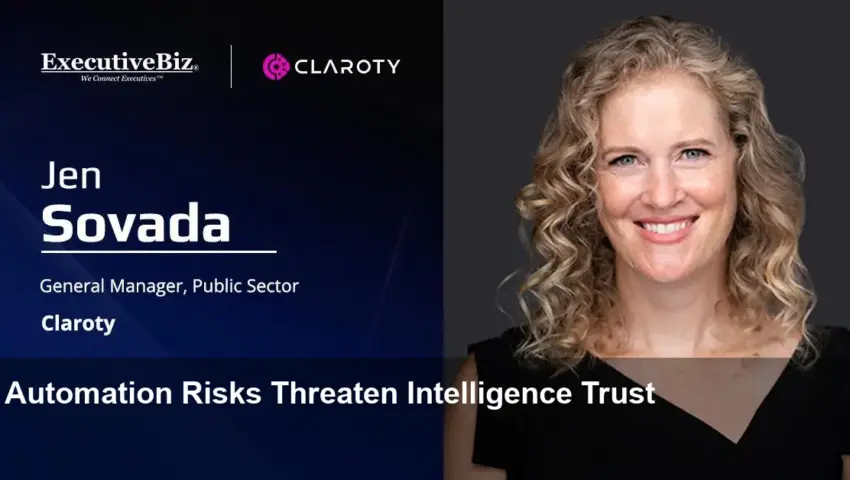
- Jen Sovada, Claroty’s general manager for public sector, warned about automation risks in intelligence.
- She specifically raised concerns about AI-generated narratives and their potential to distort analysis.
- The warning signals a need for stronger human oversight, provenance checks and verification in intelligence workflows.
Claroty exec raises alarms on automation and AI narratives
Jen Sovada, general manager for the public sector at Claroty, has issued a warning about the growing risks automation poses to intelligence work. In particular, Sovada cautioned against overreliance on AI-generated narratives — structured outputs from automated systems that can sound authoritative but may be misleading.
What Sovada warned and why it matters
Sovada’s warning highlights two related concerns: the automation of analysis and the unchecked distribution of AI-produced summaries or narratives. When automated tools generate conclusions or stitch together data into a single explanatory story, errors can be amplified and hard to spot. That creates the risk that decision-makers accept flawed intelligence because it appears complete and confident.
This is especially consequential in public sector and critical infrastructure contexts where Claroty focuses: flawed conclusions can lead to misdirected responses, overlooked threats, or misplaced trust in systems that lack human validation.
How AI-generated narratives can mislead
AI-generated narratives often present synthesized information in fluent, persuasive language. But fluent language is not the same as verified fact. Without clear provenance — where data came from, which models were used, and what assumptions were applied — narratives can:
– Obscure uncertainty
A narrative can eliminate the caveats and conditional language analysts usually attach to raw findings, creating a false sense of certainty.
– Amplify errors
If a model is trained on biased or incomplete data, its outputs will reflect those gaps and biases, and automation can spread those mistakes quickly across an organization.
– Reduce human skepticism
As tools become more polished, people may begin to accept generated conclusions without sufficient verification, increasing downstream risk.
Recommended guardrails and next steps
Sovada’s warning implies practical steps organizations should consider: maintain human-in-the-loop review for critical decisions, document data provenance and model limitations, implement verification and cross-checking processes, and educate users about the limits of automated outputs. These are not inherently anti-automation steps; rather, they aim to make automation safer and more reliable.
Bottom line
The rapid adoption of automation and AI in intelligence workflows offers real efficiency gains — but Sovada’s message is a reminder that gains come with risk. Clear provenance, human oversight and verification practices are essential to prevent AI-generated narratives from misleading analysts and decision-makers.
Image Referance: https://www.executivebiz.com/articles/claroty-jen-sovada-ai-automation-intel-risks