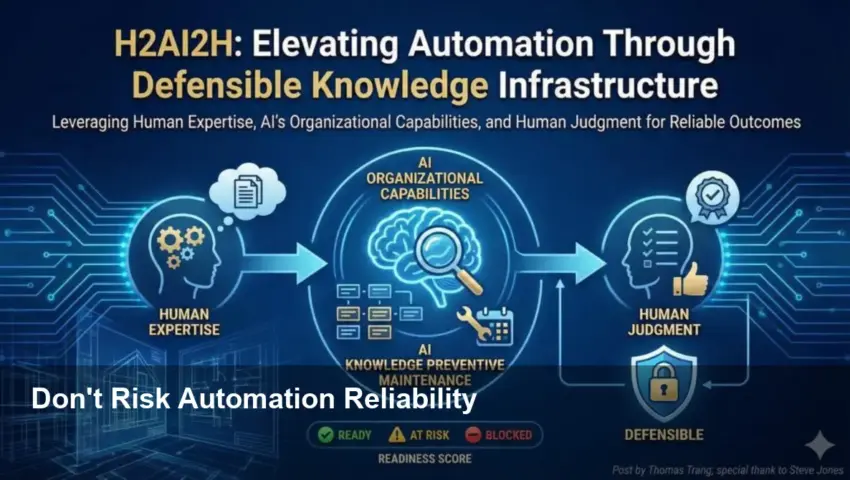
• H2AI2H stands for Human → AI → Human, prioritizing human expertise around AI-driven actions.
• The real value in AI for building automation is operational reliability, not only faster processes.
• A defensible knowledge infrastructure provides traceability, governance, and auditable decisions for safe deployments.
What H2AI2H means for building automation
H2AI2H — Human to AI to Human — reframes how AI should operate inside building automation systems. Instead of treating AI as an invisible efficiency layer, the model places human expertise at both ends: humans train and guide AI, and humans receive, validate, and act on AI outputs. This framing shifts success metrics from raw speed to reliability, safety and long‑term operability.
Why a defensible knowledge infrastructure matters
A defensible knowledge infrastructure is a practical set of practices and systems that make AI decisions explainable, auditable and repeatable. For buildings, that means:
- Traceability: recording what data, models and rules led to an action.
- Provenance: documenting sources and versions of models and datasets.
- Governance: clear policies for model updates, approval workflows and rollback.
Together these elements protect against unexpected behavior, support troubleshooting, and create a record for operators and stakeholders.
Operational impacts and risks
When AI is deployed without a human‑centred, defensible layer, buildings risk incorrect control decisions, hidden performance degradation and longer outages. Prioritizing H2AI2H reduces these risks by keeping humans in the loop for edge cases and by enabling operators to trust — and verify — automated decisions. For facility managers and system integrators, that trust translates into fewer firefights, clearer maintenance priorities and better vendor accountability.
Practical steps to implement H2AI2H
- Map human expertise: identify where operator knowledge is essential and document decision rules.
- Curate training data: ensure datasets reflect real building conditions and annotate edge cases.
- Build traceability: log model inputs, outputs and the human approvals that follow.
- Version and test models: keep controlled release processes and rollback plans.
- Add explainability: surface reasons for AI recommendations so operators can assess them quickly.
- Continuous feedback: capture operator corrections to improve models while preserving audit trails.
What this means for vendors and operators
Vendors should package AI features with the supporting infrastructure — logging, explainability tools, and governance — rather than selling raw models alone. Operators and owners should demand evidence of defensibility: documented workflows, clear change control, and the ability to interrogate AI decisions. This social proof of reliability will increasingly determine which solutions are adopted at scale.
H2AI2H is less a single technology than a design principle: put humans and defensible knowledge structures at the center of automation so buildings are not merely faster, but consistently reliable and safe. Prioritizing that shift will shape which AI deployments succeed in real operational contexts.
Image Referance: https://www.automatedbuildings.com/2026/01/h2ai2h-elevating-automation-through-defensible-knowledge-infrastructure/