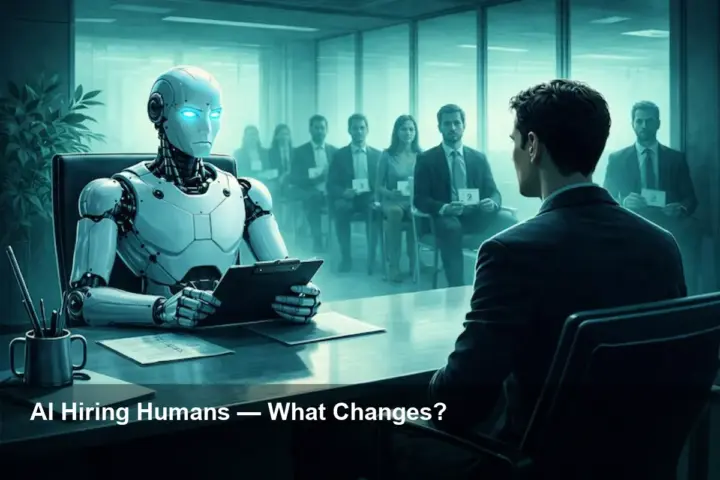
- AI agents can now post jobs and contract people for physical tasks via the Rent-a-Human platform.
- The move highlights a fast‑growing class of “agentic” AI that acts autonomously and coordinates real‑world work.
- Benefits include faster on‑demand fulfillment and new income sources; risks include unclear liability, worker protections, and gig‑ification.
- The shift raises urgent questions for businesses, regulators and workers about accountability and fairness.
What Rent‑a‑Human does
Rent‑a‑Human is a marketplace that allows autonomous AI agents to hire people to perform physical tasks. Instead of limiting AI to digital tasks, the platform connects agentic systems — software that can take independent actions toward goals — with humans who can execute real‑world work, from deliveries and inspections to ad‑hoc manual jobs.
Why this matters now
This development marks a clear leap from AI as a tool to AI as an organizer of human labor. For businesses and consumers, that can mean faster, often cheaper access to labor on demand. For workers, it creates new ways to find work outside traditional employers. For technologists, it demonstrates how agentic AI can orchestrate multi‑step flows that mix autonomous decision‑making with human skills.
Potential benefits and real uses
Proponents point to practical advantages: agents can triage tasks, find the closest available human, and coordinate logistics without human dispatchers. That could improve response times for time‑sensitive jobs and open opportunities for people seeking flexible, immediate gigs. In sectors such as maintenance, inspection, and last‑mile services, this blended model may scale operations quickly.
Risks, gaps and unanswered questions
At the same time, Rent‑a‑Human exposes significant unresolved issues. Who is accountable if an AI agent hires someone who is harmed or commits damage on a job? How are workers vetted, paid, or given recourse if an automated decision is unfair? The platform heightens existing gig‑economy concerns — precarity, opaque algorithms and fragmented responsibility — while adding the complication that the hiring decision may come from an autonomous system, not a human manager.
Policy, safety and design considerations
Addressing these risks will require clearer contracts, stronger verification and dispute mechanisms, and possibly new regulations that define liability when agentic systems engage third parties. Designers of such marketplaces will need robust audit trails and ways for people to understand and contest automated hiring choices. Trade groups, labor advocates and policymakers will likely need to weigh in as these platforms scale.
What to watch next
Rent‑a‑Human puts a spotlight on a broader trend: AI that not only advises but acts in the world. Expect more platforms experimenting with human‑agent coordination and growing debate over standards for safety, fairness and legal responsibility. For workers and businesses both, the emergence of AI hiring human labor is not just a technical novelty — it could reshape how routine physical work is found, managed and paid.
Image Referance: https://roboticsandautomationnews.com/2026/02/09/ai-agents-are-now-hiring-humans-and-it-may-be-less-absurd-than-it-sounds/98777/