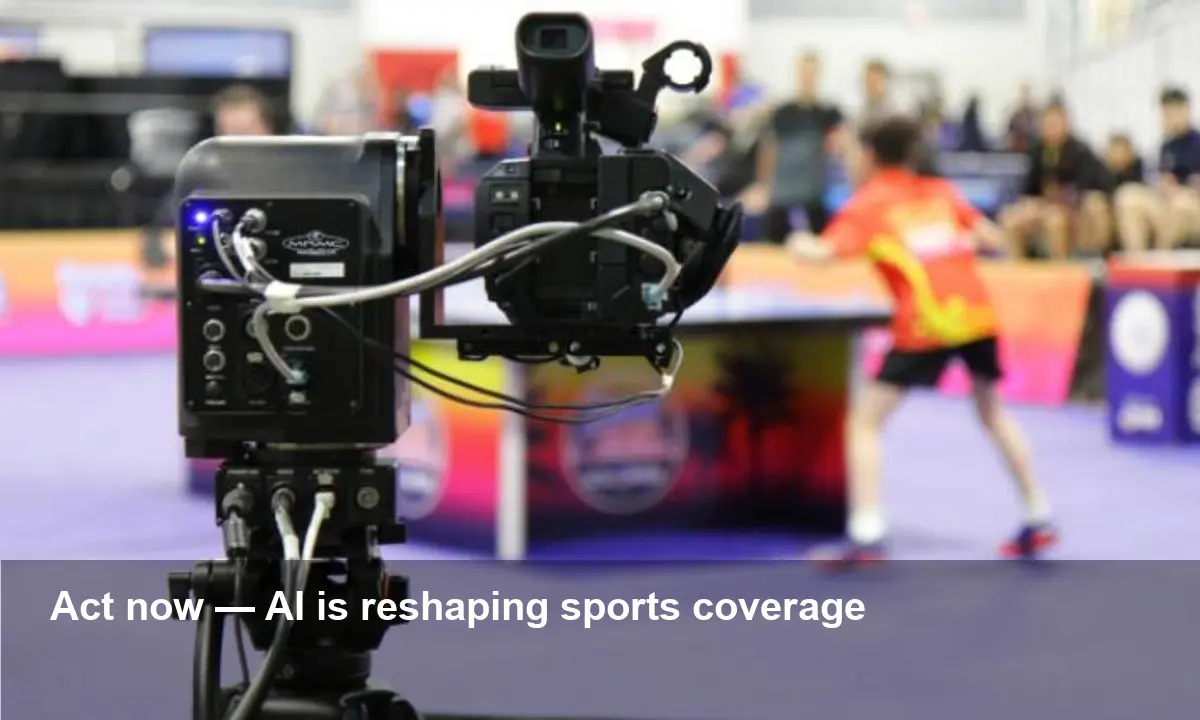
- Over the past 12 months, sports coverage has shifted rapidly toward AI-driven automation, says Marius Merten, sports broadcast manager at MRMC.
- MRMC identifies automated cameras, AI-assisted highlights and metadata-driven workflows as core drivers of the next wave of sports reporting.
- Broadcasters face pressure to adopt automation to reduce costs, produce more personalized content, and deliver faster highlights — or risk losing audience share.
- MRMC stresses that human expertise will remain essential even as robots and AI scale production.
MRMC: AI is the next wave in sports coverage
Marius Merten, sports broadcast manager at MRMC, says the last 12 months have changed sports reporting the same way they have changed other media sectors: by accelerating the adoption of AI and automation. MRMC — known for camera robotics and motion-control systems for broadcast — argues that a combination of smarter cameras, automated production workflows and AI-driven editorial tools will define how live sport reaches audiences in the near future.
What changed in the past 12 months
Broadcasters faced twin pressures: rising production costs and expectations for faster, more personalized content. Those forces, coupled with advances in machine vision and AI-driven clipping and indexing, made automation not just attractive but necessary. According to MRMC’s assessment, three trends stand out:
- Automated and remote camera systems that reduce on-site crews and enable more consistent multi-angle coverage.
- AI-assisted highlight detection and metadata tagging that speed up turnaround and make content searchable and reusable.
- Smarter workflows that combine human direction with automated execution to scale output without proportionally increasing staff costs.
Why automation matters for broadcasters and rights holders
Automation promises clear business advantages: lower operational costs, faster delivery of highlights and the ability to produce more sport at scale. For rights holders and broadcasters juggling multiple events, automated systems can prioritize and distribute critical moments to platforms and partners more quickly. MRMC frames these changes as both an opportunity and a risk — early adopters can capture audience attention and advertising dollars, while slow movers may cede ground.
Human expertise remains central
MRMC emphasizes that automation doesn’t eliminate the need for experienced production staff. Instead, it shifts human roles toward supervision, creative decision-making and quality control. The most successful implementations pair AI systems with seasoned operators who set editorial priorities, validate AI-detected clips and shape storytelling.
What broadcasters should do now
MRMC recommends broadcasters pilot AI-enabled workflows on lower-risk events, build metadata standards that AI can use effectively, and invest in training staff to work alongside automated tools. These practical steps help minimize disruption while unlocking the speed and scale benefits of automation.
The near-term outlook
As AI and robotics mature, MRMC anticipates a sports-media landscape where more events are covered with fewer on-site personnel, highlights are produced in near real-time, and personalized clips become standard. The transition will create winners and losers — broadcasters who move quickly and thoughtfully will get a competitive edge, while those who delay may struggle to keep pace.
Image Referance: https://www.svgeurope.org/blog/ibc-acquisition/a-new-power-mrmc-on-how-the-next-wave-of-sports-coverage-will-be-driven-by-ai-automation/