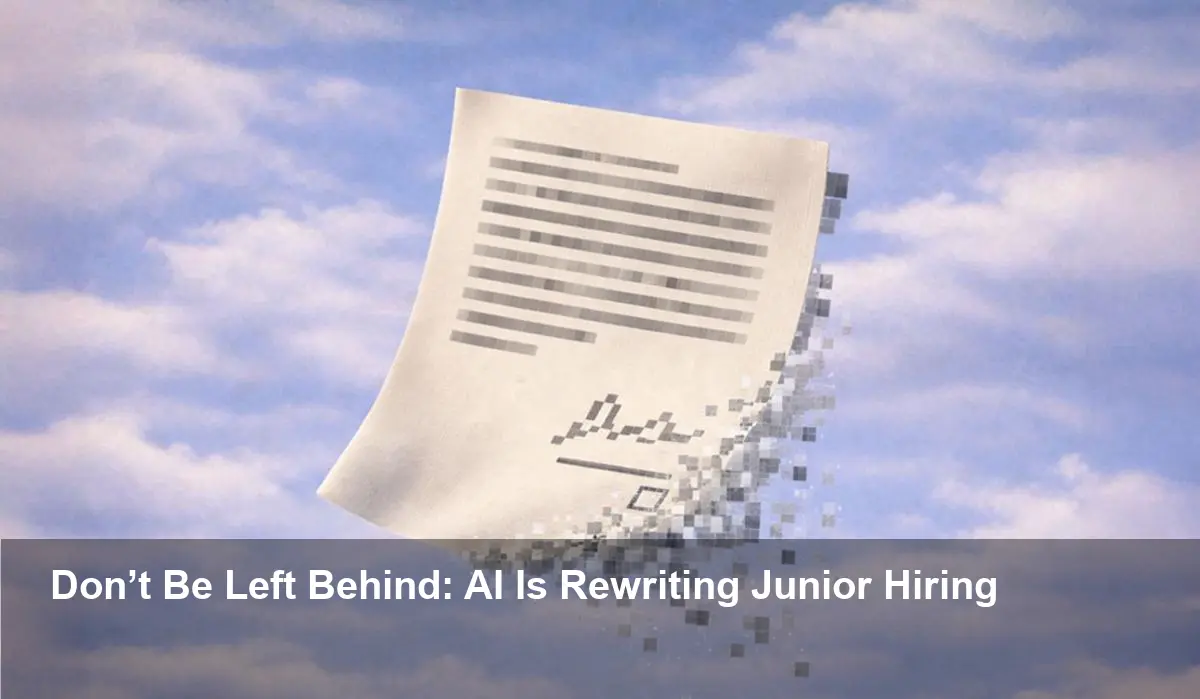
- Generative AI is reshaping agency hiring: junior roles now prioritize AI-tool fluency and hybrid skills over pure craft.
- Agencies are sourcing talent from nontraditional pools—bootcamps, remote contractors and cross-disciplinary hires—rather than only classic art schools.
- Firms are investing in upskilling and new onboarding to blend ethical use of AI with creative standards.
Agencies say ‘there’s no room for purists’ as AI changes junior hiring
Generative AI has moved from curiosity to core workflow in many creative agencies, and the effect is rippling through recruitment. Entry-level roles that once prioritized flawless manual craft — handcrafted layouts, painstaking editing, or long-form manual coding — are now being reshaped around speed, tool fluency and the ability to orchestrate AI-assisted outputs.
What’s changing in the junior talent search
Recruiters and agency leaders are increasingly measuring candidate value by different criteria: prompt literacy and tool familiarity, the ability to combine human judgment with machine suggestions, and comfort iterating quickly. That doesn’t mean foundational skills no longer matter, but it does mean candidates who insist on purist, one-method approaches are less competitive.
Where agencies are hiring from now
Traditional pipelines — top art and communications schools — remain important, but agencies are broadening sources. Bootcamps, online course graduates, multidisciplinary freelancers, and international remote talent pools have become reliable ways to find junior staff who already understand AI workflows. Social proof from peer hiring also pushes firms to experiment with nontraditional hires.
How agency business models are adapting
AI is driving agencies to productize services, increase automation and demand quicker turnaround. That changes job descriptions: more emphasis on rapid prototyping, data-informed creativity and collaboration with technical teammates. Agencies are also building in-house upskilling programs and apprenticeship tracks to convert promising juniors into senior contributors who can responsibly use AI.
Risks and ethical considerations
Rushing into AI-first hiring creates pitfalls. Reliance on AI can erode craft depth if training is neglected, and there are ethical questions around attribution, data provenance and bias. Agencies must balance the pursuit of efficiency with guardrails, oversight and continued mentoring.
Practical advice for junior talent
Junior candidates should showcase AI fluency alongside foundational skills. Practical steps include: building a portfolio that demonstrates AI-assisted work and clear creative judgment, learning dominant generative tools, documenting process and ethical choices, and emphasizing adaptability and teamwork. Being a ‘purist’ about a single craft risks narrowing opportunity; being able to guide, prompt and refine AI outputs is increasingly a ticket to hire.
Looking ahead
Agencies that combine human craftsmanship with smart AI oversight say they’re more competitive. The job market for juniors will likely reward hybrid skill sets and continuous learners. For candidates and agencies alike, the imperative is clear: adapt, upskill and build systems that keep creative standards while leveraging AI’s productivity gains.
Image Referance: https://digiday.com/marketing/theres-no-room-for-purists-generative-ai-is-altering-the-agency-junior-talent-search/