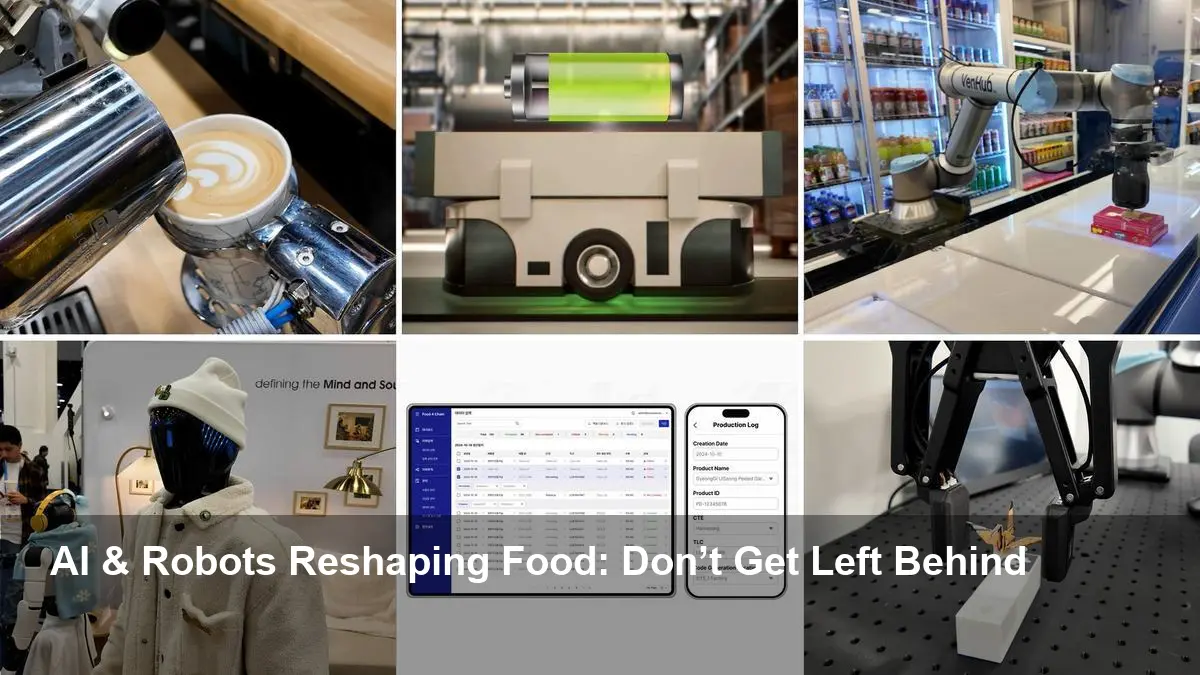
- CES 2026 placed AI, robotics and autonomous retail at the center of food and beverage innovation.
- Exhibits highlighted automation that spans food manufacturing, restaurants and supply chains.
- Rapid adoption signals operational cost cuts, labor replacement and faster delivery, creating pressure on lagging firms.
- Industry leaders are piloting integrated AI systems; the takeaway: adapt or risk falling behind.
CES 2026: A Turning Point for Food & Beverage Technology
AI, Robotics and Autonomous Retail Took Center Stage
At CES 2026, technology designed specifically for the food and beverage (F&B) industry dominated show floors and press briefings. Companies showcased robotics for food production, AI systems for supply‑chain forecasting and autonomous retail concepts that aim to remove traditional friction from buying and serving food. The collective message was clear: automation is moving from experimentation to implementation.
Where automation is showing up
Automation demonstrations spanned three key areas: manufacturing lines with robotic handling and inspection; restaurant operations with robot chefs, automated order fulfillment and contactless service; and smarter supply chains powered by predictive AI and real‑time tracking. Each area promises to boost throughput, reduce waste and compensate for persistent labor shortages.
Why This Matters for Manufacturers, Restaurants and Retailers
For manufacturers, CES highlighted tools that can streamline production and quality control. For restaurants, exhibitors emphasized systems that reduce front‑ and back‑of‑house labor needs while maintaining or improving consistency. For retailers and distributors, autonomous retail and AI‑driven logistics point to faster delivery windows and lower inventory costs. Collectively, these advances can compress margins and speed-to-market advantages in ways that favor early adopters.
Risks and industry implications
Even as exhibitors touted efficiency gains, CES underscored important risks: workforce displacement, integration complexity and the capital required to modernize. Companies that delay evaluation risk losing competitive positioning as peers pilot and scale these technologies. Regulators and industry groups will also play a role in how quickly and responsibly these tools are adopted.
What leaders should do next
Executives in the F&B sector should treat CES 2026 as a call to action. Practical next steps include piloting targeted automation in high‑volume areas, investing in AI for demand forecasting to reduce waste, and building partnerships with tech providers to manage integration and compliance. Early pilots allow organizations to measure ROI and train staff to work alongside new systems.
Bottom line
CES 2026 demonstrated a clear trajectory: AI, robotics and autonomous retail are not abstract trends but immediate levers for operational transformation in food and beverage. Companies that act now to test, adopt and govern these technologies are likely to capture efficiency gains and market share — while those that wait may face higher costs and shrinking relevance.
Image Referance: https://foodinstitute.com/focus/ai-automation-dominate-fb-innovations-at-ces-2026/