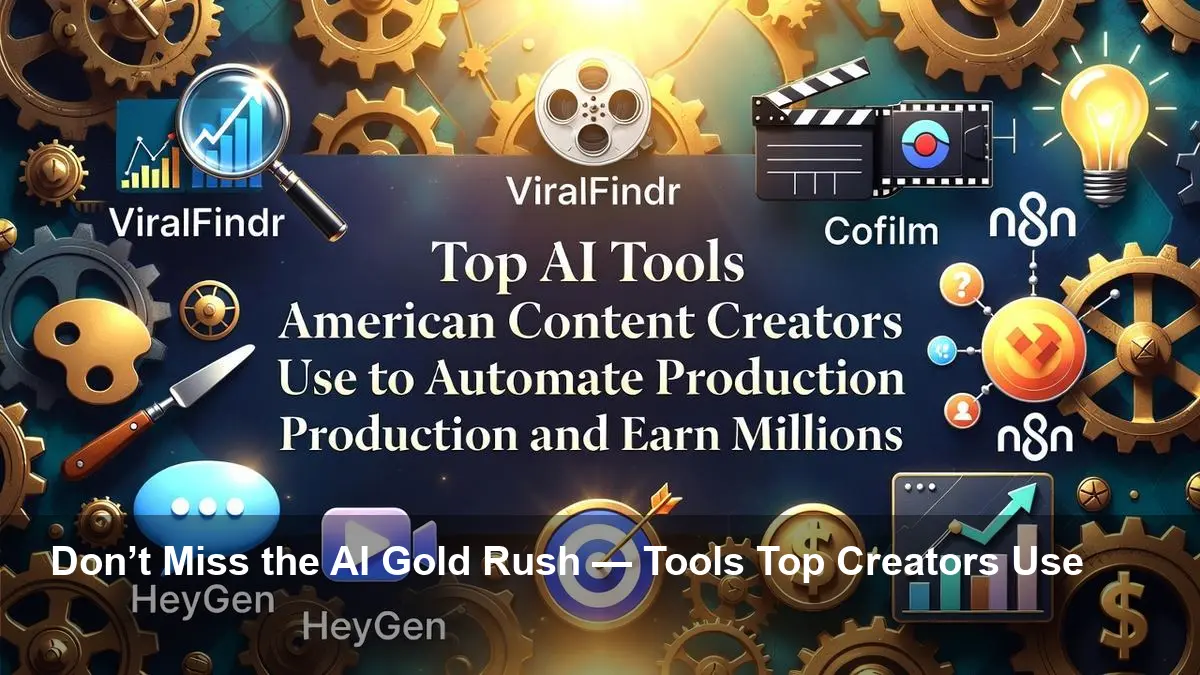
- US creators are building “content factories” that publish dozens of videos weekly using AI automation.
- Top tools include ChatGPT/OpenAI for scripts, Descript and CapCut for editing, Synthesia and ElevenLabs for voice and avatars.
- These workflows scale ad, sponsor and affiliate revenue — some channels now earn millions annually.
- Risks include platform policies, quality erosion and audience distrust; cautious testing and ethics are essential.
How AI Tools Turn Creators into Content Factories
American content creators increasingly combine multiple AI services into automated pipelines that let them produce high volumes of videos, thumbnails and captions with minimal manual effort. The result: channels that can publish dozens of short and long-form videos each week, scale views quickly, and monetize aggressively through ads, sponsorships and affiliate links.
Core tools powering mass production
While exact stacks vary, common categories and examples used by top creators include:
- AI writing and ideas: ChatGPT, GPT-4 and other LLMs for ideation, scripts, outlines and bulk caption generation.
- Audio and voice: ElevenLabs and Replica for natural-sounding synthetic voices; batch voiceover exports speed up production.
- Video editing and repurposing: Descript for overdub editing and multiformat exports; CapCut and Pictory for automated cuts and subtitle embedding.
- AI avatars and synth videos: Synthesia and Reallusion to produce presenter-style videos without camera shoots.
- Image generation and thumbnails: Midjourney, Stable Diffusion or DALL·E for eye-catching thumbnails and social art.
- Optimization tools: VidIQ, TubeBuddy and analytics platforms to identify trends, keywords and ideal publish cadence.
Typical automated workflow
Creators often follow a repeatable pipeline: topic research with analytics tools → bulk script generation with LLMs → synthetic voice/video production → automated editing and subtitle generation → thumbnail creation → scheduled publishing and monitoring. Templates and batch processing reduce per-video human time to minutes.
Monetization: How volume converts to millions
High output drives aggregate watch time and impressions, which increases ad revenue and attracts sponsors. Creators multiply income streams by placing affiliate links, landing sponsored segments across dozens of videos, and repurposing assets on TikTok, Instagram and short-form networks to maximize reach.
Risks and ethical considerations
Rapid automation brings downsides: platform policy changes can demonetize AI-driven content, audiences may detect low-quality or inauthentic work, and creators may face copyright or deepfake issues. Transparency, quality checks and human oversight are critical to long-term sustainability.
Takeaway
AI tooling has changed the economics of content creation. For creators chasing scale and revenue, mastering a handful of trustworthy tools and a repeatable pipeline can produce dramatic results — but the biggest payoffs come when automation is balanced with creativity, ethics and audience trust.
Image Referance: https://quasa.io/media/top-ai-tools-american-content-creators-use-to-automate-production-and-earn-millions