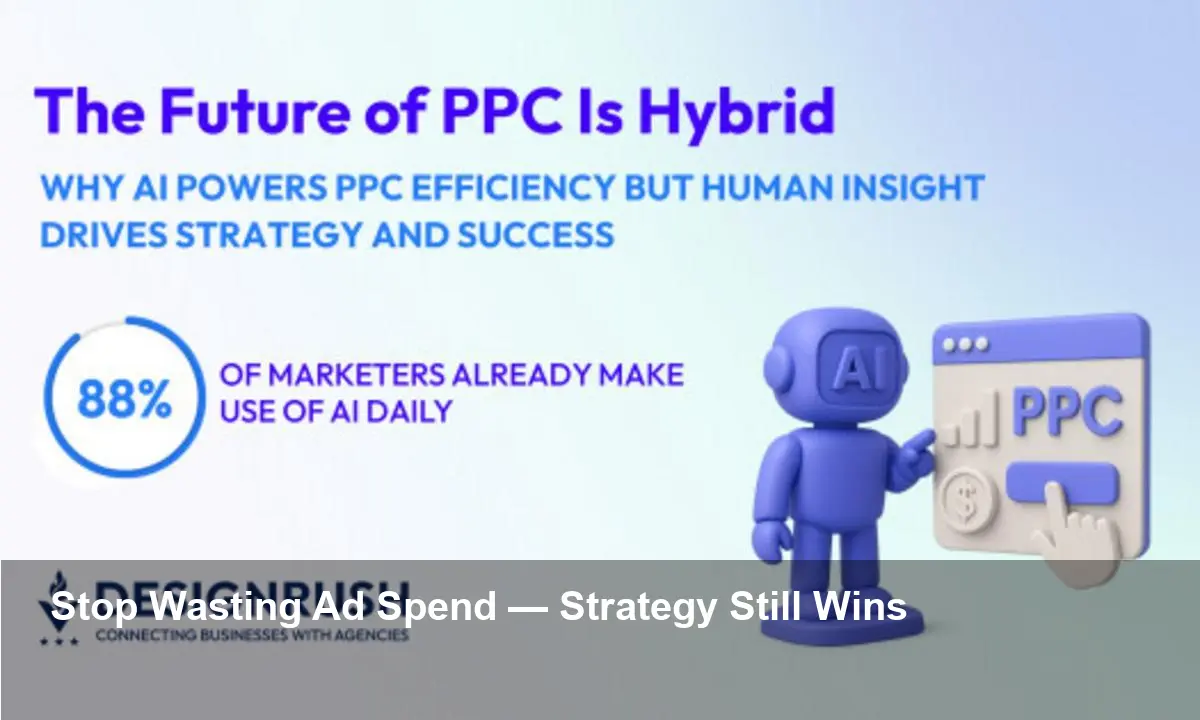
- AI and automation speed campaign execution but can’t replace human strategy for long-term PPC ROI.
- Top performers pair automated bidding and creative testing with strategic segmentation, attribution, and guardrails.
- Measured ROI depends on data quality, conversion framework, and ongoing human oversight — not automation alone.
PPC ROI: Why Automation Alone Falls Short
Brands and agencies are rapidly adopting AI-driven tools for paid search and social ads. Automation handles bidding, budget pacing, and broad creative variation — and delivers faster iteration. But faster execution isn’t the same as better returns. The real driver of sustainable PPC ROI remains human strategy: defining the funnel, selecting targets, interpreting signals and setting clear trade-offs.
Where automation helps — and where it doesn’t
Automation excels at tasks with clear objectives and consistent data: bid adjustments, dayparting, and rapid creative testing. Yet it struggles when objectives are fuzzy, the conversion path is complex, or first-party data is fragmented. Left unchecked, automated systems can optimize toward the wrong short-term signals (e.g., cheaper clicks rather than valuable conversions), creating the illusion of performance while eroding long-term value.
Core reasons automation fails to deliver real ROI
- Wrong objective signals: Machine learning follows the metric you feed it — if conversions are poorly tracked or the KPI is misaligned, automation optimizes the wrong outcome.
- Lack of context: Humans bring audience nuance, seasonality insights, and business constraints that algorithms can’t infer reliably.
- Attribution blind spots: Cross-channel and post-click value often require human-driven modeling and validation beyond automated attribution windows.
- Creative strategy: Automation can rotate ads, but it won’t invent breakthrough creative concepts or brand narratives.
Practical checklist: Turn automation into measurable ROI
- Define clear, business-aligned KPIs (LTV, incrementality, not just CPA).
- Ensure clean first-party data and reliable conversion tracking before relying on automated bidding.
- Use humans to design test hypotheses, audience segments, and creative frameworks; let automation execute and scale those tests.
- Set guardrails and fail-safes to avoid runaway spend on misleading short-term signals.
- Regularly validate automated outcomes with manual attribution checks and incrementality tests.
Bottom line
AI and automation are powerful accelerants for PPC, but they’re not a substitute for strategic thinking. Marketers who pair human insight with automated execution — clear objectives, quality data, and disciplined validation — will consistently outpace peers who treat automation as a magic bullet. If your campaigns look “good” on surface metrics but you’re unsure about true business impact, it’s a signal: tighten strategy before scaling automation.
Image Referance: https://news.designrush.com/ppc-strategy-with-ai-funnel-boost-media