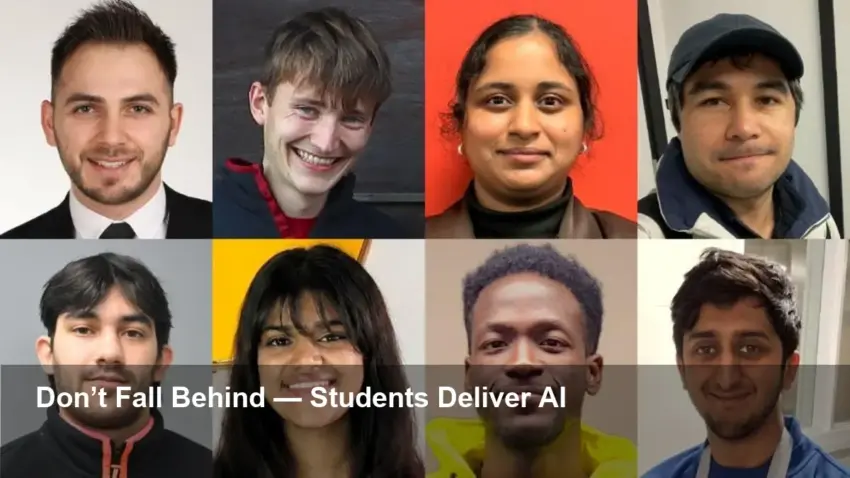
- SME manufacturers are teaming with students and graduates through Made Smarter’s Digital Internship Programme to deploy AI, automation and digital twins on factory floors.
- Internships give smaller firms low-risk access to new digital tools while providing students with hands-on industry experience.
- The programme helps tackle the skills gap and accelerates pilots of predictive maintenance, process simulation and basic automation.
How the Digital Internship Programme connects students with factories
The Made Smarter Digital Internship Programme places students and recent graduates inside SME manufacturing businesses to work on short, focused projects. Rather than sending firms to a consultancy, the internships let manufacturers trial AI models, automation hardware and digital-twin simulations with support from academic and industry mentors.
Interns typically work on practical, bounded deliverables — for example, building a simple predictive-maintenance model, automating a repetitive task, or creating a digital twin to test process changes virtually. The approach reduces upfront investment for SMEs and creates a safe environment to experiment before committing to larger roll-outs.
Why this matters for SME manufacturers
Smaller manufacturers often lack in-house data science and automation expertise, and the cost of hiring senior specialists can be prohibitive. By partnering with students, SMEs can access fresh technical skills and contemporary software tools at a fraction of the cost of permanent hires.
Adopting even modest AI or automation projects can improve plant uptime, streamline inspections and provide digital visibility into production — all outcomes that help firms compete as larger players digitise. The programme also builds internal capability: staff working with interns gain exposure to new ways of solving problems and can carry lessons into future projects.
Benefits for students and graduates
Students gain real-world experience implementing industrial AI and automation, translating coursework into commercial outcomes. They develop practical skills in data cleaning, model testing, PLC integration or simulation software — experience that employers increasingly demand.
The internships also act as a recruitment pipeline: graduates who deliver value during short projects are often better positioned for permanent roles in industry than those without hands-on manufacturing experience.
Challenges and next steps
While the internship model lowers barriers, SMEs still face challenges in integrating new tools — from data quality issues to change management and cybersecurity concerns. Successful projects usually require clear scope, executive buy-in and plans for maintaining solutions after the intern leaves.
As more small manufacturers trial these digital projects, the combination of low-cost talent and applied learning from the Made Smarter programme could accelerate broader adoption of AI, automation and digital twins across the sector. For SMEs, the message is clear: experimenting with student-led projects now reduces the risk of falling behind as rivals digitise.
Image Referance: https://www.themanufacturer.com/articles/students-deliver-ai-automation-and-digital-tools-to-factory-floors/