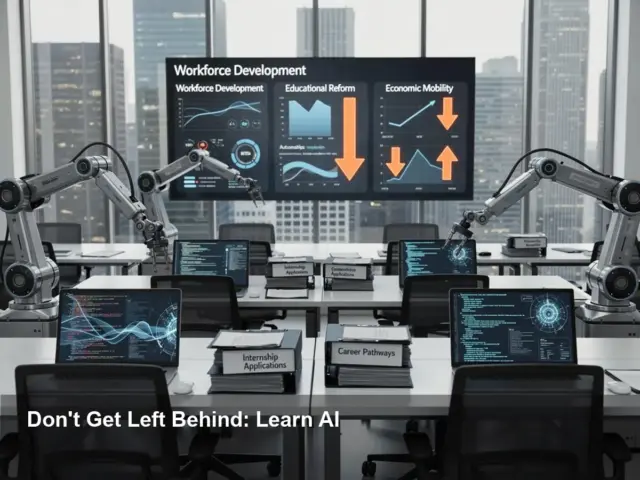
• AI is changing the structure of internships and entry-level roles, shifting work from routine tasks to project-based outputs.
• Employers increasingly expect practical AI literacy and demonstrable results rather than traditional resume lines.
• Students who upskill, build small AI projects, and highlight human strengths (creativity, collaboration) will stand out.
What’s changing in internships
Internships are no longer just administrative or narrowly supervised learning experiences. As AI tools automate repetitive tasks and speed workflows, companies are redesigning early-career roles to deliver measurable project outcomes. That means fewer traditional “make-the-coffee” tasks and more short-term, impact-focused assignments—often assessed through portfolios or practical tests rather than long application processes.
Why this matters to college students
The shift affects career launch pads. For many students, internships are the entry route into full-time roles; when those positions are restructured or reduced, competition intensifies. Employers now prioritize candidates who can use AI to produce value quickly—so students who only rely on GPA or coursework risk being overlooked.
How students should respond
1. Learn practical AI skills
Focus on tools and workflows relevant to your field: prompt engineering, data-cleaning scripts, or domain-specific AI platforms. You don’t need to be an ML researcher—employers want people who can apply AI to real problems.
2. Build micro-projects
Create short, demonstrable projects that show how you used AI to solve a problem. Host code or writeups on GitHub, a portfolio site, or short posts on professional networks. Concrete examples trump generic claims.
3. Emphasize uniquely human skills
Creativity, judgment, communication and teamwork remain hard for AI to replicate at scale. Document instances where you led decisions, synthesized ambiguous information, or guided a group to a solution.
4. Network and seek alternative pathways
Micro-internships, project-based gigs, volunteer roles and freelance work can replace some traditional internship value. Reach out to alumni, professors, and industry contacts with a specific pitch: describe a small AI-driven project you can deliver.
What employers are looking for now
Hiring teams want applicants who can show an immediate return on time invested. That can mean: a short case study, a portfolio demonstrating tool fluency, or clear evidence of problem-solving under uncertainty. Resumes that list relevant AI tools and link to short projects will be read differently than those relying on course lists alone.
The takeaway
AI is reshaping the early-career landscape. That creates risk for students who assume internships will look the same as they did a few years ago—but it also creates opportunity for those who adapt quickly. By learning practical AI applications, building short projects, and emphasizing human strengths, students can turn disruption into advantage rather than being squeezed out of entry-level opportunities.
Image Referance: https://www.webpronews.com/the-great-internship-squeeze-how-ai-is-reshaping-entry-level-opportunities-for-college-students/