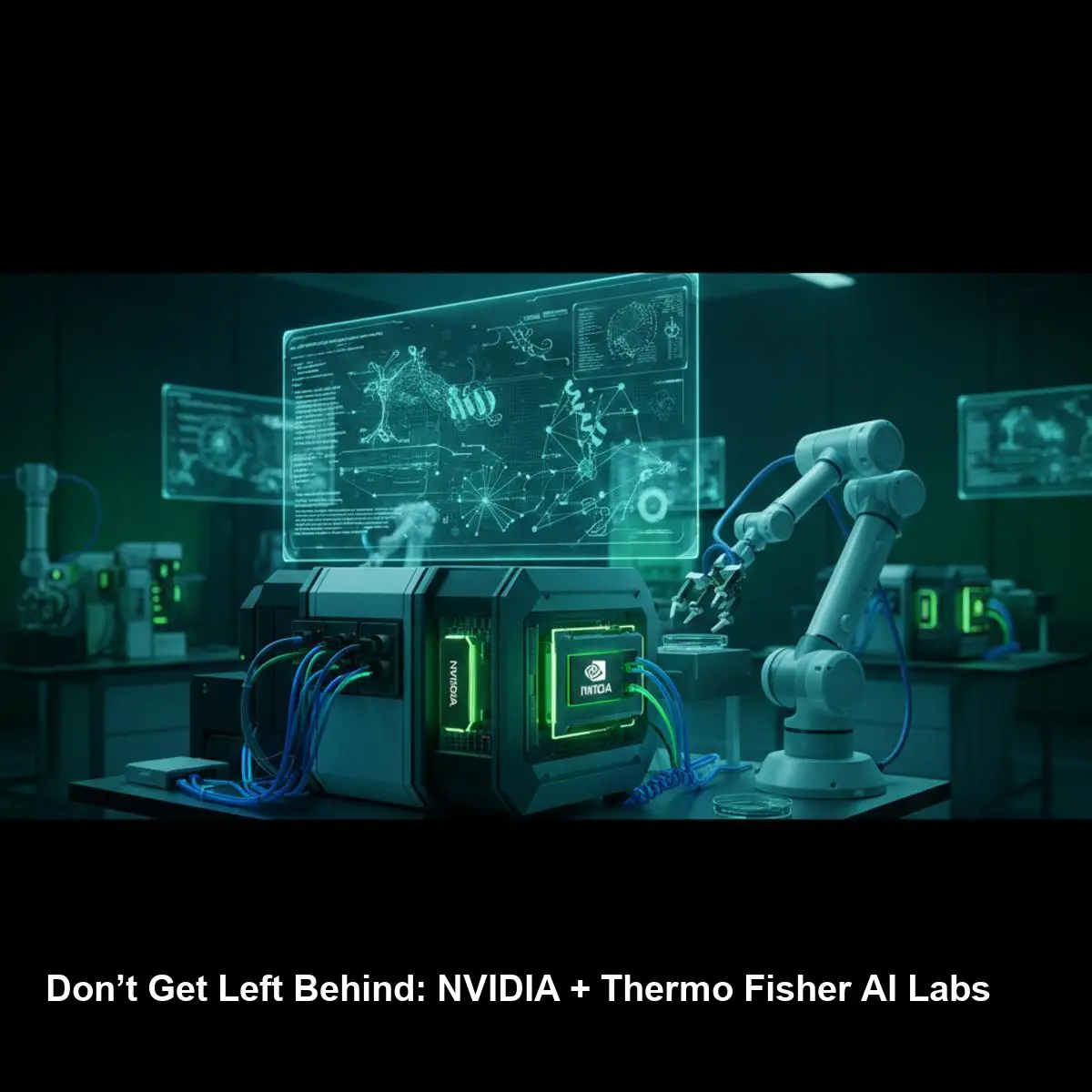
- Thermo Fisher Scientific has announced a strategic collaboration with NVIDIA to embed artificial intelligence into laboratory instruments and software.
- The partnership aims to reduce manual, repetitive tasks and accelerate experiment design, data analysis and overall laboratory performance.
- The move signals growing pressure on life-science labs and instrument makers to adopt AI-driven workflows or risk falling behind peers.
Thermo Fisher and NVIDIA team up to bring AI inside the lab
Thermo Fisher Scientific and NVIDIA have launched a strategic collaboration to integrate AI capabilities directly into scientific instruments and the software that controls them. The stated goal is to minimize manual workflows and speed up both experiment design and data analysis, boosting laboratory performance and throughput.
What the collaboration promises
- Embedded AI in instruments: AI models and software will be incorporated into Thermo Fisher’s instrumentation ecosystem to automate routine steps and surface insights faster.
- Faster experiment design and analysis: By applying AI to experimental workflows, the collaboration aims to reduce time spent on planning experiments and interpreting results.
- Reduced manual labor: Automation of repetitive tasks should free scientists to focus on interpretation and higher‑value research activities.
Why this matters to laboratories and researchers
The collaboration between two major industry names combines Thermo Fisher’s deep footprint in laboratory products with NVIDIA’s leadership in AI computing. For labs, that combination promises practical gains: shorter experiment cycles, fewer manual errors, and potentially higher sample throughput. For research organizations and commercial labs, these capabilities can translate to faster discoveries, quicker product development and improved cost efficiency.
This announcement also reflects a broader trend: instrument vendors and software providers are racing to embed AI across life‑science workflows. Organizations that move quickly to assess and adopt these tools may capture productivity gains that lagging peers will miss.
Potential implications and next steps
Expect phased integration: instrumentation manufacturers and software partners typically pilot new capabilities with selected customers before broader rollout. Labs should monitor product announcements and early deployment reports to evaluate how AI-driven features align with their workflows.
Risk and reward: While AI promises clear efficiency gains, labs should weigh integration costs, validation requirements, and regulatory considerations, especially for clinical and regulated workflows.
Bottom line
Thermo Fisher’s deal with NVIDIA is a clear signal that AI is moving from research hype into embedded, practical tools inside the lab. The partnership aims to cut manual work, accelerate experiment design and deliver faster analysis — but it also raises the stakes for laboratories to evaluate AI adoption or risk losing competitive ground.
Image Referance: https://www.stocktitan.net/news/TMO/thermo-fisher-scientific-announces-strategic-collaboration-with-9l2fcvez4y52.html