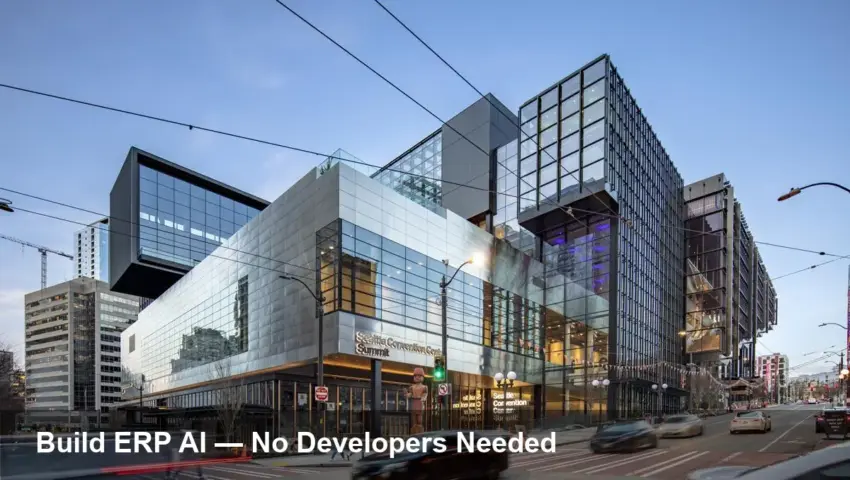
- Acumatica showcased AI and low-code platform capabilities at its Summit 2026.
- Business users can create customized AI-driven workflows without developer support.
- The shift promises faster automation and reduced IT backlog — but raises governance and security questions.
- Adoption could accelerate practical AI use inside ERP, changing how companies automate processes.
Acumatica spotlights low-code AI for ERP at Summit 2026
At its 2026 Summit, Acumatica highlighted an expanded focus on practical AI and low-code tooling that enables business users to create customized workflows inside the ERP environment without needing developer support. The company framed these capabilities as a way to bring AI-driven automation directly to operations teams and line-of-business users.
What this means for ERP automation
The core message from the Summit is that organizations can shorten the path from idea to automation. By coupling AI capabilities with low-code builders, Acumatica aims to let users prototype and deploy workflows—such as approvals, data enrichment, and routine decisioning—faster than traditional IT-led projects. That change can reduce backlog for developers and help teams iterate on process improvements more quickly.
For businesses, the immediate benefits are clear: quicker time to value for automations, less dependence on scarce developer resources, and more experiments with AI in everyday tasks. For Acumatica, the move reinforces a trend among ERP vendors to embed AI and citizen‑developer tools directly into their platforms to drive adoption and product stickiness.
Risks, governance and why caution matters
While empowering non‑developers is attractive, it also raises predictable risks. When business users build AI workflows without tight governance, organizations can face issues around data quality, model accuracy, and compliance. IT and security teams will need to establish guardrails—approval workflows, auditing, role‑based access, and model validation—to prevent accidental data exposure or flawed automated decisions.
Companies that skip governance may see short‑term gains but create longer‑term maintenance and compliance headaches. The Summit’s emphasis on ease of use heightens the need for clear policies and oversight as adoption scales.
What to watch next
Expect to see partners and customers testing the new low-code AI features in pilot projects across finance, supply chain, and service operations. Observers should watch for early case studies showing measurable time savings, error reduction, or faster cycle times — and for vendor guidance on governance and monitoring best practices.
If adopted carefully, the combination of AI and low‑code inside ERP could change how organizations approach routine automation: shifting power from centralized IT teams to operators who understand process details best. But the balance between speed and control will determine whether this change delivers long‑term value.
Image Referance: https://erp.today/acumatica-summit-highlighting-ai-low-code-solutions-for-erp-automation/