- AI-powered accounting tools are spreading quickly across U.S. companies, automating core tasks such as AP/AR, reconciliations and close processes.
- Finance roles are shifting from transaction processing to analysis, controls and strategic business partnering; firms are investing in reskilling.
- Adoption brings efficiency and cost benefits but raises concerns about job displacement, governance and regulatory scrutiny.
AI-Driven Accounting Automation Accelerates in the U.S.
What’s changing
Across the American corporate landscape, finance teams are increasingly deploying AI and automation to handle routine accounting tasks. Technologies — including robotic process automation (RPA), machine learning for anomaly detection, and generative models that draft journal entries or summarise transaction data — are being integrated into accounts payable, accounts receivable, bank reconciliations and month-end close workflows.
From processing to partnering
As machines take over repetitive work, accounting roles are evolving. Instead of daily transaction entry and manual reconciliations, many professionals are being steered toward higher-value activities: data analysis, forecasting, internal controls, compliance oversight and strategic advisory work for business units. Finance leaders say this shift is already reshaping job descriptions and hiring priorities.
Speed and savings — but not without trade-offs
Companies report faster close cycles and improvements in accuracy and auditability after automating routine processes. Those gains can translate to cost savings and more timely financial insights. At the same time, automation introduces new risks — if models or workflows are poorly governed, errors can propagate quickly. This drives demand for stronger audit trails, change controls and documented model governance.
Reskilling, redeployment and workforce impact
Rather than eliminate roles wholesale, many firms are redeploying staff into oversight and analytics positions. Finance teams are investing in training programs to build skills in data literacy, process design, and AI governance. Still, segments of the workforce whose primary function has been high-volume transaction processing face the most exposure to displacement.
Vendor ecosystem and mid-market adoption
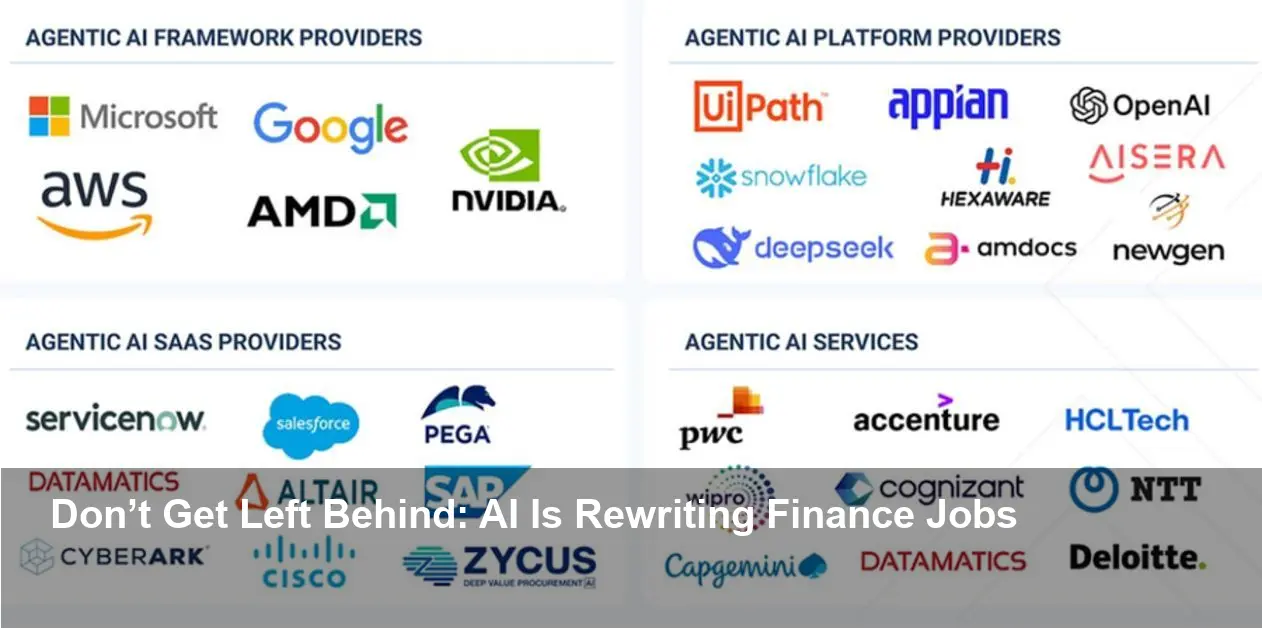
Beyond large enterprises, mid-market companies are adopting cloud-first automation tools and packaged AI accounting solutions. Vendors increasingly offer out-of-the-box connectors for ERPs, prebuilt reconciliation engines and document processing capabilities that reduce implementation time and technical friction.
Regulatory and governance considerations
Regulators and audit firms are watching how AI is used in financial reporting and compliance. Firms must document controls around automated processes, validate model outputs, and maintain human-in-the-loop checkpoints for material judgments.
What finance leaders should do now
- Prioritize areas with high volume and predictable rules (invoicing, reconciliations) for initial automation pilots.
- Invest in upskilling: data analytics, controls, and model governance are core competencies for the next-generation finance team.
- Establish clear ownership, audit trails, and escalation paths for AI-driven decisions to satisfy auditors and regulators.
AI-driven accounting automation is not a temporary trend — it is reshaping how financial work gets done. Companies that act now to combine technology adoption with people-focused transition plans are most likely to capture efficiency gains while minimizing disruption.
Image Referance: https://markets.financialcontent.com/stocks/article/247pressrelease-2026-1-16-ai-driven-accounting-automation-accelerates-in-the-us-reshaping-finance-roles-across-companies