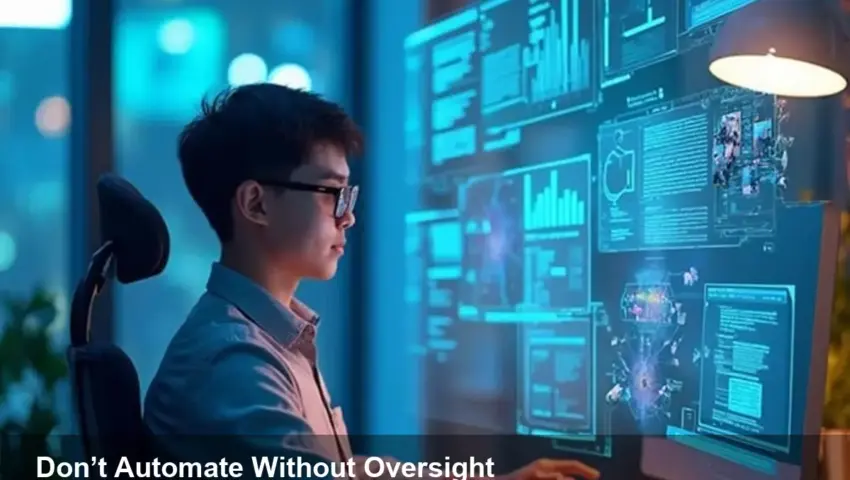
- Intelligent systems are automating repetitive workflows, routing decisions, and cross‑system orchestration.
- Teams that apply human‑in‑the‑loop checks and observability see faster outcomes and fewer costly errors.
- Major risks include skill shifts, unchecked bias, and governance gaps — the biggest mistake is deploying without monitoring.
- Start small: automate high‑volume manual tasks, measure results, then scale with clear SLAs and audits.
How intelligent systems change workflows
Intelligent systems — from rule‑based automation to models that recommend or decide — are being embedded into everyday business processes. Instead of people doing repetitive handoffs (copying data between apps, routing tickets, approving standard requests), automation platforms now handle these steps end to end. That frees humans for higher‑value work: judgment, exceptions and creative problem‑solving.
These systems do more than speed up tasks. They orchestrate across tools, trigger actions based on real‑time signals, and surface recommendations when human review is needed. Common use cases include customer support routing, invoice and expense processing, HR onboarding, marketing campaign orchestration, and parts of software deployment pipelines.
Why it matters now
Adopting AI workflow automation changes how teams are measured and how work gets done. Organizations report faster cycle times and reduced manual errors when they standardize repeatable processes. That creates clear competitive advantages: faster customer response, lower operational costs, and the ability to reallocate people to tasks that need judgment.
There’s also a FOMO angle: teams that delay adopting automation risk falling behind peers who capture efficiency and insight. However, quick adoption without guardrails creates new problems rather than solves them.
Risks, common mistakes and governance
Neglecting governance is the single biggest mistake teams make. Common risks include:
- Skill displacement: roles shift; people need reskilling to work alongside automation.
- Bias & fairness: automated decisions can amplify data or design biases unless audited.
- Reliability & outages: automated chains can magnify a single failure into broad disruption.
- Security & compliance gaps: automated data flows increase the attack surface if not secured.
Mitigations are straightforward but essential: implement human‑in‑the‑loop approvals for sensitive decisions, log and monitor all flows, require explainability for model‑based steps, and enforce role‑based access and change control.
Practical steps to get started
- Map high‑volume, manual processes and pick one predictable, low‑risk workflow to pilot.
- Define success metrics (time saved, error reduction, throughput) and baseline current performance.
- Add observability from day one: dashboards, alerts, and audit logs so you can detect regressions.
- Train and reassign staff to manage exception handling and continuous improvement.
- Scale only after measurable gains and formal governance are in place.
Bottom line
Intelligent systems are redesigning modern work by automating routine tasks and augmenting human decisions. The upside — speed, consistency, and capacity to focus on higher‑value work — is real. But the biggest cost is cultural and operational: teams that rush automation without monitoring and governance risk errors, bias, and security failures. Start small, measure, and build oversight into every step to capture the benefits without the hidden harms.
Image Referance: https://vocal.media/futurism/how-intelligent-systems-are-redesigning-modern-work