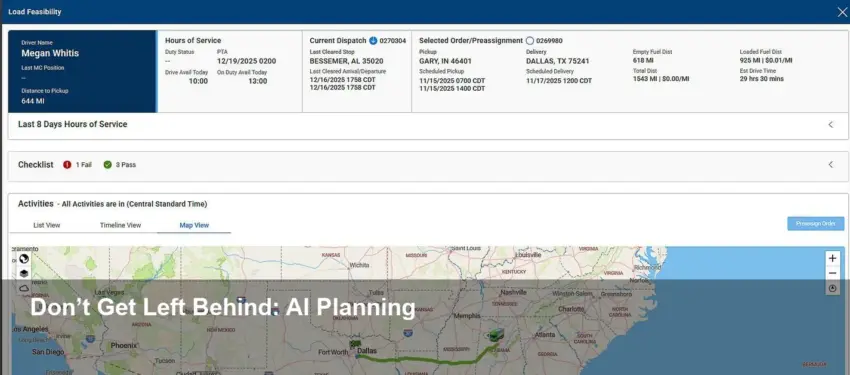
- McLeod Software has released version 26.1, adding AI-driven automation and a unified planning toolset.
- The update is positioned to reduce repetitive planning tasks and centralize route and load planning in one interface.
- Fleets and brokers that adopt the new tools may gain faster planning cycles and fewer manual errors — those who delay risk losing efficiency.
- Operators should evaluate integrations, data quality and training needs before rollout.
What McLeod v26.1 introduces
McLeod Software’s version 26.1 focuses on two headline changes: AI automation and unified planning tools. According to the announcement, the release ties automated decision‑support into the company’s transportation management workflows and brings planning functions together into a single workspace.
The AI automation is intended to handle routine, repeatable tasks that previously required manual input. The unified planning tools consolidate route, load and capacity planning so planners can view options and make decisions from one interface rather than switching between modules.
Why this matters for carriers and brokers
Operationally, these updates aim to shorten planning cycles, reduce clerical work and lower the chance of human error. For carriers and brokers struggling with rising labor costs and tight margins, automating repetitive steps can free staff for higher‑value tasks such as exception handling and customer communication.
There’s also a FOMO factor: early adopters that integrate the new features into daily workflows may realize faster turnarounds and better utilization. Conversely, organizations that delay evaluating the update risk falling behind peers that adopt automation to scale planning capacity.
Practical impacts and considerations
-
Data quality and governance: AI tools are only as good as the data feeding them. Companies should audit master data, rates and network constraints before relying on automated recommendations.
-
Integration and training: Centralizing planning improves visibility, but it also changes day‑to‑day workflows. Plan for training, pilot phases and integration testing with telematics, EDI feeds and accounting systems.
-
Human oversight: Automation speeds decisions but doesn’t replace domain expertise. Maintain clear exception workflows so planners can review and override AI recommendations.
What operators should do next
Operators interested in v26.1 should contact McLeod or their vendor representative to schedule a demo and get release notes. Run pilots with selected lanes or equipment types to measure impact before a full rollout. Track metrics such as planning time per load, utilization rates and exception volumes so you can quantify benefits and identify areas needing refinement.
Version 26.1 positions McLeod’s TMS to be more automated and planner‑centric. For fleets and brokers focused on efficiency, the release is worth evaluating now — and preparing for the operational changes that come with broader automation.
Image Referance: https://www.trucknews.com/products/mcleod-software-version-26-1-adds-ai-automation-unified-planning-tools/