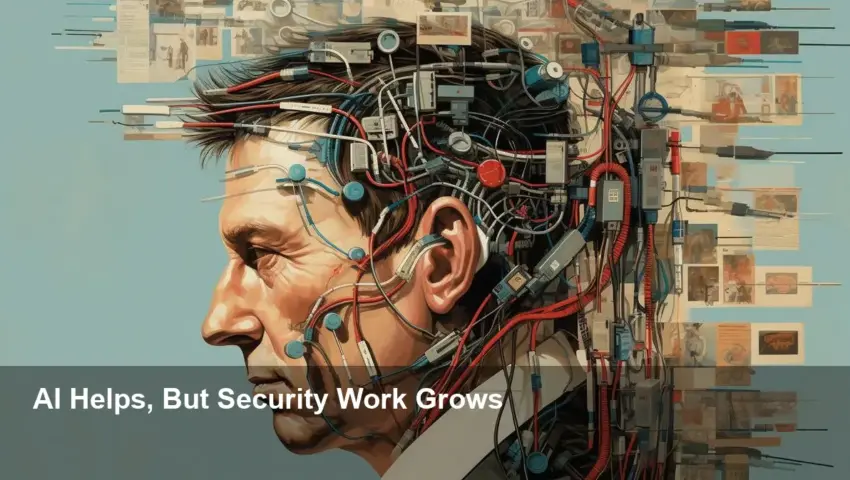
- AI security workflows are now routine in many shops.
- Teams still face expanding workloads and tighter governance demands.
- Automation reduces some tasks but increases oversight and dependency.
- Security operations must balance human review, policy and observability.
AI made workflows routine — but work didn’t disappear
AI-driven processes have become a regular part of security operations, helping teams automate detection, triage and response. That shift has delivered clear benefits: faster alert handling, more consistent playbooks and the ability to apply models at scale. But routine use of AI hasn’t meant lighter workloads for security teams.
Why workloads and governance keep growing
Several structural pressures explain why security work continues to expand even as organizations adopt AI:
- Governance and compliance: Automated decisions require policies, audit trails and explainability. Establishing and maintaining governance for AI systems adds planning and documentation work that didn’t exist to the same degree before.
- Oversight and human-in-the-loop needs: Automation can escalate issues faster, but it also creates new review points. Teams must validate model outputs, investigate false positives and tune rules — all ongoing tasks.
- Toolchain complexity: Integrating AI tools into existing detection and response pipelines introduces configuration, monitoring and maintenance overhead.
- Dependency risks: Increased reliance on automation raises new operational risks — from model drift to integration failures — forcing teams to add monitoring and contingency planning.
Why this matters now
Organizations may assume AI will simply cut headcount or eliminate toil. In practice, AI shifts the type of work rather than eliminating it. Security roles increasingly emphasize governance, model monitoring, data quality and policy enforcement. That means staffing, training and process changes are required to keep pace.
For decision-makers, the key implications are clear: automation can scale capability, but it also brings governance and operational debt. Unchecked, that debt can reduce resilience and increase the chance of missed signals or compliance gaps.
Practical steps teams are (and should be) taking
- Define clear governance: Create policies for model use, logging, auditability and escalation. Make explainability part of deployment checklists.
- Keep humans in critical loops: Reserve automated action for low-risk tasks and ensure human review for high-impact decisions.
- Monitor models and pipelines: Track performance trends, alert volumes and false positives to catch drift early.
- Invest in training and roles: Shift hiring and upskilling toward AI oversight, data engineering and compliance expertise.
- Standardize observability: Centralize logs, decisions and outcomes so incidents can be traced and learning loops closed.
The bottom line
AI is changing how security gets done: workflows are faster and more consistent, but the scope of work has broadened. Teams that treat automation as a platform requiring governance, continuous monitoring and human judgment will be better positioned to capture AI’s benefits without being overwhelmed by new operational burdens.
Image Referance: https://www.helpnetsecurity.com/2026/01/30/central-role-ai-security-workflows/