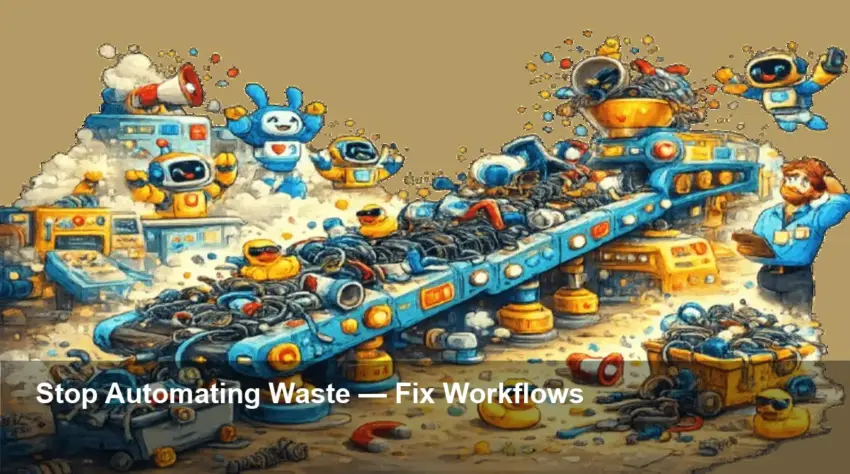
- Automating inefficient processes simply scales waste and creates new problems.
- Fix the system first: map the end‑to‑end workflow, find friction, measure impact, then automate.
- Prioritize high‑value fixes and human handoffs before adding AI or bots.
- Small changes to workflow design often deliver bigger productivity gains than premature automation.
The trap: scaling inefficiency with AI
Many teams rush to apply AI and automation to visible tasks — routing emails, filling forms, or moving data between systems — because those pieces are easy to mechanize. But automating a flawed process doesn’t fix the underlying problem; it magnifies it. What was once a manual annoyance becomes a fast, repeatable source of waste, errors and customer friction.
That’s the core warning: automation without process hygiene turns AI into an efficiency amplifier for things you shouldn’t be doing at scale.
A practical framework to map friction and unlock real gains
Below is a step‑by‑step approach teams can use to avoid the trap and make automation actually productive.
1. Map end‑to‑end
Start with a simple visual map of the full workflow — from trigger to outcome — including systems, teams and handoffs. Don’t stop at a single task. Many failures stem from upstream inputs or downstream dependencies that only become visible when you trace the whole flow.
2. Identify friction points
Look for where work queues up, gets delayed, or regularly needs rework. Friction often shows as repeated clarifications, manual handoffs, system mismatches, or ambiguous responsibilities. These are the spots that will multiply if automated prematurely.
3. Measure impact
Attach simple measures to each friction point: cycle time, error rate, number of handoffs, or customer complaints. Even approximate metrics help prioritize. If a handoff causes daily rework, it’s a higher‑value fix than an occasional form‑validation issue.
4. Prioritize fixes before automation
Fix root causes where they’re cheap and fast to change — clarify roles, standardize inputs, or eliminate unnecessary steps. Treat automation as the last mile: you automate only after the process consistently produces the right outcome.
5. Automate, then monitor
When you do automate, deploy incrementally and keep monitoring. Automation scales both good and bad outcomes; logging, alerts and rollback plans let you catch problems before they propagate.
Why this matters now
With AI tools lowering the cost of automation, teams risk scaling mistakes faster than ever. Organizations that invest time in mapping and fixing workflows first will get cleaner, faster wins and avoid costly rework later. Teams that skip this may appear to move quickly — but they may simply be moving waste faster.
Practical next steps for leaders
Run a short workshop to map one core workflow, pick a top friction point, and fix it this sprint. Use automation only after you see consistent improvements. Over time, this disciplined approach delivers sustainable productivity and makes AI a force multiplier, not an amplifier of broken processes.
Image Referance: https://martech.org/why-automating-a-broken-workflow-with-ai-is-a-trap/